

Tree planting grants raised in Wales
 © Welsh government
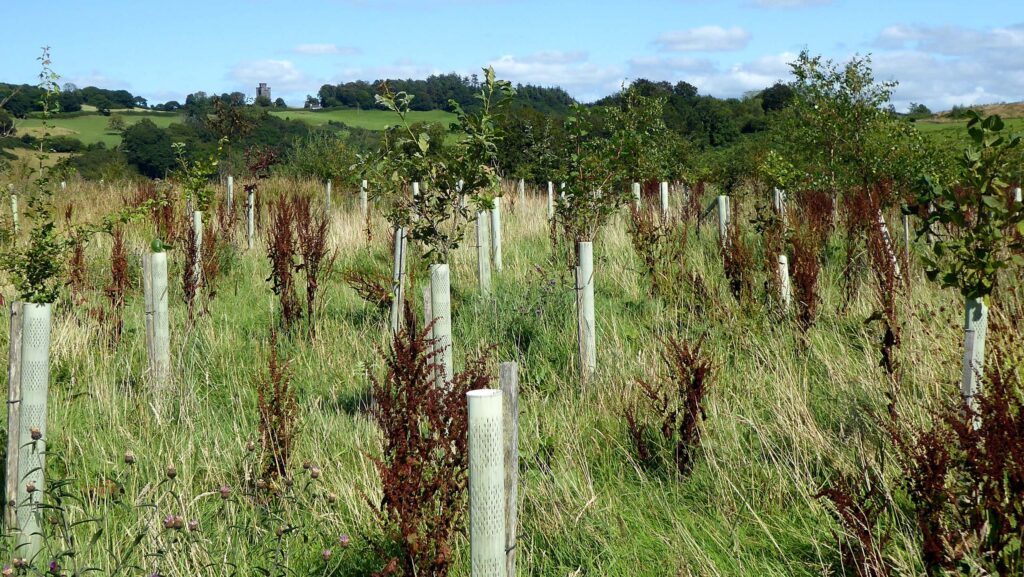
 Farmers and landowners in Wales can apply for enhanced tree-planting grants from next Wednesday (4 March), the Welsh government has announced.
The latest grants offer up to £13,294/ha, including 12 years of maintenance and premium payments, depending on the planting option.
A new £825/ha incentive is also available for creating native broadleaf woodland.
See also: Analysis: Can Welsh tree cover plans work for farmers?
Wales deputy first minister Huw Irranca-Davies said the scheme is “an excellent opportunity for landowners and farmers to explore whether they have land which would benefit from additional tree planting, such as integrating shelterbelts or agroforestry to provide shade and shelter benefits to livestock”.
He added that the extra payment reflects the ecosystem benefits of native woodland, including improved biodiversity, carbon capture and air quality.
To qualify for the enhanced payment, no more than 20% of the area may be planted with conifers and at least 800 stems/ha must be planted.
Participants will have up to two years to complete larger-scale planting.
Additional support
Those farmers joining the Sustainable Farming Scheme must complete a tree and hedgerow planting opportunity plan and plant at least 0.1ha by 2028.
The support available under these tree planting grants are additional payments above the “Universal” payment.
They are available to support tree planting and encourage planting beyond the minimum requirement.
Further details on “Optional” and “Collaborative” actions will be published before the end of March, the Welsh government said.
The grant also covers new water-related infrastructure, such as troughs, piping, and water gates, aimed at creating buffers from agriculture and improving water quality.
Industry response
The Farmers’ Union of Wales (FUW) broadly welcomed the higher payments, but warned that existing tree-planting grants still fail to reflect long-term land-use impacts.
FUW president Ian Rickman said: “It is important that we hold the next government to account on its ability to ‘uplift’ payments for certain policy priorities.
“And to keep the focus on safeguarding sustainable food production and supporting the vitality of rural communities, while also ensuring that only genuine, active farmers are eligible to access these payments.”
Ifan Davies, Nature Friendly Farming Network Cymru sustainable farming officer, added: “This funding is welcome news as integrating higher levels of native tree cover into agriculture is important for strengthening Welsh farms’ resilience to climate change.”
He emphasised that other habitats that sequester carbon, such as traditional grasslands and peatlands, are equally vital.
Explore more / Transition
During the series we follow our group of 16 Transition Farmers through the challenges and opportunities as they seek to improve their farm businesses.
Transition is an independent editorial initiative supported by our UK-wide network of partners, who have made it possible to bring you this series.
Visit the Transition content hub to find out more.
