

Welsh nature charity to rewild Ceredigion uplands
 © David Kilner
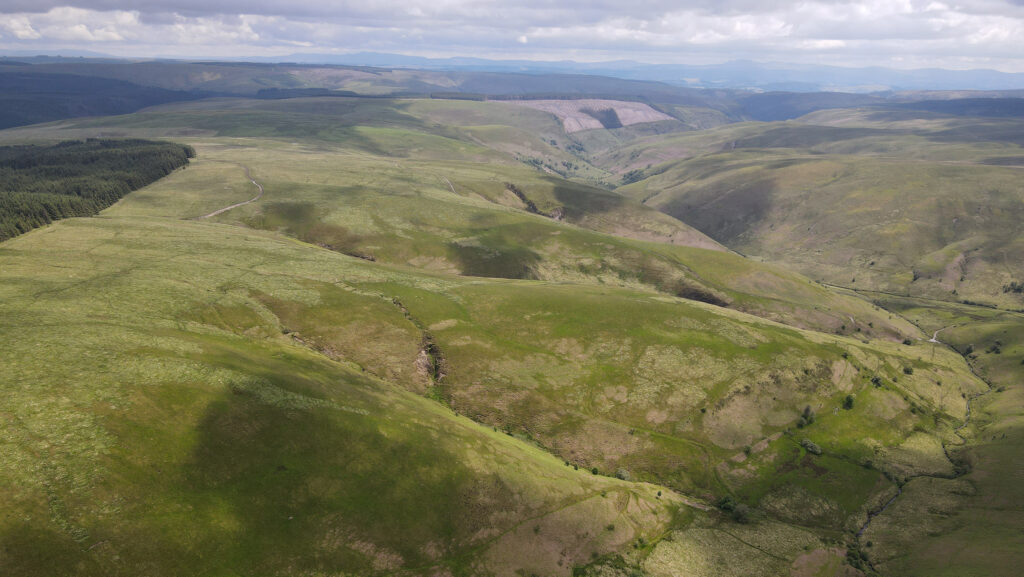
 A Welsh nature charity is aiming to rewild over 483ha in the uplands of Ceredigion, having successfully purchased the site in Cwm Doethïe, in the Cambrian Mountains.
Tir Natur has raised more than 50% of the £2.2m purchase costs, and a philanthropic bridging loan has enabled it to purchase the site, securing it while further fundraising is in progress.
The charity said the project aims to establish Wales’s largest rewilding site and, over the next five to 10 years, hopes it will contribute to increased biodiversity, cleaner water, healthier soils, improved carbon storage, and reduced flood risk for downstream farmland.
See also: Natural resources in Wales remain in crisis, report warns
These outcomes, the charity said, would be supported through measures such as peatland rewetting and natural water retention.
Tir Natur chair, Tasha Reilly, said: “This is about more than restoring one place.
“This project is part of the urgent response needed to restore nature in Wales.”
‘Well-suited for rewilding’
It is understood that the land has been assessed as having poor grazing value and is unsuitable for commercial forestry due to its location within the Mynydd Mallaen/Cwm Doethïe site of special scientific interest (SSSI).
The charity said this makes it well-suited to rewilding without displacing productive farming.
The vendors will continue to live in their farmhouse and farm adjacent productive land.
“At a time when nature loss and climate impacts are accelerating, this site will demonstrate what’s possible when we allow nature to take the lead and work for people again,” added Ms Reilly.
Livestock for nature restoration
To achieve their nature restoration goals, the charity plans to use cattle to help tackle Molinia and bracken, ponies to graze areas cattle can’t reach and later ancient breeds of pigs to provide ground disturbance.
While exact numbers are not yet set, the aim is to restore the land while supporting a working rural landscape and contributing to Wales’s 30% for nature target (30by30), without taking land out of production.
However, stocking densities are said to start low, aiming for around 0.03 livestock unit/ha, and will be adjusted as the land responds, the charity said.
Industry response
Farmers’ Union of Wales president Ian Rickman said the union fundamentally remains opposed to rewilding.
“We have concerns about the scale and transparency of this project,” he said.
“While it is positive that the role of livestock has been acknowledged, questions remain over how such a large area of land will be managed and funded in practice, and what this means for food production and the wider rural economy in the long term,” added Mr Rickman.
The Game and Wildlife Conservation Trust (GWCT) added that nature reserves play a part, but will not be enough to reverse national biodiversity decline in the UK.
GWCT Wales director Lee Oliver said: “Government targets on nature recovery will only be met by providing the right advice and financial support to farmers, who manage 90% of the land in Wales, to help them transition to a more biodiverse way of farming.
“We need to produce food in our country, both for our own security and to avoid importing environmental problems from abroad.”
Explore more / Transition
During the series we follow our group of 16 Transition Farmers through the challenges and opportunities as they seek to improve their farm businesses.
Transition is an independent editorial initiative supported by our UK-wide network of partners, who have made it possible to bring you this series.
Visit the Transition content hub to find out more.
