

Farmers warned against trading surplus bluetongue vaccines
 © Oli Lees
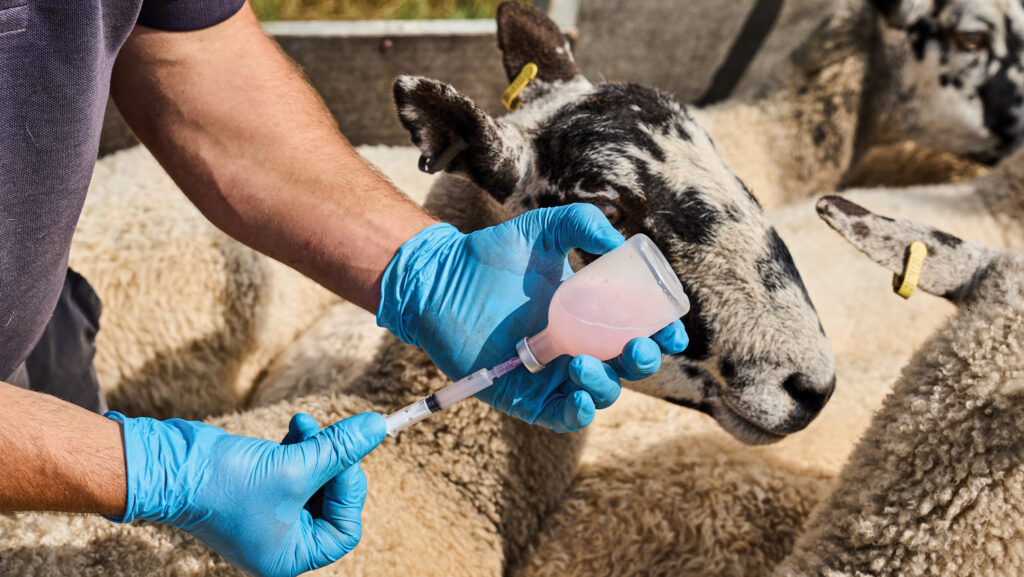
 Livestock farmers have been warned against trading leftover bluetongue vaccines, following reports of illegal sales and exchanges on social media.
The Veterinary Medicines Directorate (VMD) said vaccines obtained outside authorised supply chains could pose animal health risks due to potentially incorrect storage, handling or transportation.
See also: Sheep farmers signal strong BTV-3 vaccine demand for 2027
Bluetongue serotype 3 (BTV-3) vaccines are prescription-only medicines and cannot legally be transferred between livestock keepers, even where the recipient has a veterinary prescription.
Farmers should obtain vaccines through their vet or an authorised online retailer, the VMD said.
Splitting vaccine bottles
Vets can split vaccine bottles between holdings, provided storage requirements are met and doses are administered within 10 hours of opening.
Prescribed quantities can also be decanted for farmers to administer, subject to appropriate labelling, instructions and record-keeping.
However, the regulator urged caution over biosecurity risks, particularly as BTV-3 is blood-borne, and warned that opening or decanting vaccines could affect their effectiveness.
Unused vaccines should be returned to veterinary practices for safe disposal.
Suspected illegal sales can be reported anonymously through the VMD’s online reporting service or by calling 01932 338338.
Cases rising
The warning comes as confirmed bluetongue cases in Great Britain reached 3,338 during the 2026-27 season.
Latest Defra figures, published on Monday (12 October), show 2,812 cases in England, 478 in Wales and 48 in Scotland, with another 513 suspected cases under investigation.
This compares with 348 confirmed cases throughout 2025-26, 163 in 2024-25 and 126 in 2023-24.
A Defra spokesman said: “This is an incredibly difficult time for animal keepers who are on the frontline of this disease, and we are grateful for their ongoing co-operation.”
Reporting fatigue
National Sheep Association chief executive Phil Stocker warned that reporting fatigue could mean official figures underestimated infections, while laboratory testing backlogs were still being cleared.
“Reporting to vets might not have been reflected in the numbers, which is not good, as it ends up not having true figures on what’s going on the ground,” he said.
Mr Stocker also expressed concern about declining vaccination activity ahead of next year’s midge season.
“The vaccination volumes have passed their peak and dropped off. That suggests it’s falling off people’s agenda,” he said.
“Predictions are that this could be equally bad next year.”
Mr Stocker added that cooler weather will slow the virus and the midges that spread it, but bluetongue is still circulating.
“Please keep reporting. Talk to your vet, and if you don’t have a close relationship with your vet, call Apha.”