

Food price cap could push produce off shelves, NFUS warns
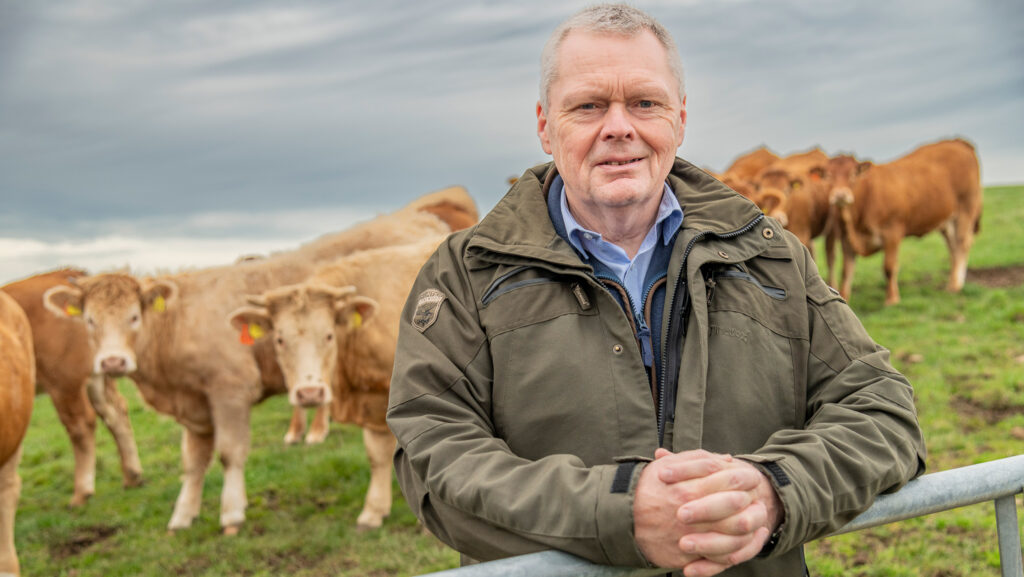 Andrew Connon © NFU Scotland
A price cap on staple foods risks displacing Scottish produce from supermarket shelves in favour of cheaper imports, NFU Scotland has warned, as new ShelfWatch figures show domestic sourcing holding firm.
The SNP proposal, pledged in its election campaign, would limit what large supermarkets can charge for essentials such as bread, milk and eggs, to help poorer households.
Retailers would still be able to sell higher-cost goods alongside the capped lines. The Scottish government launched a consultation on draft legislation, which runs until 24 November.
See also: NFUS ShelfWatch: Scottish produce gains supermarket ground
NFU Scotland’s latest ShelfWatch audit (PDF) reviewed more than 20,000 own-label products across 73 stores. It found 26% were Scottish, up from 19% at the same point last year, rising to 89% when British products are included.
Every retailer improved its Scottish sourcing. Aldi leads on 68%, followed by Lidl on 51%, Co-op and M&S at around 30%, and Tesco on 23%. Chicken, soft fruit, vegetables and fresh pork all rose.
Own-label products
The report focuses on the mid-year 2026 audit, which reviewed more than 20,000 own-label products across 73 stores. However, changes in methodology mean the year-on-year figures indicate a trend only.
NFU Scotland president Andrew Connon said: “The latest ShelfWatch figures show that domestic sourcing is holding up, with some really positive examples of retailers increasing their support for Scottish farmers and crofters.”
He warned: “But this progress cannot be taken for granted. Proposed food price caps could create additional commercial pressure on retailers, making cheaper imported food more attractive and potentially displacing Scottish produce from our own supermarket shelves.”
The union points out that the Scottish government’s own consultation recognises this risk of extra commercial pressure on retailers.
The consultation paper also accepts that a cap could see costs borne elsewhere in the supply chain. Food and Drink Federation Scotland has urged ministers to drop the plans.
Government commitment
Launching the consultation, business minister Tom Arthur said the Scottish government was committed to action in food affordability that “works with retailers and protects farmers and food processors”.
Mr Connon said: “Any pressure created at the retail end of the supply chain risks being passed back through processors and suppliers to the primary producer.”
He added that efforts to improve food affordability “must not come at the expense of the farmers and crofters producing that food”.
The union also wants clearer country-of-origin labelling and more transparency in the food service and out-of-home sectors, where there is far less information on where food comes from.
Resilience will be a key theme at its autumn conference, which takes place at Ingliston, near Edinburgh, on Thursday (29 October).