

Miliband under fire over surge in farmland solar approvals
 © Tim Scrivener
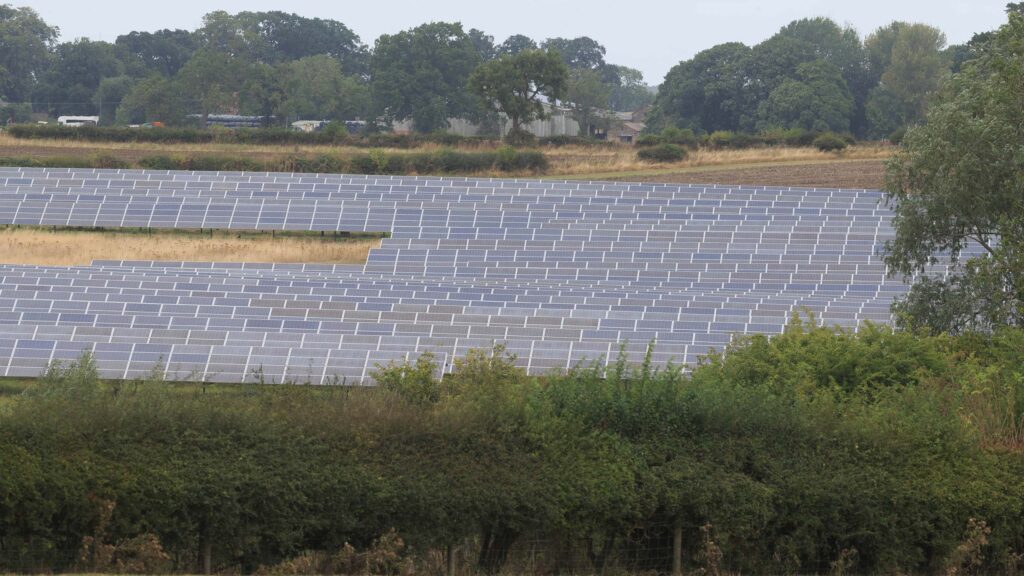
 Energy secretary Ed Miliband is facing a mounting political and rural backlash after approving a wave of large-scale solar projects that critics say will swallow productive farmland and industrialise the countryside.
Under the latest Contracts for Difference (CfD) auction, ministers have backed 134 solar farms in England and a further 23 in Wales and Scotland, mainly on hillsides, alongside 28 onshore wind schemes.
The solar schemes deliver a record 4.9GW of capacity and form part of a wider 14.7GW renewables package – enough, the government says, to meet the electricity needs of about 16m homes.
See also: Record 157 solar farms approved amid food security fears
Campaigners estimate the developments could run to thousands of hectares of mainly agricultural land, with some suggesting the total area could approach the size of a major city.
Among the most controversial schemes is the West Burton solar farm on prime Lincolnshire-Nottinghamshire farmland.
Oxford decision pending
Meanwhile, a decision is pending on the 840MW Botley West project near Oxford – one of Europe’s largest proposed solar farms – which would cover more than 800ha, much of it on the Blenheim Estate.
Planning inspectors have submitted their report, and Mr Miliband is expected to rule within months.
The approvals have intensified scrutiny of the government’s wider energy strategy, particularly following a heated Commons committee exchange this week in which Conservative MP Bradley Thomas pressed Mr Miliband to publish details of a 2025 renewables co-operation deal with China.
The energy secretary rejected suggestions of secrecy, saying the government was following established precedent.
Shadow energy secretary Claire Coutinho has accused ministers of over-reliance on Chinese supply chains for solar panels and grid equipment, warning of risks to energy security.
‘Wasted space’
The Campaign to Protect Rural England (CPRE) said it supports renewable energy but argues that rooftops, car parks and brownfield land should be prioritised.
It cites research suggesting there is sufficient “wasted space” to meet national solar targets without extensive use of productive farmland.
Rosie Pearson, who chairs the Community Planning Alliance, said: “This represents further destruction of countryside and best farmland while warehouse roofs, car parks and houses sit empty of solar panels.
“Add that to the pylons that accompany the solar farms and rural areas are being industrialised.
“We see once again that food security, nature and landscapes do not matter to Miliband.”
Government defends plans
But a Department for Energy Security and Net Zero spokesman said the projects would help strengthen the UK’s energy independence and, alongside wider clean power measures, contribute to lower household bills over time.
The government has also confirmed that, from April 2026, average household energy bills are expected to be reduced by about £150 a year under budget measures that cut certain levies from consumer electricity costs.