

NFU presidential rivals lay out key priorities
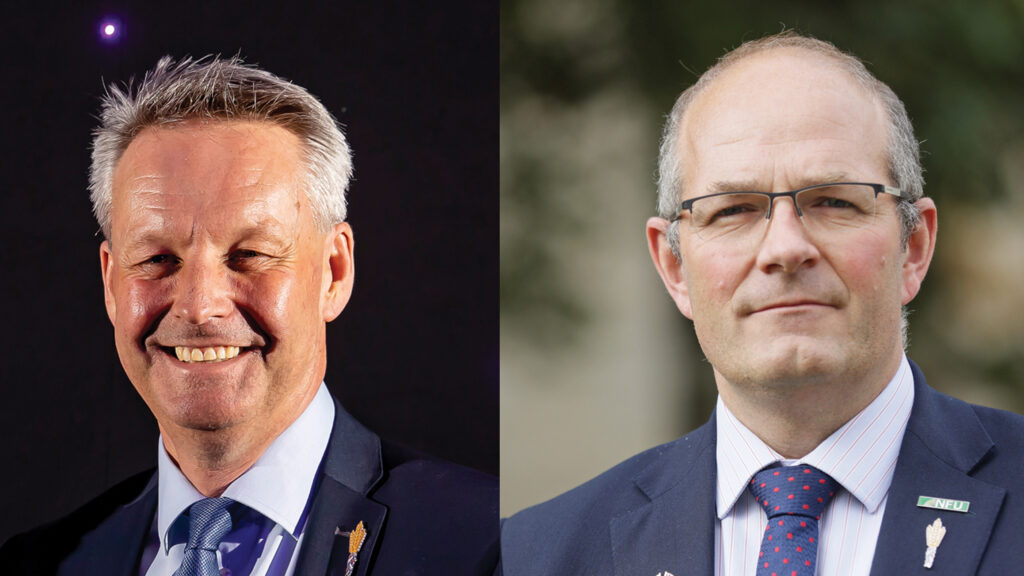 David Exwood and Tom Bradshaw © NFU
 NFU president Tom Bradshaw and deputy president David Exwood have set out their competing visions for the union’s future, ahead of a vote at the close of the annual NFU Conference on 25 February.
At a virtual hustings that was dogged by technical issues on Thursday 22 January, the candidates outlined their election agendas and then faced questions from NFU farmer-members.
Mr Bradshaw, who is seeking a second term as president, argued that to secure long-term stability and profitability the union must build on hard-won relationships in Westminster – noting the government’s recent climbdown on the proposed farm inheritance tax (IHT) threshold.
See also: Exwood challenges Bradshaw for NFU president
Mr Exwood, who is standing again for deputy president while also challenging for the top job, made the case for a sharper reset focused on food production, farmer confidence and reconnecting the NFU with its grassroots members.
Mr Bradshaw, a fourth-generation arable farmer based at Fordham, Essex, told members it had been “a great honour” to lead the organisation through “an incredibly challenging and highly pressurised period”.
He stressed that recent changes to farm IHT showed “what can be achieved when we work as one NFU”.
He said that, if re-elected, his next term would be built on three key priorities: working with Defra for an inclusive Sustainable Farming Incentive (SFI), trade deals that did not undercut British farmers, and placing food production at the heart of political decision-making.
Mr Bradshaw said it was “critical the SFI supports sustainable farming for all types of land tenure and right across our varied geography and iconic landscapes”.
On trade, he warned against offshoring poor welfare and environmental standards, arguing: “To have thriving primary production, we need to embed our domestic standards within trade policy.”
He also highlighted falling production of staples and said ministers must act on their pledge that “food security is national security”.
Domestic food push
Mr Exwood, a mixed farmer based just south of Horsham, West Sussex, warned that while British farmers were “some of the best in the world”, they were “getting left behind”.
He argued that rising costs, global competition and shrinking support budgets demanded “a complete reset on UK food production”, with 2026 as “the starting point”.
Central to Mr Exwood’s pitch was a push to increase domestic output, with sector-by-sector targets and a bigger Environmental Land Management (ELM) budget.
“The money available to farmers through ELM has halved in three years,” he said, calling for SFI 2026 funding to rise to “£1.5bn per year, with actions that work for all farms”.
He pledged to push back against policies that “take too much land out of production”, adding: “We need a clear ambition of land sharing, not sparing.”
Mr Exwood also focused on rebuilding engagement with members and reinforcing the union’s culture.
He said the NFU must be “seen as the voice of all farming”, with a stronger regional offer, more face-to-face engagement and a more personal social media presence. “My style is to build bridges and collaborate,” he said.
Member questions
Both candidates were pressed on milk prices, farm safety and member engagement.
Mr Exwood said the worsening industry safety record was “an absolute tragedy” and argued the NFU must “lead by example and make sure we have farm safety everywhere in everything we do”.
Mr Bradshaw agreed the issue was unacceptable, saying council must decide “what is it that the NFU is going to do in the health and safety field”.
On milk prices, Mr Exwood pointed to the need for better market regulation and processing capacity, while Mr Bradshaw described the situation as “brutal”, driven by supply and demand, and called for stronger protections around dairy contracts.
Other candidates
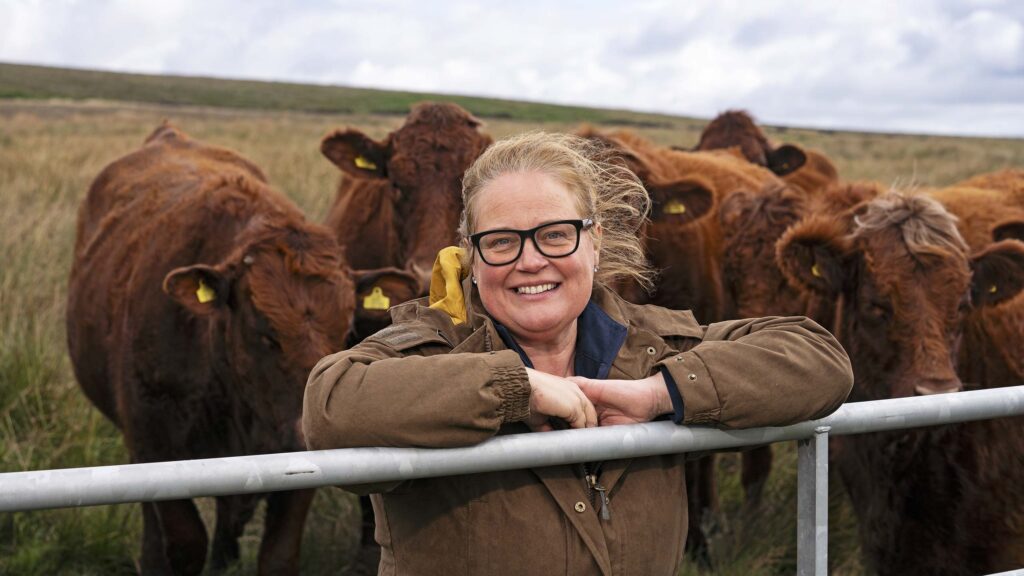
Rachel Hallos © NFU
Alongside the presidential contest, vice-president Rachel Hallos is standing for deputy and for re-election as vice-president, while dairy farmer Paul Tompkins and Isle of Wight county chairman Robyn Munt are standing for both deputy and vice-president.
Wiltshire mixed farmer Mark Jeffery is standing for the vice-president role only.