

Opinion: We should learn from history on food security
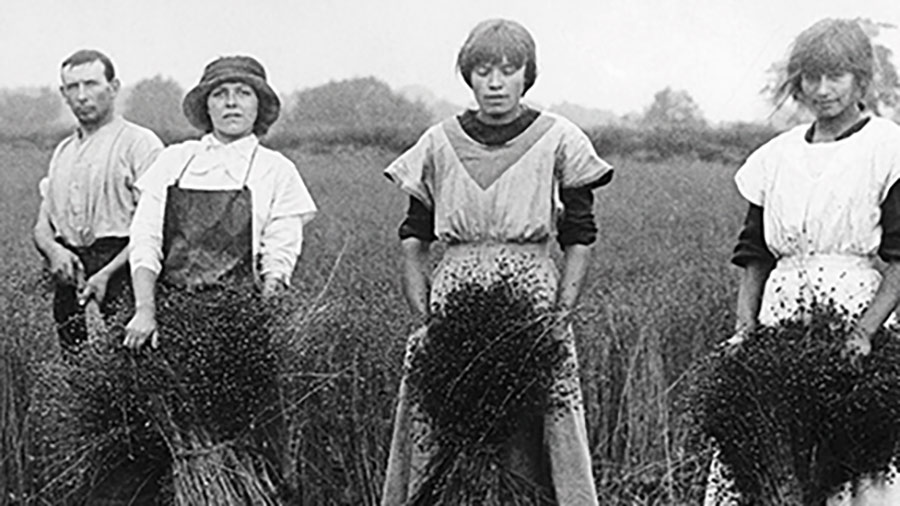 © Imperial War Museum
 It is now beyond doubt that the government is set to encourage imports of cheap food into Britain virtually free of tariffs or standards of production.
This, the argument goes, will make other trade deals easier and control the cost of living.
We have been here before and in the long term it is doomed to failure. May I remind any politicians and/or policymakers of the lessons of history.
See also: Farming’s role in the First World War
About the author

Back in 1846, the Corn Laws were repealed. These laws, which imposed tariffs on grain imports, were passed in 1815 to protect farmers’ livelihoods.
But the industrial revolution had progressed and urban employers persuaded the government to abolish this protection to cut the cost of living.
Farm profitability declined over the next 20 years until it took a dive in the 1870s when grain started arriving from America after railroads had been built from the Midwest to the ports.
Farm bankruptcies and land abandonment followed, with farm wages at starvation levels. Against this background, in 1914, the First World War broke out.
A few of us tried to promote the concept that it was possible to produce food and look after the environment at the same time. But Defra… was governed by people whose understanding of farming was urban, not rural.
Emergency measures were taken to increase food production to avoid the nation being starved into submission, and grain ships continued to cross the Atlantic despite attacks by early German U boats. But it was a close-run thing.
After the First World War, complacency set in. The government decided to revert to relying on imports from the empire and elsewhere, and UK farming was neglected.
Profits disappeared, farmworkers’ wages were cut and more farmers went bust.
Through the 1930s it became clear that Hitler was spoiling for another fight and the government realised it had to rebuild food production.
Several marketing boards were established and when the Second World War broke out in 1939, food shortages forced up market prices and farmers were back in profit.
After the war, some politicians, having learned their lesson, decided, in 1947, to create a policy that would provide stability for farmers and cheap food for consumers.
The country was only 30% self-sufficient in food so had to continue to import. But deficiency payments were introduced to make up the difference between imports and farmers’ production costs.
That system continued, albeit reducing, until we joined the European Economic Community in 1973.
Profitability that had been declining recovered under the European system and farmers were able to reinvest and produce more – perhaps too much.
By the mid-1990s, Britain was almost 80% self-sufficient in food that could be produced in our climate.
But the government and the EU overreacted. They introduced set-aside to cut production, and that legacy remains. Today Britain is 60% self-sufficient.
A few of us tried to promote the concept that it was possible to produce food and look after the environment at the same time.
But Defra, which had replaced the Ministry of Agriculture, was governed by people whose understanding of farming was urban, not rural, and they took food production for granted.
Do you see a repeating pattern? And do you agree that, if we are to import more and more food, something like the deficiency payment scheme of 1947 is needed?
Environmental payments alone certainly won’t maintain food production or the healthy countryside our citizens say they want.