

Editor’s View: Burnham’s big deal needs hard sums
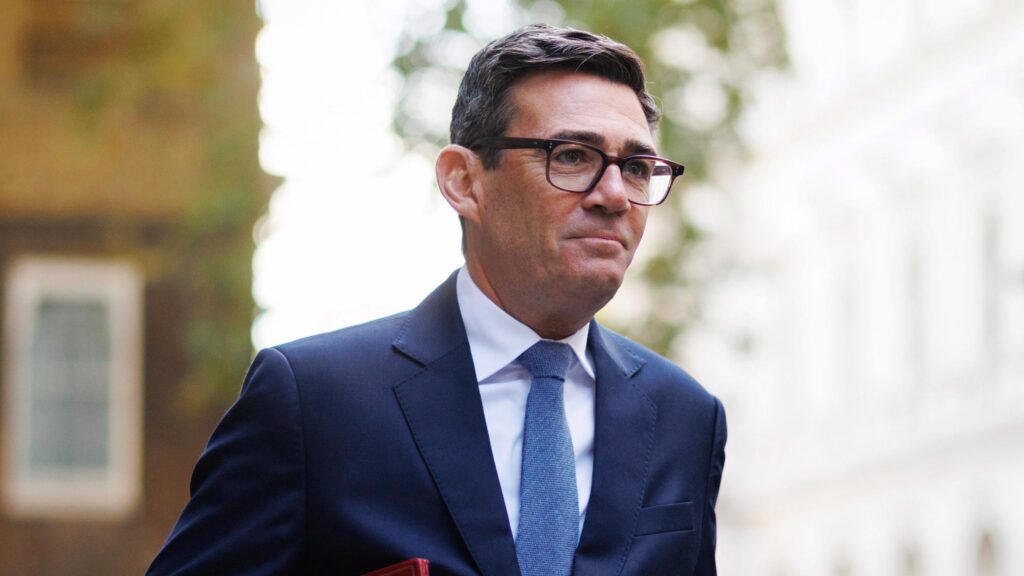 Andy Burnham © Simon Dawson/No 10 Downing Street
 What do Donald Trump, Boris Johnson and Andy Burnham have in common? More than Burnham would probably like to admit.
All three are instinctive politicians, drawn to grand gestures and inclined to speak first and check the facts later.
Those instincts can often be a political gift.
Responding in real time and on camera to plans to impose Tier 3 restrictions on Greater Manchester during the pandemic, Burnham showed the empathy and charisma that earned him his “King of the North” title. He understood the mood and met the moment.
But shooting from the hip also carries the risk of shooting yourself in the foot.
The prime minister demonstrated that this week when he told MPs the NFU was “very strongly in support” of a UK-EU sanitary and phytosanitary (SPS) deal, only to have to correct himself later.
The union is actually, he clarified, neutral pending the terms.
There are good reasons to welcome an SPS deal of this nature. But making food easier to trade doesn’t automatically make British farming more profitable.
It’s true that removing costly certification and border delays should create opportunities for exporters.
The government itself estimates the agreement will be worth £5bn a year to the UK economy, but it’s not at all clear how much of that cash will reach the farmgate.
Savings on paperwork could support better producer prices, or could be used to lower consumer prices. Or perhaps most likely, build stronger margins elsewhere in the chain.
The obligations, meanwhile, will most certainly reach into the field.
Even a farmer supplying only British customers could face changes to crop protection or production requirements, without directly receiving an exporter’s savings.
Andersons’ analysis for CropLife UK illustrates the stakes.
Its worst-case scenario of immediate retrospective alignment on crop protection decisions estimates a £500m-£810m reduction in farming income in the first year.
Unfortunately, the prime minister had not even seen the report when asked to comment on it on Monday.
Other warnings to MPs this week about farmers being pushed away from food production underline the urgency of getting this deal right, because better access to the EU market isn’t worth much if British producers lack the investment or tools to supply it competitively.
And that’s why any new trade policy needs a coherent, properly funded farming counterpart.
English farmers who lost out in last month’s fastest-finger-first scramble for the SFI cannot pay their bills with promises of smoother exports while competing against subsidised producers.
There may, of course, still be tangible prizes on offer from the SPS deal for farmers, including reopening EU markets to British seed potatoes and easing trade in breeding animals.
But before the champagne corks start popping in Marsham Street, Defra should publish a sector-by-sector assessment of producer benefits and adjustment costs.
Looking at trade flows alone won’t tell us whether farmers are better off – and the prime minister needs to know that before declaring victory.
His instincts helped make him King of the North in 2020.
Now he’s in Number 10, he needs to match them with a command of the detail – or risk becoming the Jester of Westminster.