

Editor’s View: Farming’s task must be to take back control
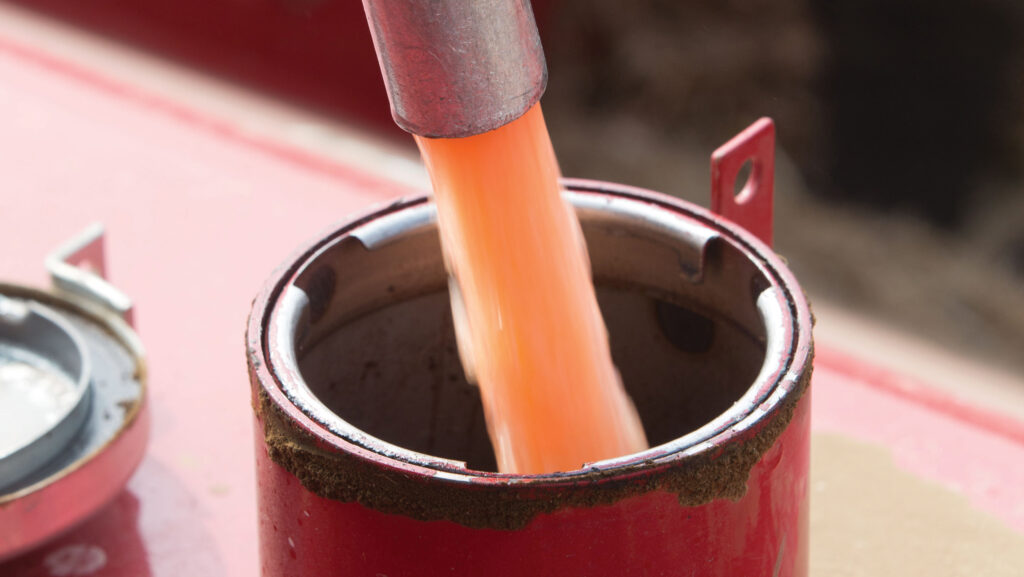 Red diesel © Tim Scrivener
 Another week, another threat to UK food security as we wait on US president Donald Trump to decide whether to ban the export of diesel in a bid to massage domestic fuel prices downwards.
Experts say the move would have a significant impact on the UK as, unlike for petrol, we lack sufficient domestic refining capacity for the vital fuel, and therefore import significant quantities from the US – the world’s largest diesel refiner and exporter.
It would come on top of a global diesel market that is already missing around 1.5m of the 8m barrels a day that made up the seaborne diesel market before the Iran conflict started, according to investment bank Morgan Stanley.
See also: Red diesel price volatility hits autumn fieldwork
About the author

So clearly, if it happens, prices are going to move sharply higher, and well into uncharted territory.
That’s obviously going to hit farmers in the pocket directly by making on-farm machinery more costly to move.
But also in all the myriad ways that fuel reaches into the ordinary running of a business, such as by driving up the cost of deliveries.
As with many things that are Trump-related, no one seems at all sure whether he will do it or not, but there are fortunately some negative economic trade-offs that are giving him pause for thought.
Mind you, if he was influenced by those, perhaps he’d never have started the military conflict in the first place.
So that’s another one for the list of things that are of concern but totally out of our hands – notwithstanding the steady transition of some vehicles and other bits of kit to alternative energy sources.
And this is a long list in farming – when the size of our profit margin can be dictated by the whim of a politician, drone warfare in Ukraine or a storm in a prairie on the other side of the world.
None of this can be ignored, but it feels important to always look at it alongside what can be controlled within your business, a topic that columnist Amy Hughes also offers a fresh perspective on this week.
That’s why it was so gratifying to see this year’s Farmer of the Year, James Chapman, recognised in part for building strong business links with nearby farmers, as well as the local community.
Graham Parks, our Beef Farmer of the Year, won praise for his energetic focus on good grassland management and cost control.
And Mixed Farmer of the Year Stephen Matthews-Jones has driven down electricity costs by a third after installing solar panels on the roof of his poultry shed.
An era of uncertainty is rewarding farmers such as these, and many others like them who are taking more control of their businesses.
As farmers in England continue to reflect on the fallout from the Sustainable Farming Incentive debacle, that is surely where the focus will be for those with the ability and resources to adapt.
This week also sees us reveal plans for a new event, Farmers Weekly Live, that will take place at Stoneleigh in July 2027.
Whatever upheavals take place between now and then, there is no doubt that a focus on positive self-reliance will still be highly relevant – even if we can’t escape the long shadow of Trump completely.