

Editor’s View: Maddening Trump tips UK farmers into the red
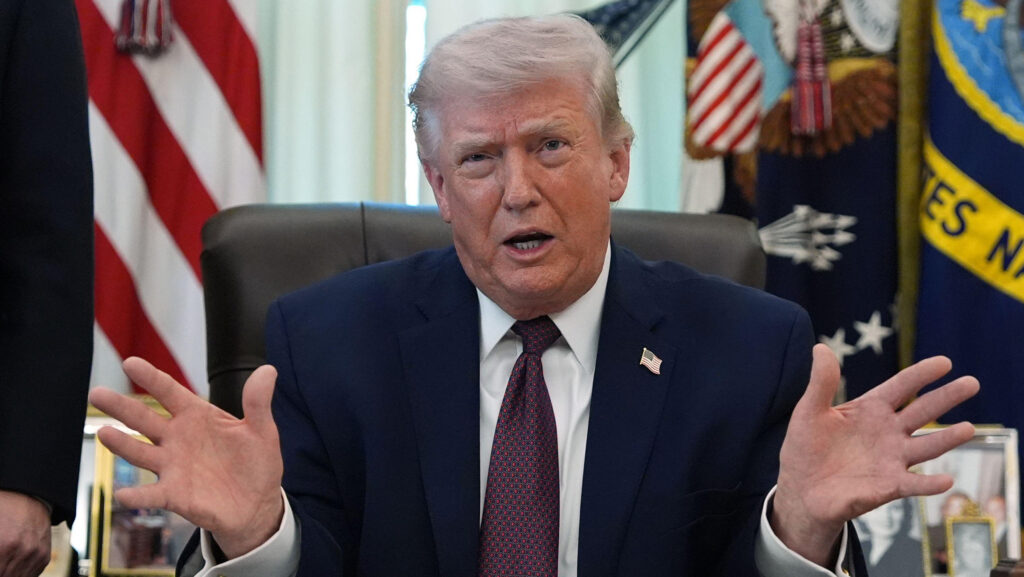 Donald Trump © Associated Press/Alamy Stock Photo
 Isn’t it maddening that US decisions that have been taken in the Oval Office, and those that are yet to be taken, will dictate whether a slice of UK farmers will make a profit or loss this year?
Some were staring at losses before the Iran conflict kicked off and some will of course still make a profit, but there is a good chunk in the middle who could now tip the wrong way.
In England alone, the industry will fork out an additional £337m for red diesel over the next 12 months in comparison to fuel prices sitting at their pre-Iran conflict levels – unless there is a swift end to the war.
See also: Fuel price hike to take heavy toll on farm incomes
About the author

That is more than 16 times what Defra will give to farmers in England as their final delinked area payment – capped at £600/holding.
And that is before we get to fertiliser and the other second- and third-order impacts that will add higher costs to other goods.
Moreover, the tariffs imposed by the US-UK trade deal had already contributed to a fall in food and drink exports to our former colony, with the drop in whisky exports contributing to an overall 8.6% decline in value terms.
The same deal led to the decision to let in tariff-free bioethanol, contributing to the mothballing of our domestic production plants.
Now, farmers are among taxpayers forking out £100m for Ensus to reopen for three months, without any guarantee that it will run on home-grown crops, simply to shore up supplies of vital CO2.
The president has a speech scheduled for the early hours of Thursday morning (UK time), after we go to press, for a major update on the conflict.
Most signs point to this being an announcement of a phased end to his country’s participation in hostilities, but there is still a possibility of further escalation given the presence of US troops in the area.
The price of oil will undoubtedly continue to move lower if it is the former.
However, it is unlikely to settle back at pre-war levels for some time, as a withdrawal leaves Iran even greater freedom to be a stubborn blockage in the arterial Strait of Hormuz, causing many economies significant pain.
Stubborn elevated costs lead to a rising likelihood that the Bank of England will look to constrain inflation by raising interest rates in the coming months.
The sharp jump in rates in 2021 (from historically low levels), to dampen post-Covid inflation saw UK agriculture reduce its total borrowing from around £12bn in 2021 to less than half that in the following four years.
That speaks to the profits that some businesses enjoyed in those years, but it is also indicative of the pain arising from the higher cost of servicing that debt – some of which has abated since rates started falling again in August 2024.
Were rates to start increasing once again, that would be yet another unwelcome cost even for the well-run businesses that farm advisers say make up a big chunk of our sector’s borrowing – especially when, prior to this, it looked so likely there would be one or two cuts this year.
At least we are leaner and meaner than in 2021…