

Editor’s View: Rapid response needed to beat back bluetongue
 © NSA
© NSA The news of a significant outbreak of bluetongue in sheep flocks in the South West – as well as sporadic cases in other parts of England including the North West – is a severe blow to those affected and a call to action for shepherds everywhere.
Here is the bad news: compared to last year’s outbreak, this one is seeing a higher proportion of sheep in each affected flock displaying clinical signs and the symptoms appear more severe.
See also: A day in the life: Managing 100,000t of grain at PX Farms
Here is the good news: there is plenty of vaccine available and there is still time for most of the sheep industry to act.
With a very short time now until the ram goes in, rapid decisions in consultation with your local vet will have to be taken as to whether to vaccinate stock to protect them before breeding.
Coming in at a reported £2.50 per animal, it is both a significant additional cost and another job, but very good value compared to suffering higher mortality and a significant drop in fertility.
Almost precisely this time last year, when the disease also reared its head, there was good uptake of the vaccine in pockets of the country – particularly East Anglia, where proximity to midges from Europe was at its highest. Incidence rates subsequently were low, with a high likelihood that sufficient animals were inoculated to inhibit the spread of the disease.
This year, the threat is not at its highest in those regions – as we have seen with the outbreak being centred on Exmoor. Instead, infected livestock have harboured the disease over winter and it is they who have infected midges here and set the spread into motion, making it difficult to forecast where outbreaks may occur next.
This is another reason why farmers in all parts of the country should consider speaking to their vet and make an informed decision about whether to invest in vaccinating.
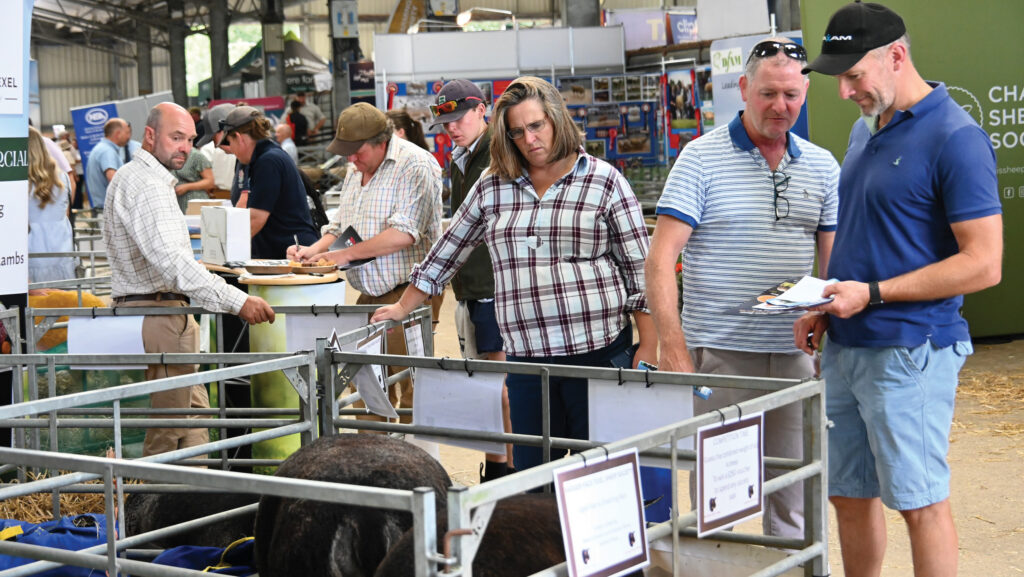
At the NSA Sheep Event in Malvern this week (28 July), industry experts noted that this disease is not a topic that has captured much farmer attention either this year or in previous years.
There are, of course, plenty of other things to contend with at this time of year when the risk is at its greatest – other vaccinations, breeding sales, supplementary feeding and the many other jobs that crowd in each day.
And outbreaks until now have at first glance been sporadic in nature and limited in impact. Yet there are also concerns that there has been significant under-reporting of incidences.
Some may have put signs such as increased abortions and stillbirths down to an alternative cause without a formal investigation while others may have been reluctant to go through the formalities that come with a notifiable disease.
This would be fine for something no more severe than the common cold. But this is a disease that killed around 55,000 sheep in the Netherlands in 2023 in a national flock of less than one million.
A concerted effort in the coming weeks – by farmers, vets, governments and all other stakeholders – to grip this issue would be a remarkable demonstration of what we are capable of.