

Editor’s View: The fightback against bluetongue is on
 © Oli Lees
 “Often licked, never beaten” read the sign on the ice cream van this week.
And what’s true for a humble Mr Whippy is true for our livestock sectors as well this year, amid searing heat and developing disease outbreaks.
So it is encouraging to see milk buyers responding to rapidly falling production this week by raising prices.
See also: Bluetongue: Is the UK’s strategy keeping pace?
About the author

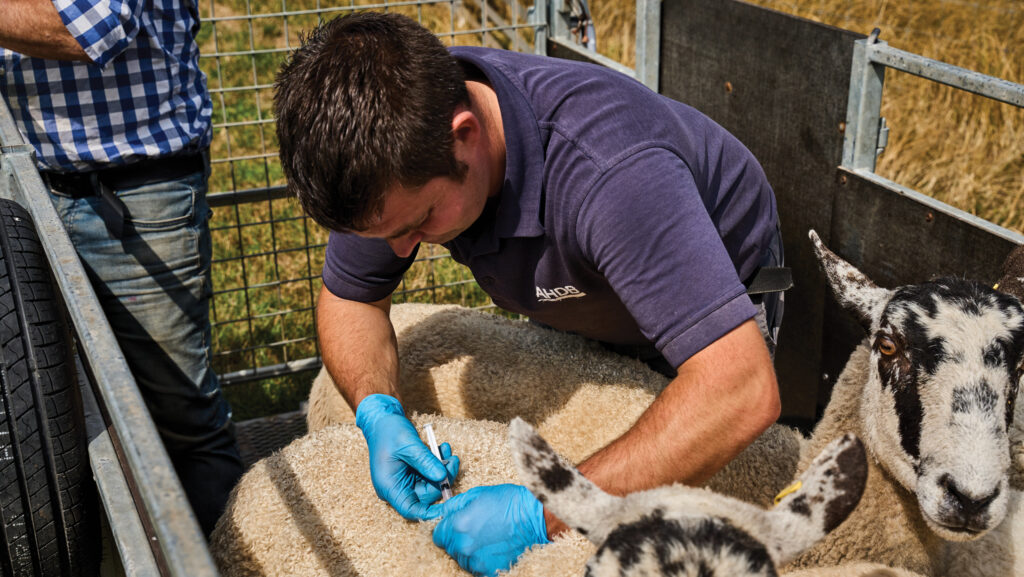
A corner turned there perhaps, but not yet with bluetongue, with a strident warning this week from the chief vets to ramp up efforts to vaccinate as many livestock as possible as well as maintaining vigilance for clinical signs.
At a press briefing on Wednesday (5 August), they warned that the peak of the disease is still likely in front of us as infected midges will continue to breed and disperse over an ever-wider area until cooler weather arrives in autumn.
We have plenty of information on the national picture, as well as the latest advice on what to look for at a farm level, in this week’s news and livestock sections.
One thing is for certain, we will not be returning to the geographical control zones that accompanied previous outbreaks as midges are already dispersed over too large a part of the country.
As well as the mass outbreak in the South West, there are officially confirmed cases in the North West, the Midlands and a single case in Yorkshire and Humber.
In Wales, there are just four cases confirmed but they are dispersed, with one in the Vale of Glamorgan, one on the Lleyn Peninsula and two in Powys.
Richard Irvine, the chief vet for Wales, could not have been clearer about the threat: “In Wales, we feel like we’re on the cusp of something that could be really bad – not just this year, but next year,” he said.
Yet there is cause for optimism. Farmers are answering the call to action, with a huge surge in vaccine uptake in the past 10 days.
Government and the trade are also working hard to speed up the authorisation of more supplies from the EU.
Christine Middlemiss, the chief veterinary officer for the UK, also sought to dispel concerns about the slow pace of testing, saying that the Pirbright Institute in Surrey, which is currently doing the testing for the whole of Britain, is not yet operating at full tilt.
Additional testing capacity is also being arranged at Scotland’s Moredun Research Institute, but that is not expected to come online until late summer or early autumn.
The final thing to consider for many sheep farmers at this time of year is the trade in breeding stock.
Those who are in an area with bluetongue circulating should be wary of bringing in naïve stock from a low risk area as they are at the highest risk of a bad outbreak.
Those in a lower risk area should be wary of bringing in untested animals from a higher risk area as they can be carrying the disease without displaying clinical signs – which could then lead to local midges picking it up and spreading it.
As we head into peak sale season, how all this will affect trade and demand will be something to watch.