

Editor’s View: What Wales gets right about farming politics
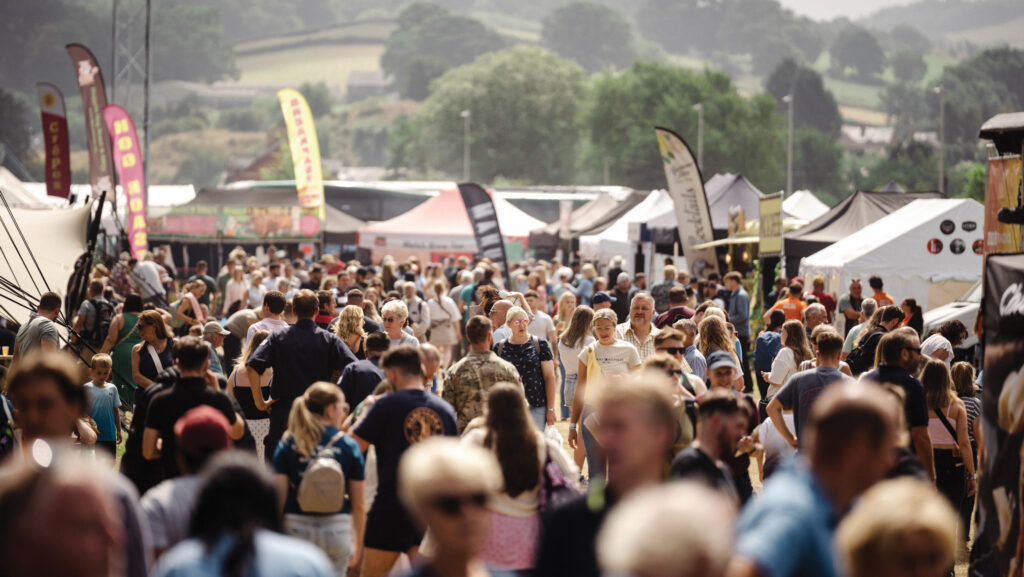 Crowds at Royal Welsh Show © Royal Welsh Agricultural Society
 “I am here where I would always be”.
Those words were among the opening remarks of Wales’s first minister, Rhun ap Iorwerth in a sauna-like tent at the NFU Cymru stand at the Royal Welsh Show on Monday (20 July).
He said them not because he is of farming stock himself, but because he’s from a nation where all political parties are obliged to pay much more heed to agricultural and rural affairs than their counterparts across the border.
See also: Gruffydd pledges partnership with farming industry
About the author

How many modern-day Westminster politicians would naturally be at countryside events unless they were compelled by their office?
You would have to go back to Jim Callaghan in the 1970s to find a genuinely rural English prime minister – he used to retreat to his Sussex farm while in office and later retired there.
Farmers in Wales, Scotland and Northern Ireland all benefit from being part of much more rural societies than their more metropolitan counterpart.
They and their politicians are much more comfortable than the English at talking about agriculture being an important part of the broader social fabric – and worth supporting on those terms as well as for direct food security.
It is no accident that Welsh farmers enjoyed their full rate of area payments until last year and it has been one of Plaid’s first actions to announce a multi-year funding for the Sustainable Farming Scheme.
I point this not because it is impossible or even undesirable for someone from a different background to lead a department with agriculture as part of its brief but because it’s underappreciated how much harder it is.
First, being from our world gives a politician a natural affinity for what the flashpoints with farmers may be – vital political currency that has to be earned on the job by others.
That helps avoid the crushing timidity displayed by those who are vividly aware how little they know.
And second, it allows that politician to more quickly lay down a challenge to both farmers and their own departments than they would otherwise have been able.
It was notable in other remarks how comfortable Mr ap Iorwerth was in telling farmers that some of the challenges that lie ahead for Welsh farming were not just political problems to solve – but that farming had to come up with solutions too.
The audience at Builth Wells on Monday seemed content to take this medicine.
One wonders if an English farming crowd will be as receptive to hearing home truths from new Defra secretary Angela Eagle, although her reputation for bluntness means she may well be up for administering it.
British Sugar has also been facing up to some tough realities this week by announcing the closure of its Cantley sugar factory following years of challenging trading conditions – and there may be more to come.
Wagon Wheel biscuit inventor Garry Weston, who saw off a pack of corporate raiders to grab the firm for ABF in 1990, would have been astonished to learn that a few decades later millions of people would be injecting themselves to suppress their appetite.
If you’re a farmer linked to a supply chain for snacks, I’d like to hear what your buyers are telling you.