

Opinion: Connectivity holds the key to technical excellence
 © Tim Scrivener
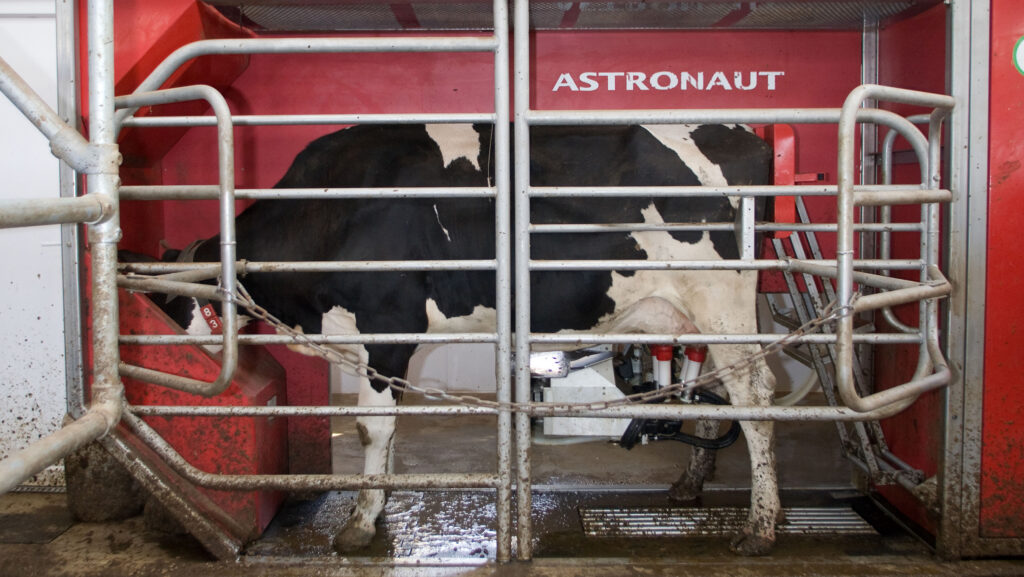
 Farming has always been an early adopter of technology that works. GPS guidance, variable rate application, automated milking – UK farmers have embraced these not out of novelty, but because the return on investment is clear.
The appetite for innovation is there. What isn’t there, on too many farms, is the infrastructure to support the next wave of it.
See also: Technology is nothing without a skilled workforce
About the author

Ruth Plant is a project manager at the National Robotarium, the UK’s centre for robotics and AI at Heriot-Watt University.
Here she explains why co-ordinated action is needed to achieve essential connectivity.
The conversation around farm technology has become almost entirely focused on the kit. The sensors, the drones, the autonomous machinery. Far less attention goes to whether the underlying infrastructure exists to run any of it reliably.
Private 5G connectivity is the enabling layer that most of that technology depends on; and it’s the piece that policy, government and the industry have consistently struggled to deliver.
NFU data from 2025 tells you what most farmers already know from experience. Only 22% of members have reliable mobile signal across their entire farm.
The UK government’s Shared Rural Network was due to deliver 95% 4G coverage by the end of last year. Yet, it’s still not complete.
For a farm trying to run GPS-guided machinery, pull live data from remote sensors, or monitor livestock across a large estate, patchy public network coverage isn’t an inconvenience; it’s a hard stop.
Dedicated network
Private 5G is different. It’s not an upgrade to your phone signal, but a dedicated network covering the farm itself, independent of whatever the public mast is doing.
The benefits are consistent bandwidth, low latency, and full operational control.
It supports remote livestock monitoring, precision soil sensing, drone coverage across large acreages, autonomous robotic systems, and the kind of real-time data that turns good instincts into better decisions.
In short, it’s the layer that makes connected farming actually function in the field, not just in a manufacturer’s brochure.
The problem is that private 5G infrastructure comes with a significant upfront cost.
The licensing landscape is complex. And the vast majority of farmers have no guidance on what their options are, let alone how to evaluate them for their specific land, operation, and budget.
That’s where the industry, government and regulators are currently letting farming down.
Shared investment
There is a straightforward model that could change this.
Farmers have always understood the economics of shared investment in expensive infrastructure. The same logic applies to connectivity.
A single private 5G node can cover a significant geographic area.
A cluster of neighbouring farms investing jointly – ideally with appropriate government support to make the economics work – could access infrastructure that none of them could afford individually.
The technology already exists. The co-operative model already exists. What’s missing is the framework to bring them together.
Three-point plan
That requires three things.
Government needs to treat rural farm connectivity as agricultural infrastructure investment, in the same category as drainage, roads, or electrification; not as a consumer broadband problem to be solved by the telecoms market.
Ofcom and network providers need to coordinate on a licensing framework that reflects how farming actually operates, including flexible access for deployments that move with the seasons and the work.
And a dedicated co-operative infrastructure fund should make it possible for groups of farms to invest jointly in shared private networks, rather than leaving each farm to navigate the cost and complexity alone.
Technology is no longer the barrier. The question is whether we’re willing to treat connectivity as the agricultural infrastructure it should be.