

Opinion: Diversification has changed – so must the way we think about it
 © GNP
© GNP Around three-quarters of farm businesses already have some form of diversified enterprise. The question is no longer whether to diversify, but what comes next.
For many, diversification is no longer about generating extra income. It is about building resilience for the next generation.
See also: Find all out diversification content in one place
Diversification needs to move beyond “tinkering at the edges” to become an integral part of business strategy.
About the author
 Sally Ormiston is a director of specialist rural land practice Rural Solutions.
Here she sets out why diversification needs a strategic approach
That does not mean every estate needs a wedding venue, every farm should open a café, or every redundant barn should become holiday accommodation. One of the biggest mistakes we see is starting with the idea rather than the business.
The best diversification projects rarely begin by asking “What can we build here?” They begin with a simpler question: “What are we actually trying to achieve?”
For some families, it is creating stable income that is not tied to agricultural markets. Others want to provide opportunities for the next generation to stay involved.
Some are motivated by restoring habitats, protecting heritage, or creating something that benefits the wider community.
Priorities
Being clear about priorities makes decision-making easier and avoids pursuing ideas that look attractive on paper, but never quite fit the place or the people behind it.
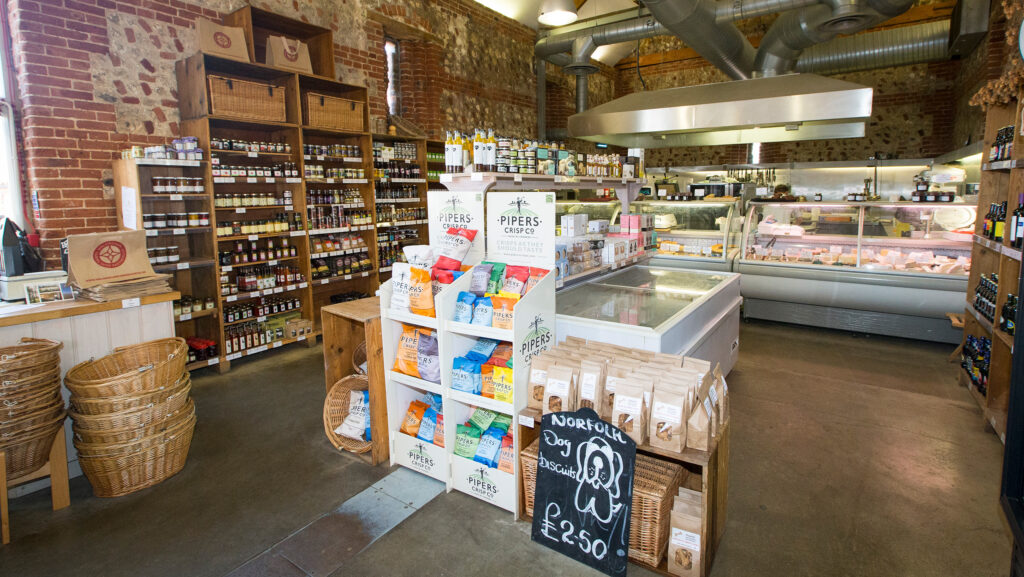
Farm shops, holiday cottages and campsites still have a place, but they are no longer the default answer.
Across the rural economy we are seeing demand emerge in areas from flexible workspace and specialist healthcare to renewable energy, environmental markets, education, leisure and creative industries.
Not every opportunity will suit every estate or farm, and that is exactly the point. Successful diversification is not about following the latest trend. It is about understanding genuine demand in your location and matching that with the strengths of your assets.
Planning policy, access, utilities, ecology, heritage and infrastructure all influence what can realistically be achieved.
Too often these questions are not considered until time, effort and money have been spent pursuing an idea without first testing its viability.
Testing the practical constraints early need not stifle ambition, but may give it a better chance of succeeding.
Sometimes it confirms an idea is viable; sometimes it reveals a stronger opportunity; occasionally, it reveals a “showstopper” that means going back to the drawing board.
All these outcomes are valuable because they allow informed decisions before significant time and money have been committed.
Strategy
Perhaps the biggest change in recent years is that diversification is no longer a single project but, for many rural businesses, it is an ongoing strategy.
Individual developments should support wider ambitions for the estate or business rather than exist as isolated ventures.
A renewable energy project might complement environmental objectives, while new workspace could strengthen local employment and create reliable income. Habitat creation can sit alongside commercial development rather than compete with it.
The strongest businesses are increasingly thinking about how these pieces work together over the long term.
It requires a broader conversation than planning permission alone: understanding the commercial opportunity, operational realities and long-term direction of the business before deciding what to build, restore or invest in.
Diversification has never offered more possibilities than it does today. But having more options also makes choosing the right one more difficult.
The projects that succeed are not necessarily the most ambitious or eye-catching; they are the ones that reflect the character of the place, respond to real market demand and are grounded in a realistic plan for delivery.
In an increasingly complex rural economy, that is what resilience looks like.