

Opinion: Free farrowing pigs can be the best commercial option
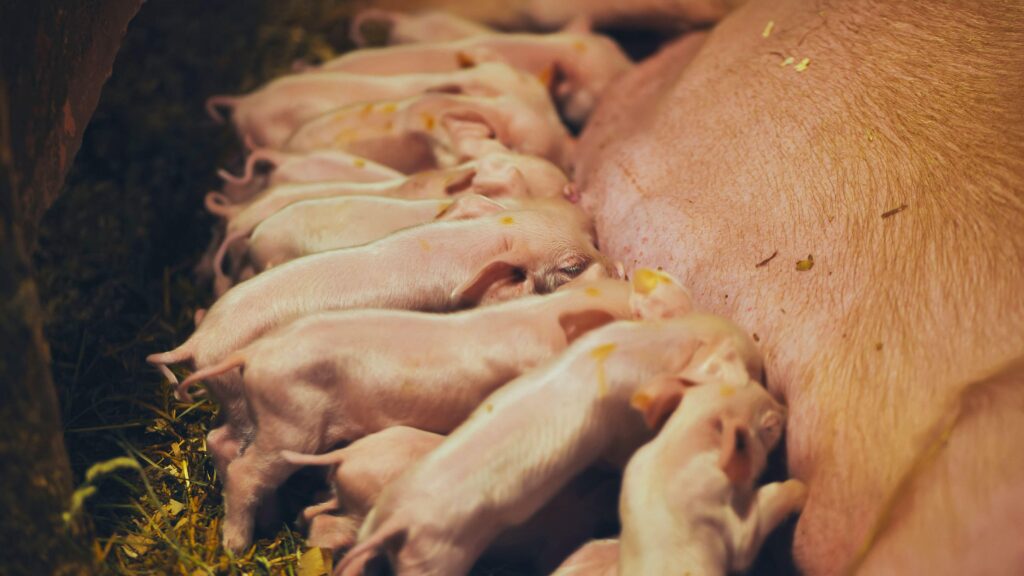 © Davidovich Mikhail/Alamy Stock Photo
 There is a lot of talk in the industry about “flexible farrowing” – systems that allow temporary confinement of pregnant and birthing sows – with those in favour seeing it as a positive welfare improvement.
But anything which allows confinement will never be the solution to truly improving the lives of farmed sows – and neither will it meet the demand of 85% of UK adults who say it’s important that farmed animals are cared for to higher welfare standards.
See also: What is the future for flexible farrowing systems?
About the author
 Phoebe Hartnett is a senior scientific and policy officer, developing welfare pig standards for RSPCA Assured members.
Here she sets out the case for a move to free farrowing systems.
Ultimately, flexible farrowing is simply tinkering around the edges of existing systems, which are deeply flawed when it comes to welfare.
While there might be a limit on the number of days a sow can be confined – and 10 has been suggested – the practice still restricts her ability to move, nest, and interact naturally with her litter at a crucial time.
Abnormal behaviour
This physical restriction causes severe physiological stress and leads to abnormal behaviours and health conditions.
The inability to move freely also exacerbates heat stress during lactation, a growing concern for animal health.
Sow confinement is often justified by the risk of piglet crushing, yet crates do not eliminate this, with piglets often trapped against bars, necessitating euthanasia.
Sadly, crushing happens in all systems, and pre-weaning mortality rates are remarkably similar between unconfined outdoor systems and confined indoor ones.
Research involving 70,000 litters shows that while increased crushing may occur in free farrowing systems, it is often offset by higher deaths from starvation and disease in crate systems.
This study concluded that litter size at birth was the main influence on piglet losses.
And while a 2026 University of Leeds study showed flexible farrowing crates increased piglet survival, the free farrowing pens used were sub-standard, undersized and with no straw.
Heavier piglets
Despite this, unconfined sows raised piglet litters 4kg heavier at weaning, with better maternal behaviour, lower stress, and fewer crushings later on. These findings suggest that modern, purpose-built free farrowing systems would have lower levels of crushings.
To successfully move away from the crate as a management crutch, the industry must focus on the “3Ps” (pen, people, pigs): better pen design, expert training for people, and breeding pigs for maternal traits.
The RSPCA has championed this shift for years, banning crates in its welfare standards for all members since 2014. This proves that piglets can be protected without compromising the sow’s dignity, health and wellbeing.
Commercial gain
Free farrowing is not just an ethical choice; it is a proven commercial one. Currently, 40% of UK sows already farrow outdoors in arcs, demonstrating that sows thrive when given the right environment.
By following the lead of countries like Sweden and Norway, the UK has a unique opportunity to become a world leader in pig welfare.
This shift is supported by consumer trends, with 62% of UK adults willing to pay more for higher-welfare British products.
Investing in genuine free farrowing systems is about future-proofing businesses and meeting a growing public mandate.
The evidence is clear: we do not have to choose between welfare and productivity. Transitioning to free farrowing respects the natural maternal instincts of sows while improving piglet survival through superior management.
Now is the time to lead with compassion and adopt systems that allow both sows and piglets to truly thrive.
With a significant outdoor herd and the support of RSPCA Assured, the UK has a unique opportunity to become a world leader for higher welfare pig farming if we work effectively together to invest in genuinely welfare-friendly, future-proof free farrowing systems.