

Opinion: Harvest festival prompts prayer for self-sufficiency
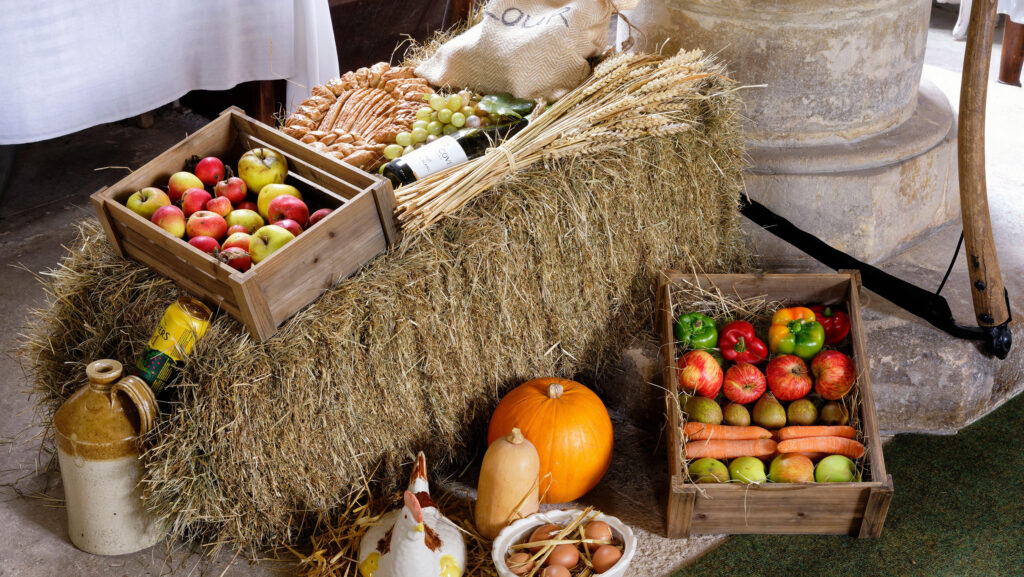 © Martin Fowler/Alamy Stock Photo
There were about 15 worshippers for harvest festival this year in our little church in Holbeach St Marks.
In the interests of full disclosure, I’ve included Neil, the organist, the vicar and the vicar’s wife in that number to make it sound more impressive.
See also: Opinion – I might as well throw the farm calculator in the bin
About the author

Our church only opens for festivals these days, but in a village not otherwise noted for its architectural merit, it’s an unexpectedly charming mid-Victorian building with a very attractive hemispherical roof.
I believe this is called the “apse” in case you ever need that for a crossword clue.
Almost half of the congregation were farmers with loud voices, so the refrain, the bit where we were asked to repeat “thanks” for this year’s harvest, was delivered with audible sarcasm.
Our rendition of “We Plough the Fields and Scatter” would not easily have been confused with a choir of angels. It was closer to the tuneless nuns in Sister Act before Whoopi Goldberg had done her bit.
After the sermon we tucked, irreverently, in to wine, hot dogs and chocolate cake around the font.
I’m not devoutly committed to the Christian faith. Our farm runs the length of the village behind the church and the school, so my participation is a duty to fan the embers of traditions that survive from the days when the village was a thriving, self-sufficient community.
My other big reason for attending is to make sure the Church of England cannot sell the building to a Cockney who would turn it into a house with uPVC windows.
Nonetheless, it felt meaningful to reflect on the farming year we have had. Even with the difficulties we have all faced, there is still enough to be thankful for.
It isn’t hard to imagine the pain of being a farmer in Ukraine or Russia. Attacks on both countries’ ports have reportedly left the 2025 crop backing up on farms, with insufficient storage for this season’s harvest.
Yields appear to have been good in both countries, but the inability to sell wheat outside the domestic market has reputedly pushed prices below $100 (£76) per tonne in some parts of Russia.
Many of these farmers are now wondering whether they can afford to drill a crop for the year ahead.
In Russia, soaring costs, falling demand and interest rates of 25% have sent about 30,000 Russian farmers bankrupt since the start of the war.
Will these land-locked surpluses eventually disrupt global markets or will falling production lead to longer-term shortages?
In the first column I wrote in this magazine, more than 20 years ago, I argued it wasn’t right to subsidise UK farmers just to maintain self-sufficiency when we had good trading relationships with our neighbours.
By instinct, I’m a trader not a fighter. I can’t believe how much the world has changed since then and my views have changed with them.
In the volatile world in which we live, it is insane for any country that can grow food not to ensure a base level of production and to ensure there is capability to store, process and distribute it around the country. It seems David Richardson was correct all along.
At this time of year, when Christians think about farming, I pray that our politicians will do the same.
When preparing for conflict, ensuring domestic resilience is just as necessary as buying weaponry.