

Opinion: Humans matter, as well as the environment
 © Adobe Stock
 I skim-read the brief article about a landscape recovery project, thought “that’s nice”, and moved on.
But something made me go back and read it again.
Various organisations, the “community” and some farmers were involved. The farmer featured was happy because he was going to carry on farming.
See also: Opinion – Green Party will try to end farming as we know it
About the author

All good so far. What stopped me in my tracks, though, was the statement that the scheme would “create 14 jobs”. Hold on. Fourteen jobs? Doing what?
I am under no illusion that government environmental schemes are intended to support farming in the sense of growing things and raising livestock for food.
They are instead a supplementary income stream that may incidentally enable the actual farming to continue by paying farmers to meet political targets for more trees, wildflowers, bogs and ponds.
Some delving on the internet revealed that this particular scheme followed a familiar pattern.
There is one major landholder and most of the farmers are its tenants.
Direct and indirect experience – what I’ve seen near my partner’s farm and what I’ve read in the farming press – do not reassure me that such landholders view environmental schemes as a way to support their tenant farmers; they are just as likely to see them as a way to remove tenants, either at one fell swoop or by a process of attrition.
Although there are soothing words about retaining livestock, the scheme in the article includes restrictions on stocking densities, which is no surprise to me.
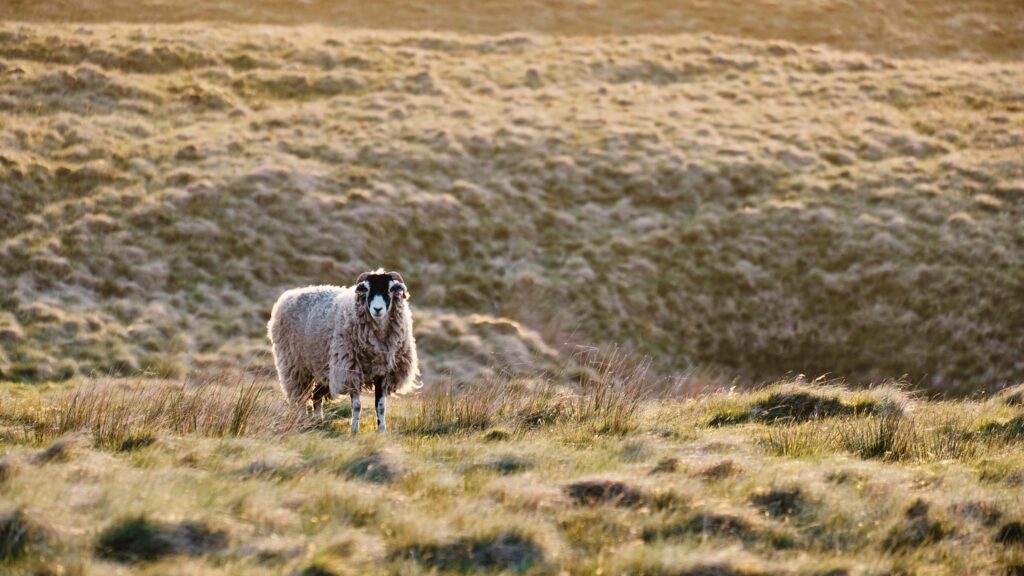
In the valley where my partner’s farm lies, environmental schemes have chipped away at livestock rearing until there are now very few sheep left in the area, so I think it is safe to assume that the 14 new jobs won’t be in agriculture.
I don’t think we should spend nothing to enhance the natural environment, but the human residents matter as well.
I don’t want a few farmers and token sheep who are there on sufferance.
I want to preserve the authentic, farming-based culture of areas like the Lake District. I’m not keen on paying for jobs that involve self-importance and lanyards, the specific purpose of which is to hinder productive work.
I also worry that with little control over whether the environmental targets are hit, and no control at all over the withdrawal of payments at short notice, tenants of farms included in environmental schemes are dangerously exposed to policy changes, no matter what assurances they are given now.
Perhaps farmers are considered, in the dismissive words of a banking chief executive about staff shortly to lose their jobs to artificial intelligence, “lower-value human capital”, their unsung and unglamorous work deemed less worthy of financial support than whatever the 14 new employees will be doing.
My guess is that some will be monitoring the numbers and spread of desirable flora and fauna.
“Berating” may be implicit in other job descriptions, as in “berating farmers for letting their sheep be in the wrong place”.
Other posts will lean heavily towards the current obsession with accessibility, community engagement and outreach, their purpose being to abduct unwilling urbanites and deposit them on windswept moors to seek “wellness” by connecting with nature.
Farmers and sheep may not be particularly welcome there, but everyone else will be.