

Opinion: Never mind recent purchases – things will get better
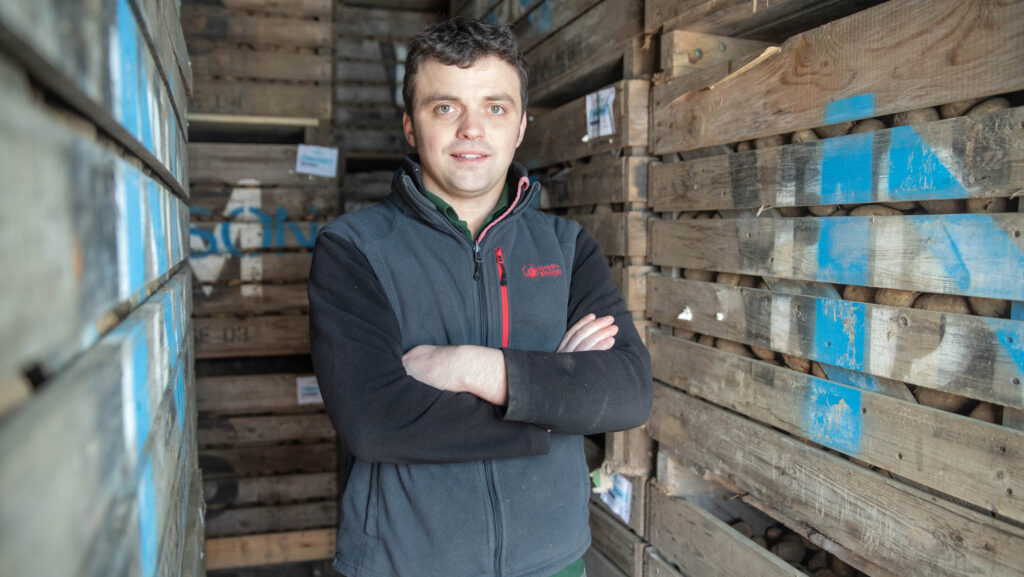 Mike Neaverson © Tim Scrivener
 Confident that this summer was destined to be wetter than a service station toilet seat, in the spring I ordered our first proper grain dryer.
Second-hand of course, and it would appear with some complimentary rat damage in the fuse box, but nonetheless a proper bona-fide diesel glugger.
Readers clearly have me to thank, therefore, for the extraordinarily easy combinable harvest.
See also: Opinion – don’t expect your sprayer to provide post-BPS answers
About the author

As it happened, our new-to-us machine arrived as agreed on the back of a lorry in mid July, just as we were on the home-straight of what my generation will remember as the maddest, earliest, easiest harvest of our lives.
It will set the benchmark, just like 1976 did for my grandfather. Up north you can guarantee having to use yours, but down here in the arid east, our ambition is never even to plug a dryer in.
For us, grain dryers are little more than an insurance policy against the occasional harvest where a depth sounder on your combine would be of more use than a yield monitor.
In a similar vein a few years ago at about this time of year, I looked at the long-range forecast and spent an amount of money that could buy quite a nice house in this part of the world on a self-propelled potato harvester.
For a fraction of the cost, you can buy a trailed harvester that gets towed behind a tractor. But a self-propelled has tracks and massive wheels and a holding tank that’s a bit like a combine. To the potato grower, they also happen to be extremely cool.
I couldn’t give a monkeys about fast cars, but show me a Dahlman roller bypass kit and I go all fizzy. Like a grain dryer, they are the potato grower’s insurance policy against a washout.
Fast forward to today, then, and I’m not ashamed to admit that the financial year containing the 2025 potato harvest will be an absolute stinker.
We had good quality and were fortunate enough to sell the vast majority of our crop at market values with only a few tractor loads of rubbish being sent to the anaerobic digester at the bitter end.
The problem being, though, that those market values were always about £100/t less than the cost of production. In other words we were losing £2,500 on every lorry load that left the farm.
We are a growing business with a commensurate cashflow requirement and I decided fairly early on that said self-propelled was going on the classifieds to plug a house-sized hole in my forecasts.
So here we are then, owner of both an unused grain dryer in a Mediterranean summer and a trailed potato harvester in what history would indicate might well be a challenging autumn.
But do you know what? I actually feel really pleased about it. I hope never to repeat the financial performance of the past 12 months, but with wheat now leaving the farm in decent quantities and veg prices heading north, I feel, cautiously, like things are turning a corner.
We have learned a lot, consolidated and got more efficient, spending more money on drainage and muck than we now do on depreciation in the accounts.
So onwards and upwards it is then to harvest 2027. Things can and will get better.