

Opinion: The age of volatility demands a new approach
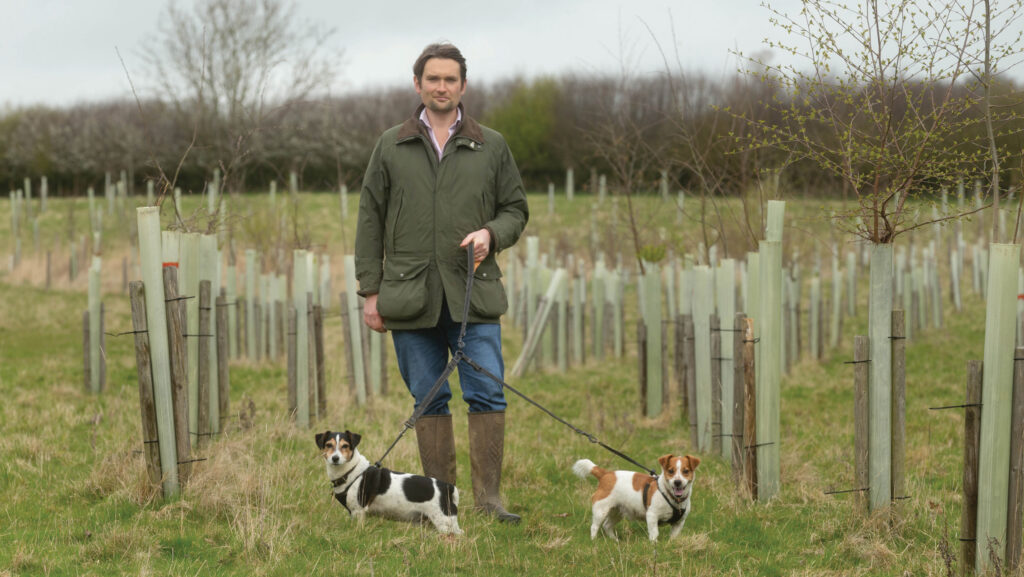 Joe Stanley © Tim Scrivener
 It’s been quite the half decade, hasn’t it? Covid-19, departing the European Union, the largest European war since 1945 and, now, a conflagration in the Middle East which threatens to destabilise the entire global economic order.
Throw in enough climate change to have given the UK its three worst harvests on record as national production of meat, fruit and vegetables all continue to decline, and you might think that the lights would be flashing red on a government dashboard somewhere keeping track of the resilience of the UK food system.
See also: Opinion – food and farming need ‘executive council’ of leaders
About the author

Alas, no such dashboard exists and – even if it did – it’s highly unlikely that anybody would be monitoring it.
Despite all the near-misses and sphincter-clenching episodes of the past five years, nobody in consecutive governments seems to have taken the time to have put two and two together and come up with the rather glaring conclusion that we might be a rich country but no, we are not guaranteed our next meal.
At this year’s NFU Conference, the keynote speaker – Professor Tim Lang – engaged the audience with his observations on the fragility of the UK food system, encapsulated in his belief that we need to move from a “just in time” to a “just in case” model.
Redundancy and resilience are essential in an uncertain world where even our closest allies can no longer be relied upon. Our food supply can no longer be outsourced to the lowest bidders.
I’ve been making the same points myself for years; our national “food security” is far more complex than what British farmers can produce in a “normal” year – some 60% by value.
That figure assumes ready access to a vast array of inputs, most of them imported: fertiliser, sprays, feed, vet meds, fuel, machinery and spares, labour, genetics – even data.
As governments round the world – from the Nordics to China – stockpile not just food but also these critical materials, here in the UK we continue to hew to the Ricardian belief in comparative advantage, fearing the additional short-term cost that such strategic planning might generate.
Yet farm business can act to build resilience at an individual level. In a highly centralised system – reliant on volatile and potentially scarce external inputs – we’re always going to be vulnerable to external shocks we cannot control.
We can, however, find ways to move toward more decentralised ways of operating.
At an extreme, consider an organic farm: with no recourse to fert or sprays, and likely operating closed nutrient loops over diverse rotations with a focus on soil health, they stand relatively well placed to weather the sort of extreme “black swan” events as represented by the current goings-on in the Persian Gulf.
Of course, such an approach has limits, not least the shackles of our current economic system which continues to value efficiency and lowest cost over any sort of resilience or redundancy.
Furthermore, as the Co-op and M&S experienced in 2025, a simple hack of a software system from a suburban bedroom can cause more disruption to our brittle and centralised food system than even a war or act of God.
This is a vast issue, a complex topic. But we cannot ignore it any longer. We’ve moved from the age of stability to the age of volatility; are we “just in time” to develop a “just in case” model? Or is it already too late?