

Opinion: We must capture winter water to combat droughts
 © GNP
© GNP It now being September, summer is officially over. I don’t know how yours went, but, in this corner of East Sussex, it was extremely hot and very dry.
Some parts of the UK did not suffer too badly, but with Wales, of all places, declared in drought, unprecedented wildfires in Scotland, and temperature records not just breaking but shattering across the country, something very alarming is going on.
See also: Opinion – it’s time for the NFU to revisit suckler cow headage payments
About the author

The extraordinary thing here in the South East was the rate of evaporation of any precipitation that we did receive.
No sooner did it rain than the sun came out, temperatures soared, hot winds developed and, within a couple of days, the moisture was all gone.
In my whole farming career, I’ve never seen crops or pastures burn off like they did during a series of heatwaves. At times it felt decidedly apocalyptic.
If there is no longer any doubt that Britain’s climate is warming, how as farmers are we are going to continue to produce the bulk of the food for the UK’s still growing population?
The changes that will be required in our farming practices are daunting and go far beyond a bit of regen here or precision farming there.
We are already not growing nearly enough food, let alone equipped to deal with adverse climate change that will make food production ever more difficult.
The UK food self-sufficiency ratio, at 60%, is among the worst of large western European countries.
Perhaps most worrying of all, according to a recent report from the Food Foundation (an independent UK-registered charity established in 2015 that works to address systemic failures in the food system), is that Britain is currently becoming ever-more reliant on imports of fruit and vegetables, having lost 13,000ha of land used to grow fruit and veg since 2021.
We now import 80% of our fruit and 47% of our vegetables. Worse still, we are dependent on imports from countries that are often much more heat stressed and short of water than we are.
Properly managed, we have the water resources to change things. Britain may be unusually dependent on imported food but, perhaps not coincidentally, we are an outlier in terms of what percentage of water we use for food production.
The global average for abstracted water used for agriculture is 70%, while in the UK it is less than 3%.
Since Britain left the EU, we have heard a great deal about farm policy focusing on “public goods” like cleaner air and water.
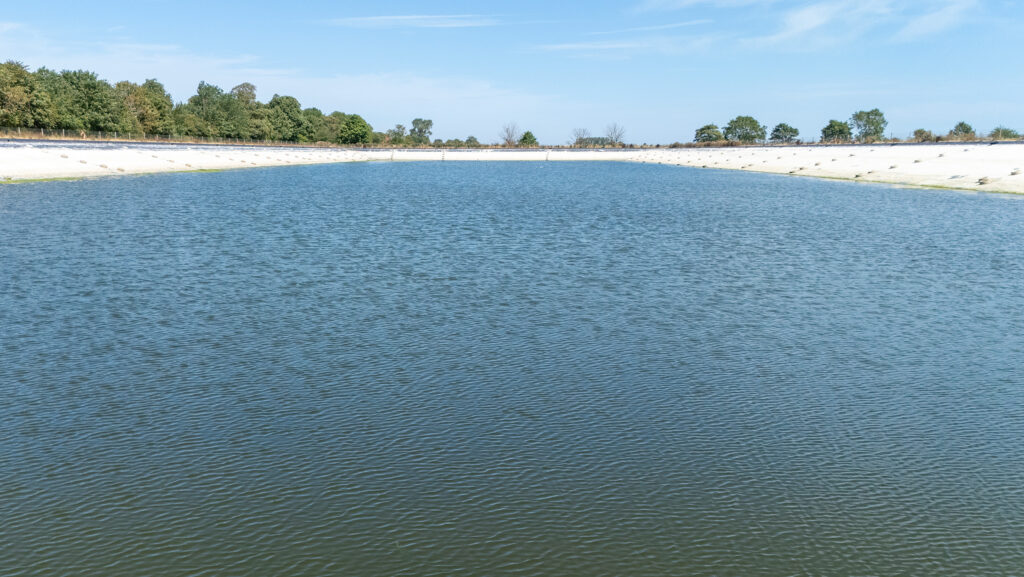
While these goals are certainly valid, surely there needs to be a more deliberate effort made to encourage the building of on-farm reservoirs to exploit those winter floods.
No one is suggesting that we produce pineapples (at least not yet), but it’s ridiculous that, in a country with an ideal climate to produce such crops, we currently import 62% of our apples and 83% of our pears, for example.
I have a river running through part of my farm that spends weeks of the year in flood most winters.
If a series of summer heatwaves are to be the “new normal”, it’s time the government took more interest in encouraging me to utilise that water to grow food, rather than see it simply flow out into the English Channel.