

Opinion: Why do badgers get a ‘free pass’ in the TB battle?
 © Adobe Stock
 As farmers we are pretty resilient, adapting to climate change by changing our timings and cropping to best suit what the weather throws at us, absorbing commodity prices that fluctuate with wars, reacting to supply and demand and changing tastes and fads.
These things are usually cyclical, however, so some years you make a quid, some you don’t.
See also: Opinion – we need more ‘bums on seats’, not more robots
About the author

Political parties are somewhat harder to swallow, and the present lot are severely testing us all at the moment, but again there is a light at the end of the tunnel, and a change of the regime can bring about a massive adjustment to agriculture’s prospects.
But what brings a livestock business to an absolute grinding halt, no ifs no buts, is TB. You may be directly affected and shut down completely, able to move cattle off, but not bring new stock on, with a gaping hole in cashflow in the future as the interruption bites further down the line.
You may “only” be caught up in a radial and be forced into 60-day testing with the inevitable consequences attached to that if you have a breakdown.
It’s in these circumstances that it is extremely difficult to forward plan, because there are simply too many what-ifs. What if we have a reactor, what if we never go TB-free and we are stuck in this doom-cycle forever?
How can any of us run a business with this hanging over us all the time? So it was with great anticipation that I read the Godfray report on how we are going to become TB-free.
This, as you may recall, was the review the government commissioned in 2018 of the strategy for achieving TB-free status in England by 2038, led by Professor Sir Charles Godfray.
Let’s not forget there is a generation of farmers now in their 40s, 50s and 60s who think it’s the norm to have to deal with TB and the consequences.
Well it’s not the norm, my grandad went TB-free in the late 1960s and it was a massive achievement for the whole of the industry.
The new standards do offer us some hope of ridding the industry of TB, one being the return of common sense, with local vets being able to work with the Animal and Plant Health Agency, identifying local issues at ground zero, taking immediate decisions to give the optimal result in the quickest time.
We also have a vaccine in the pipeline which will stop the spread of cattle-to-cattle transmission, linked to a Detect Infected among Vaccinated Animals (Diva) skin test which can then tell which cattle are carrying the disease and which have been vaccinated.
This is all good stuff and all will help, but again the onus and hard work is placed upon the farmer to control the disease, while wildlife gets a free pass, regardless of movement restrictions, pre-movement tests and a sensible sourcing policy of buying cattle from a TB 4 area to go into a TB 4 area.
We are still getting breakdowns in closed herds, so what does that tell you?
We have a two-tier wildlife control policy. Deer numbers can be controlled on a general licence and shot. Natural England can eliminate 90% of the Exmoor ponies.
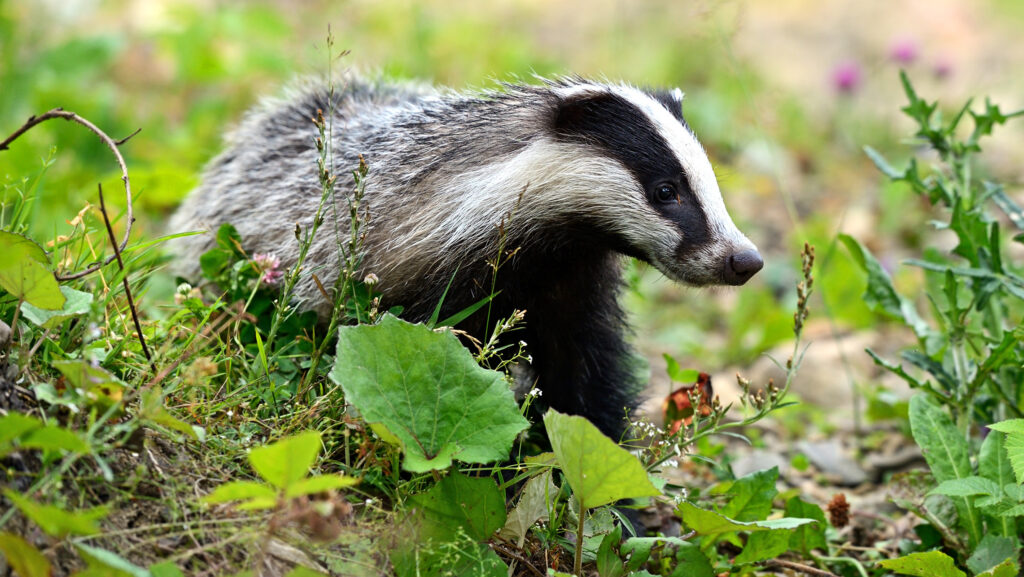
Badgers, however, are gold-plated. If we’re ever going to get on top of TB, then surely this is the logical starting point.