

Opinion: Why forestry and farming must go hand in hand
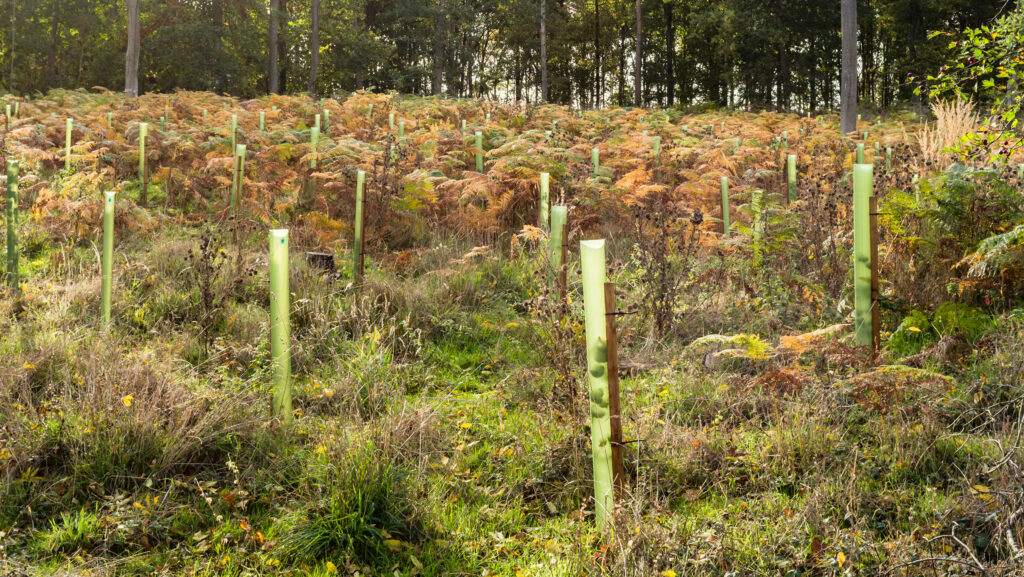 © Paul Maguire/iStockphoto
For many farmers and landowners, the conversation around tree-planting can feel like yet another demand, set against a challenging backdrop of weather, policy and geopolitics.
The UK is a small country with finite resources, yet our rural landscape is being asked to deliver more. We need it for food production, trees, housing, renewable energy, biodiversity and carbon storage.
About the author
 Rebecca Wilson is a fifth-generation farmer from the Vale of York and a social media commentator, with over 50,000 followers on Instagram and 2,000 subscribers on YouTube.
See also: Government is ‘quietly withdrawing’ green payments
The Climate Change Committee estimates that by 2050, about 21% of agricultural land could be required for carbon sequestration. For many farmers, however, this seems to overlook the balance between food production and viable tree planting.
Forestry is not an obligation for UK farmers; it is an option that can be woven into an existing farming business. And when companies work with us to support our needs and ambitions, we can achieve great results.
Land use
Farming and forestry are often described as competing (sometimes even conflicting) land uses. This narrative is shaped by misinformation and policy changes that leave farmers feeling the odds are stacked against them, with trees another threat to food production.
But forestry does not have to be at odds with farming. For some, it can offer a welcome diversification. Government figures show the average return on capital employed for farms in 2023-24 was -0.8%. So, if land, system and business structure allow, forestry may be a viable option for some farms.
For those who have given their lives to the land but cannot navigate an easy route to retirement, forestry may even help keep the farm intact for the next generation, albeit under a different land use.
However, we must consider that forestry is not a short-term enterprise. Once planted, trees shape landscapes and communities for generations. Decisions taken now will last beyond the working lives of those making them, and must be made carefully.
A question of balance
Farmers often argue that forestry “down the hill” poses more challenges for food production and that trees belong on higher, less productive land. However, regulations often prohibit this to protect wildlife and peatland at higher elevations.
Tree planting on lower land may give quicker growth, but it raises questions about where balance can be struck. This push-and-pull between farming and environmental policy exposes a deeper tension: how do we decide which land is best for food and which for forestry?
Our country is known for its patchwork countryside, shaped by farmers and land managers over generations. Rural services, including vets, livestock markets and feed suppliers, all depend on active farms. When land use changes, the effects do not stop at the farm gate.
But in reality, forestry requires specific conditions unsuitable for most UK farmland. Providers must work closely with farmers to identify plots that meet tree-planting requirements and complement wider land uses and environmental aims.
It’s reassuring to know that companies like Tilhill Forestry work directly with farmers to assess where woodland creation might fit within existing farm businesses.
This means forestry and farming are far less in competition than sometimes portrayed. When approached carefully, the two can complement one another across the same landscape.
Working together
Both foresters and farmers are long-term stewards of land, tied to climate, nature and rural economies. If they work against each other, opportunities will be lost. If they work together, the benefits could be substantial.
The future of UK land use will be defined by collaboration, ensuring forestry supports farming, farming supports forestry, and together they sustain the communities, landscapes and livelihoods that depend on them.