

Ragwort-weeding robot farm trials get under way
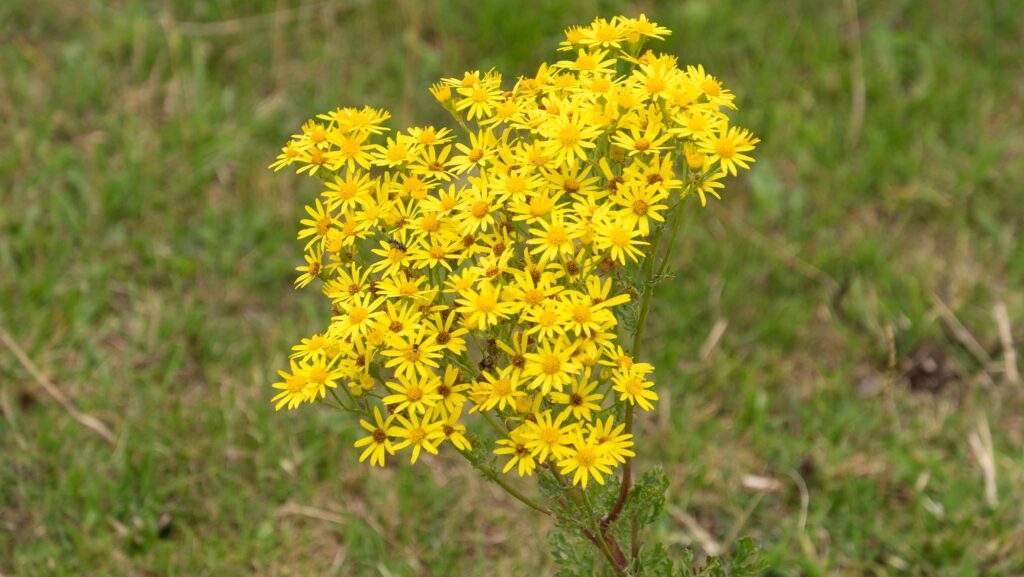 Ragwort © Tim Scrivener
 An innovative farm robot developed to detect and remove ragwort is undergoing final tests at Dorset Innovation Park, offering a potential new way to manage the toxic weed on grazing land.
The electrically powered robot, known as Raggy, has been developed to identify and remove ragwort while reducing labour requirements and limiting chemical use.
Field trials will take place across farms and other sites in Dorset throughout the summer.
See also: Clarkson weighs up driverless tractor in exclusive video peek
Ragwort can contaminate grazing land and cause serious health problems if eaten by livestock.
It’s often controlled by hand-pulling, a time-consuming task that can be costly.
Developed by South West technology firm Robotriks, in partnership with Dorset Council, Telint and Neutral Networks, the robot uses machine vision and connected technology to locate ragwort plants and mechanically removes them at the root.
The project received funding through Qualcomm Incorporated’s Qualcomm for Good Initiative.
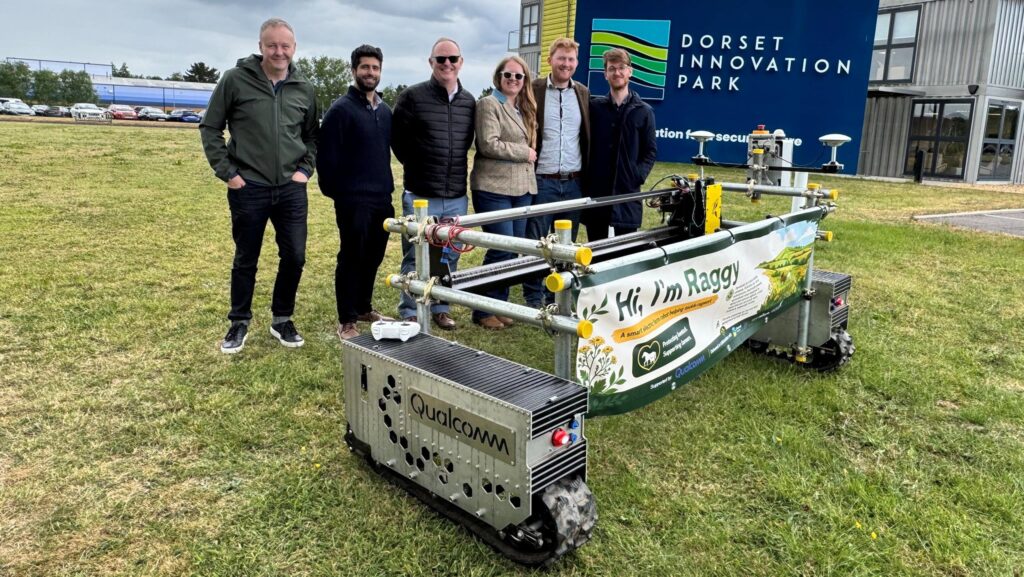
Project partners with Raggy the robot at BattleLab, Dorset Innovation Park © Dorset Council
Supporting on-farm challenges
Ben Timmons, senior director of business development at Qualcomm Technologies International, said: “Raggy is a powerful demonstration of what’s possible with intelligent connected technologies.”
The robotic traction unit (RTU) is a fully electric, modular platform designed to perform a range of agricultural tasks in real farm conditions.
While ragwort is harmful to grazing animals, it also provides a valuable food source for pollinators such as bees and butterflies.
As a result, control efforts are typically targeted at areas where livestock are at risk rather than removing the plant entirely.
Jake Shaw-Sutton, director of Robotriks, said: “This approach reduces the need for harmful chemicals, supports healthier soils and protects animals and habitat.”