

Rail crash tractor driver followed rules, inquiry finds
 © RAIB
 A rail signaller forgot a train was approaching before giving a tractor driver permission to cross the tracks moments before a collision in rural Herefordshire, investigators have found.
The Rail Accident Investigation Branch (RAIB) said the tractor driver involved in the crash at Nordan Farm user-worked crossing on 22 May 2025 had followed the correct procedure by telephoning the signal box before crossing.
Despite this, the signaller authorised the crossing even though a passenger train travelling from Manchester to Cardiff was approaching on the Down Main line at about 80mph.
See also: Tractor driver called signaller before train crash, inquiry finds
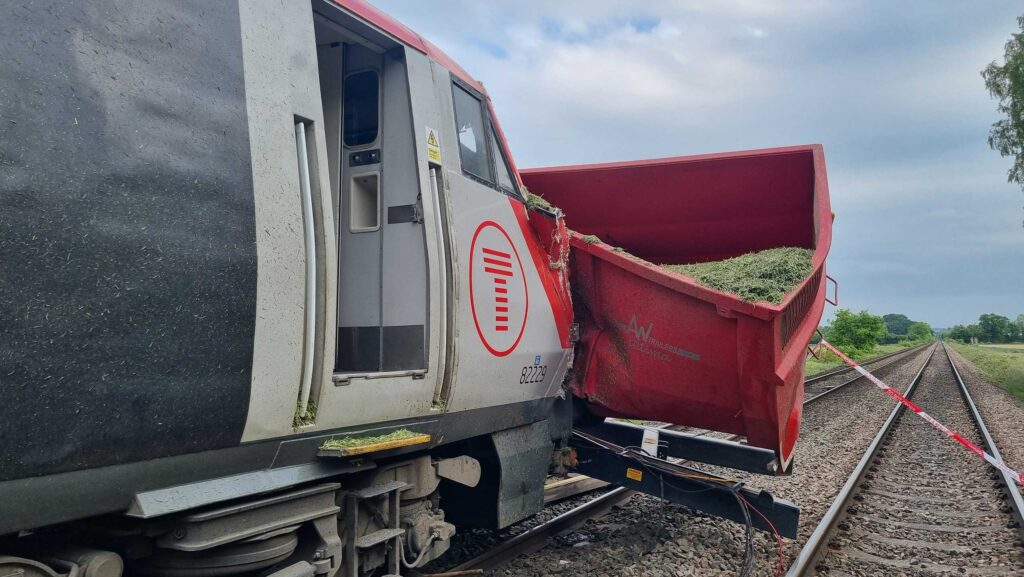
The train struck an agricultural trailer carrying silage, which was being towed by a tractor, at about 10.37am. Six passengers and one member of rail staff suffered minor injuries. The tractor driver was unhurt.
Although the train did not derail, investigators said the leading carriage sustained significant damage, along with the trailer, railway infrastructure and a second level crossing further down the line.
Rail services between Hereford and Shrewsbury were disrupted for more than 24 hours.
In its final report, RAIB concluded the accident happened because the signaller had “forgotten about the presence of the train” and failed to check signal box equipment showing the line was occupied before authorising the crossing.
Investigators said the signaller’s actions may have been affected by an interruption to their usual routine, increased workload, distraction and fatigue.
RAIB also highlighted wider concerns about safety management at user-worked crossings, particularly during periods of intensive seasonal agricultural use.
The crossing at Nordan Farm, near Leominster, is classed as passive, meaning there are no automated warning systems or barriers. Instead, users rely on instructions from the signaller to determine whether it is safe to cross.
The watchdog said Network Rail’s risk assessment process did not adequately account for crossings experiencing sharp seasonal increases in farm traffic.
RAIB recommendations
Two recommendations have been made to Network Rail, including improving risk management at crossings with fluctuating levels of use and clarifying how signallers should assess large, low or slow-moving vehicles using crossings.
RAIB also identified four learning points, reminding staff to comply with their company’s mobile phone policies, the importance of reporting fatigue, the use of available instruments and indicators when considering level-crossing requests, and adherence to the correct process for applying signal protection.