

UK’s ancient White Park cattle breed moves to priority risk
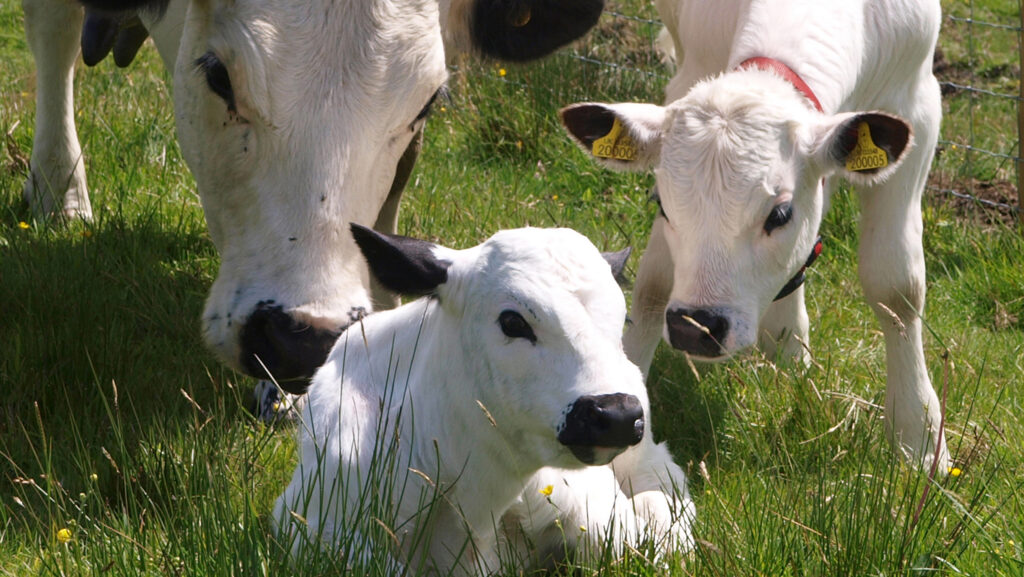 White Park cattle © Jessica Bryne Daniel
 The UK’s ancient White Park cattle have been placed in the highest-risk category following new data published on 21 April, with farmers central to efforts to reverse the decline.
The Rare Breeds Survival Trust (RBST) has moved the White Park cattle breed to its Priority category in the 2025 Watchlist, mentioning falling registrations and reduced genetic diversity.
The annual report tracks the status of native livestock and equine breeds using breeder and population data.
See also: Ancient Cattle of Wales added to rare breed watchlist
RBST chief executive Christopher Price said: “The sharp fall in White Park cattle birth registrations is a major concern for the breed’s future.”
He added: “Fantastic work by farmers and land managers is placing native livestock breeds at the heart of sustainable farming and nature restoration throughout the UK, but government support is very limited and difficult to access.
“We want to see government deliver more incentives for choosing native breeds, and we would like Defra to work with us to develop and support best practice breeding plans for all our rare native livestock and equines.”
New figures show registrations of White Park calves dropped by 36% between 2022 and 2025.
The breed’s Effective Population Size has also declined, increasing the risk of inbreeding and limiting genetic resilience.
Vital genetic resource
Mr Price said: “The UK’s native breeds are a vital genetic resource that could help farming face future challenges such as disease susceptibility and climate resilience.
“Their natural behaviour supports habitats and increases biodiversity.
“Many native breeds also have strong commercial appeal, requiring lower inputs and producing high quality, delicious produce with a strong narrative that can be sold at a premium.”
The breed is now primarily used for beef production and conservation grazing, supporting environmental land management.
However, its horned nature requires skilled handling and access to specialist processing facilities, factors that can influence uptake by farmers.
Mr Price added: “Farmers choosing native breeds should be supported through government policy that helps restore a strong, future-facing network of small abattoirs; and expanded support through funding programmes such as ELM, which is currently too limited.”
White Park cattle, identifiable by their pale coats, black muzzles and long horns, are one of Britain’s oldest breeds.
Their origins are linked to Celtic migrations to northern and western Britain during Roman expansion.
By the 1960s, numbers had fallen to just four herds, a decline that contributed to the formation of RBST in 1973.
RBST trustee and farmer Jan McCourt, who has worked with the breed for more than 20 years, said: “The decline that has prompted this move to the RBST Watchlist’s Priority category is worrying, but can be reversed with a combination of awareness, education, and financial support.”
Three other breeds, Lincoln Red Original Population cattle, Boreray sheep and Soay sheep, have also been moved into the Priority category following declines in registrations and breeder numbers.