

Vets call for surveillance of wild deer over TB concerns
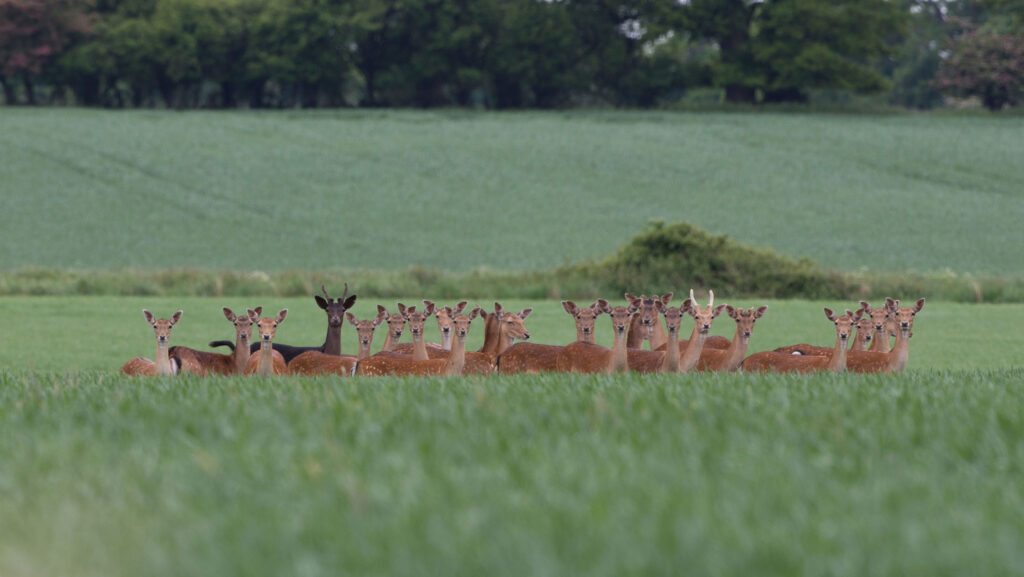 © Tim Scrivener
 Vets are calling for targeted surveillance of wild deer over concerns they could spread bovine TB to cattle in high-risk areas.
The British Cattle Veterinary Association (BCVA), which represents 1,500 farm vets principally working with livestock, has for the first time identified wild deer as an emerging bovine TB concern in its updated policy.
It is urging Defra to establish co-ordinated surveillance pilots by 2027.
See also: Analysis: Can England’s updated TB strategy deliver by 2038?
The association wants annual reporting and risk modelling to establish where deer could be contributing to disease transmission, particularly where populations are dense and animals regularly mix with cattle.
However, the risk is not thought to be widespread. The TB Hub says deer in Great Britain are generally considered spillover hosts, meaning they do not usually maintain the disease within their own populations in the absence of infected cattle or a wildlife reservoir.
Despite an estimated two million wild deer in Britain, only a few Mycobacterium bovis (M. bovis) isolations are recorded each year, although deer can act as a reservoir of infection in localised areas where populations are dense and contact with cattle is common, such as south-west England.
Deer tested for TB
Defra’s latest TB hotspot report, published in May, confirms that the Animal and Plant Health Agency (Apha) already collects and tests found-dead deer in designated surveillance areas, alongside badgers, to investigate possible links with cattle breakdowns.
Positive samples can undergo whole-genome sequencing to investigate genetic links between cases, although this alone cannot establish the direction of transmission.
Defra has previously said deer TB prevalence is generally low at landscape scale, but that higher prevalence in specific locations could pose a localised risk.
In February, Defra announced a 10-year plan to tackle deer damage to woodlands in England, including improved management, grant funding and more co-ordinated action at landscape scale, although the measures focus on environmental impacts rather than bovine TB.
The BCVA’s revised policy updates its previous position from 2021 and covers seven priority areas, including vaccination, diagnostics, wildlife management, cattle movements and mental health.
Ed Simmons, a Somerset farmer, farm vet and chairman of the BCVA TB Working Group, said a licensed TB vaccine for cattle was closer than ever.
He also stressed that disease control must address the hardship and mental anguish experienced by farmers and vets.
Additional policy calls
The association is calling for wider use of enhanced TB tests, improved veterinary training and real-time TB risk ratings for animals and holdings through the Livestock Information System (LIS), an online digital platform for cattle scheduled for mid-2027.
It also supports the government’s shift towards badger vaccination as the primary wildlife control tool, while arguing that badger culling should remain subject to review where local evidence justifies it.
New collaboration
Alongside the policy, BCVA has worked with the Farming Community Network (FCN) and Vetlife to develop When TB Hits, a practical resource offering support to farmers facing a TB breakdown and vets handling difficult conversations.
The guide is due to launch at BCVA Congress in Telford this month.
With deer surveillance now a formal policy priority, the association wants Defra to turn concerns about localised wildlife risks into a co-ordinated evidence-gathering programme.
Defra has been approached for comment.