

Wales explores targeted badger removal in bovine TB shake-up
 © Adobe Stock
The Welsh government is to develop a targeted approach involving testing, vaccination and the potential removal of infected badgers as part of a renewed drive to eradicate bovine TB.
However, the Plaid Cymru-led administration has ruled out a mass, England-style non-selective cull, insisting that any intervention must be proportionate and supported by scientific evidence.
Cabinet minister for rural resilience and sustainability Llyr Gruffydd will set out the “new and pragmatic” approach in an oral statement in the Senedd today (Tuesday 24 November).
See also: Welsh farmers demand bovine TB overhaul as losses mount
It follows publication of advice from the Bovine TB Eradication Programme Board, supporting evidence from the Technical Advisory Group (TAG) and the government’s formal response.
Nearly 96% of Welsh herds are now TB-free, but ministers have been warned that the current trajectory is unlikely to achieve officially TB-free (OFT) status by 2041 without a significant acceleration in efforts.
Mr Gruffydd said the status quo was “not an option”.
“We will not stand by while farmers face uncertainty and anxiety, nor will we pursue a mass non-selective cull,” he said.
“Instead, we will be taking evidence-based and science-led action, incorporating the three pillars of cattle, people and wildlife. Where there is evidence of infection threatening farmers’ herds and consequently their livelihoods, we will intervene.”
Three-pillar plan
The approach will combine national disease controls with targeted action reflecting local circumstances.
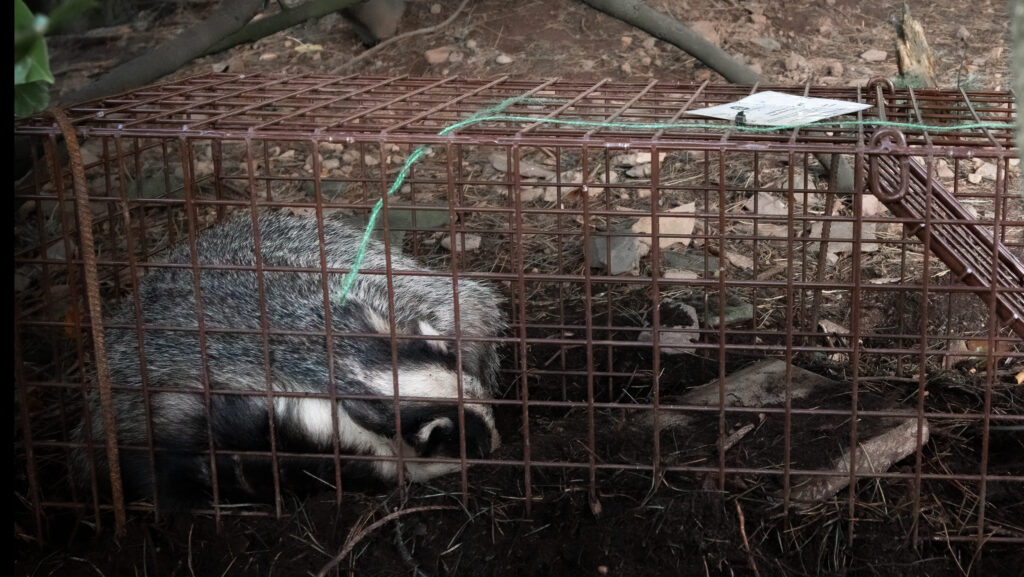
On wildlife, options may include testing, vaccination and the release or removal of badgers through a test, vaccinate and remove (TVR) approach, where supported by evidence. Badgers testing negative could be vaccinated and released, while infected animals could be removed where justified.
However, no immediate removal programme has been announced. Further evidence will be gathered through badger population surveys and fieldwork, with proposals being developed for work to begin in early 2027 where justified. Surveillance of wild deer will also be advanced.
Scientific modelling cited in the Programme Board’s advice suggests a TVR approach could result in 83% fewer badgers being killed than proactive culling, provided social groups are not disturbed.
A Northern Ireland trial in County Down, conducted between 2014 and 2018, recorded a fall in TB infection prevalence among badgers from 14% to 2% following a TVR programme. However, the impact on cattle herd breakdowns was less clear, with most attributed to cattle-to-cattle transmission.
Cattle and farmers
Farmers experiencing persistent TB breakdowns will be offered a choice of approaches, working with their private vets.
Options will include tailored biosecurity and identifying and managing out higher-risk cattle, drawing on pilot projects in Pembrokeshire, North Wales and Nant y Garth.
Ministers will also explore wider access to additional diagnostic tests to identify infection earlier, while retaining statutory tuberculin skin testing.
Other priorities include improving information available to farmers and cattle buyers about the TB status and disease risks associated with individual animals and herds.
The government will also work with industry to develop safe, sustainable outlets for cattle from TB-restricted herds, including improved access to biosecure finishing units.
The people pillar will focus on more proactive support for farmers and vets, closer working with the Animal and Plant Health Agency (Apha) and better access to disease information and practical advice.
Next steps
The government says work will begin immediately on the Programme Board’s recommendations, alongside further research, surveillance and epidemiological modelling.
The Welsh Government’s draft budget included an additional £4.5m in 2027-28 to support and accelerate preventative disease management.
A new Bovine TB Eradication Plan will be developed as the evidence emerges, with a refreshed strategy expected beyond 2027. Progress against the Programme Board’s recommendations will be reported next autumn.
Reaction
NFU Cymru president Abi Reader, a dairy farmer in Glamorganshire, welcomed the shift.
“Bovine TB has destroyed too many lives and too many family farms in Wales,” she said.
“To see the Welsh government respond in a manner that will deal more holistically with the disease is really positive.”
She added: “Seeing that the government has got the confidence to take the decision to tackle the disease in wildlife is great news. Now we wait for them to act on their promises.”