Reducing carbon emissions – a practical outlook
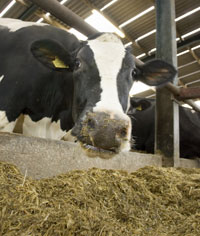
Reducing carbon emissions can lower costs, but knowing how to do it is essential.
Agriculture is hailed as one of the main emitters of greenhouse gases globally. Under the heading of agriculture the dairy industry often finds itself being pointed at as one of the most culpable.
But figures for greenhouse gas emissions in the UK shows agriculture’s emissions of the three main greenhouse gases – methane, nitrous oxide and carbon dioxide – have fallen over the past 15 years, says DairyCo’s Brian Lindsay.
“Emissions have already fallen so much they’ve exceeded the Kyoto targets of a 12.5% reduction on 1990 levels by 2012,” he says.
A desktop review by DairyCo, shows agriculture’s total contribution to UK greenhouse gas emissions is about 7% and a recent European Dairy Association report showed 3% of global emissions can be attributed to the dairy lifecycle up to the farm gate.
“The review also shows dairy reductions in nitrous oxide emissions look to be 21% since 1990 and much of this has been achieved through reduced use of nitrogen fertiliser and improved manure handling and storage,” says Mr Lindsay.
Methane emissions from dairying have declined by 15% since 1990 and this has been achieved effectively from fewer cows producing more milk and an increase in feeding efficiency.
As satisfying as it is to know UK dairy farmers have been successfully reducing their carbon footprint, it is important to keep addressing the issue of climate change, says Mr Lindsay. “A start has been made in setting targets for the future through the industry’s Milk Road Map [pdf] and we need to work out how to get there.”
Reducing emissions will almost certainly continue to reduce costs and there are several practical ways of doing this, says David Chadwick, of North Wyke Research.
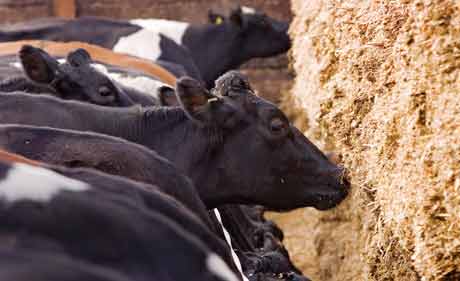
New diets may be available in the future that help reduce methane emissions
“We know nitrous oxide, carbon dioxide and methane are emissions we want to reduce, and there are a number of practical ways that farmers can address this on farm.
“By ensuring crop requirements for nitrogen aren’t exceeded, nitrous oxide emissions can be minimised. Farmers making full allowance of the manure nitrogen supply and spreading manure at the appropriate time in the right conditions will also minimise emissions,” says Dr Chadwick.
The industry is researching what can be done to address emissions, including techniques such as using nitrogen inhibitors and plants that have been bred with improved ability to use nitrogen or need less to grow. Methane is perhaps the gas most commonly associated with the dairy industry, and emissions have reduced as output per head has increased and stock numbers have decreased. But by reducing replacement rates and improving fertility rates emissions can also be cut.
“In the future it is possible we will start to have new diets developed to reduce methane emissions, which could include rumen-protected feeds and novel additives such as yeasts and plant extracts,” says Dr Chadwick.
Carbon dioxide emissions mainly stem from energy use on farm, so reductions can be made by changing cultivation techniques to reduce fuel use and by efficient use of energy in terms of heating, water and lighting. Carbon storage is also an option, through forestry or biomass crops.
Breeding longer-lasting cows and conserving and maximising use of nutrients are already a way of life. But new tools are coming that will help achieve even greater efficiencies.
A number of carbon footprinting calculators have been developed, but there is a need for an industry standard and accreditation, says Mr Lindsay. “The need for an industry standard was addressed at DairyCo’s recent climate change symposium for the dairy industry, where it was agreed DairyCo and others will work closely with accrediting bodies to ensure dairy farmers are credited for their positive actions,” he says.
Reducing emissions
Nitrous oxide:
- Take stock of wet land
- Change from solid manure to slurry-based system
- Use nitrification inhibitors
- Improve mineral N fertiliser timing
- Use plants with improved N use efficiency
Methane:
- Reduce replacement rates
- Improving fertility rates
- Increasing output per head
- Managing feed through feed rations and additives
Carbon dioxide:
- Minimise fuel use
- Change cultivation techniques
- Use carbon storage such as woodland