Farm buildings: Know your permitted development rights
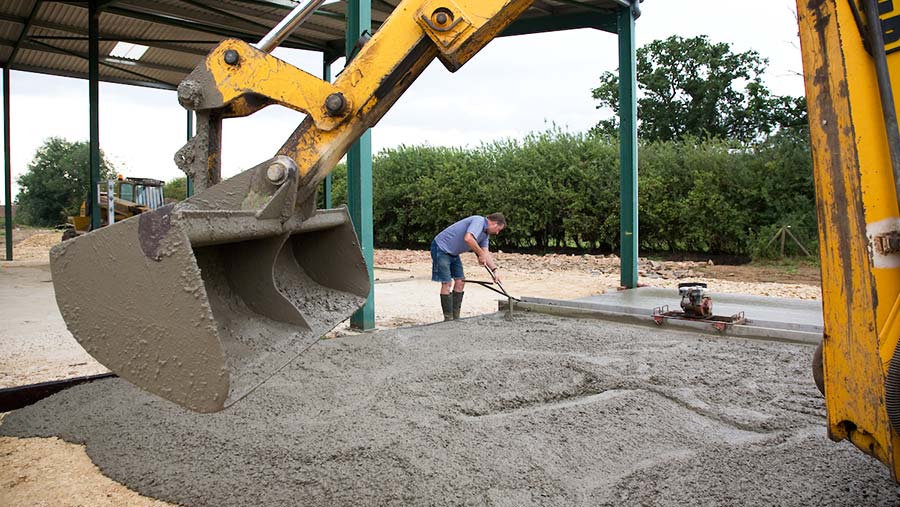 © Tim Scrivener
 Permitted development rights (PDRs) are useful procedures that make certain types of development quicker, easier and cheaper.
They allow landowners to build, extend, develop, convert, excavate or carry out engineering work on certain sites without going through the full planning permission process, and some have been designed specifically for agricultural buildings.
These rights are set out in The Town and Country Planning (General Permitted Development) Order 2015.
See also: PDR applications still hampered by council misinterpretation
What types of agricultural PDRs are there?
Class A
Permitted development related to agricultural buildings (including machinery and grain stores) and engineering/excavation rights on units of 5ha or more of agricultural land is known as Part 6, Class A development.
This allows you to erect, extend or alter a building, including excavation or engineering operations, all of which must be reasonably necessary for the purposes of agriculture within the unit.
Typically, this includes hard surfacing for field access and farm tracks and the building of machinery stores and grain stores, as long as they meet certain conditions governing siting, size and, in some cases, materials.
There must be no development:
- On a separate parcel of land that is less than 1ha and which is part of the agricultural unit
- Where dwellings are involved
- Where something is not for agricultural use
- Where the ground area of the building or development is more than 1,000sq m (except for fencing)
- Where any part of the development is within 25m of a metalled part of a trunk road or classified road
- Of a building (or involving work to a building) intended for or used by livestock, slurry or sewage sludge housing and within 400m of the curtilage of a dwelling. The curtilage usually means the physical boundary of the land surrounding a dwelling. If the works are within 400m of buildings within an agricultural unit (or a dwelling or other building on another agricultural unit), they are excluded from this restriction.
- Anything involving excavations or engineering operations connected with fish farming on certain protected land types (for example, National Parks).
Height restrictions also apply where the work is within 3km of the perimeter of an aerodrome.
There are other conditions, too, mainly concerning removal of minerals from the site and waste materials being brought on to a site.
Class O
Farmers with buildings used as offices can change them to houses under Class O.
This can be carried out anywhere as long as it is not: a listed building, safety hazard zone, military explosives storage area, an ancient monument, or where the local authority has obtained an article four preventing this type of conversion.
It must have been an office on or before 29 March 2013.
Class Q
Class Q allows for the change of use of an agricultural building to a house. In 2018, the regulations were amended to allow for up to five dwellings and up to 865sq m floor space to be converted.
The building must have been in agricultural use on 20 March 2013 and the development cannot extend beyond its existing external dimensions.
Class Q cannot be used for a listed building or one within a conservation area, National Park, Area of Outstanding Natural Beauty, World Heritage Site or a site of special scientific interest.
Class R
Class R permits the change of use of agricultural buildings to a flexible commercial use of a retail unit, restaurant or café, office, commercial storage/distribution use, hotel, or a range of leisure uses, such as a concert hall or gymnasium.
On any one farm, the conversion should not exceed 500sq m.
Class R applies to buildings in agricultural use on 3 July 2012 that are not listed or part of a scheduled ancient monument, safety hazard area or military explosives storage area.
Class S
Class S permits the change of use of agricultural buildings to a state-funded school or registered nursery.
On any one farm, the conversion should not exceed 500sq m. Class S applies to buildings in agricultural use on 20 March 2013 that are not listed or part of a scheduled ancient monument, safety hazard area, military explosives storage area or site of special scientific interest.
Development is not permitted by Class S if the site is occupied under an agricultural tenancy, unless the express consent of both the landlord and the tenant has been obtained.
How do I use permitted development rights?
You must submit an application form to your local planning authority for confirmation of whether prior approval is needed for the siting, design and external appearance of a building, work or excavation.
This application currently costs £96. You should include a written description of the proposed development, materials and a plan showing the site.
The local authority then has 28 days to confirm in writing whether prior approval is needed or not.
Where it isn’t needed, work can go ahead as long as it’s in line with the proposal submitted.
Where it is needed, the local authority may ask for more details or changes to siting, design and materials.
A notice containing specified information must also be publicly displayed at the site.
If it is to go ahead, the development must be started within five years or the approval lapses.
Consultant’s tips
Although applications for prior approval are assessed predominantly against siting and design criteria, local planning authorities increasingly like to see an agricultural justification for development planned under permitted development rights.
This is to ensure that there is not a proliferation of agricultural buildings in the countryside, says Will Tongue of agricultural consultant Berrys.
- Give the authority as much information as possible such as siting, designs, materials and motivations. It may save time, money and further questions later.
- The prior notification procedures require a short written description of the proposed development and it is advisable to include a justification of the proposed development, including choice of location.
- One of the most common mistakes made by farmers is to assume that they have the right to build or carry out other development work on their holding without applying to or notifying the local planning authority.
- In some instances it will also be necessary to obtain permission from other statutory authorities, such as the Environment Agency.
- Other interested parties, including other landowners and/or tenants, should be made aware of any development or change of use proposals.
- If you start work without checking if approval is needed, enforcement action may be taken – which could lead to an unlimited fine – or retrospective planning permission may be required.
- The authority can also insist that the work goes through the full planning permission process, even though it may have been allowed under permitted development if you had followed the correct procedure.
- The classification of even minor roads affects the distance from the road at which permitted development can take place. Check the status of roads near the farm with your local authority to avoid time and money being wasted.
- Don’t make changes to the planned development once work has started unless you get further approval or another notification that no approval is needed.
- Seriously consider whether to use certain PDRs or not as this will restrict the use of other PDRs for a time. The full planning process for such development will have to be used instead.
- The permitted development procedures remain complicated processes. If you are unsure about what to do, seek advice from appropriate planning consultants.