Advice on avoiding costly soil compaction
 © FLPA/REX/Shutterstock
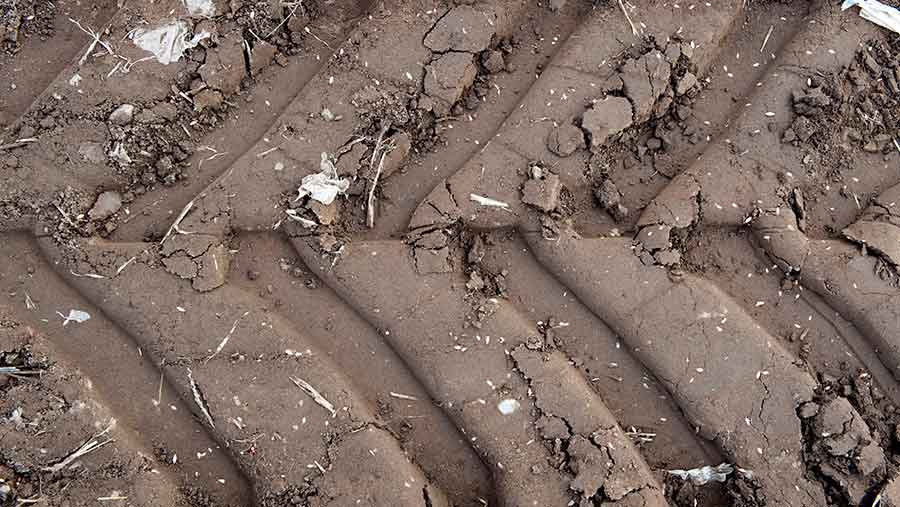
 Soil compaction could be costing UK agriculture more than £1bn every year because of low yields and the costs involved in correcting soil pans.
In addition, extra inputs are often required to boost production in fields suffering from soil compaction, according to Dick Godwin of Harper Adams University.
“A simple increase in soil density from 1.35t/cu m to 1.5t/cu m has been shown to reduce crop yields by 10–15% in addition to significantly more tillage energy and fuel being required to break the soil apart,” he said.
Furthermore, air and water infiltration rates are reduced and this affects the soil’s productivity, particularly with regard to essential worms and bacteria.
See also: Soil health unlocks arable yields on edge of the Pennines
Estimates carried out by Cranfield University in 2011 put the combined losses at £1bn. And with equipment getting heavier and after a number of wet years, it is likely to have increased, Prof Godwin warns.
Use equipment better
Dick Godwin
There is a lot growers can do to improve soil structure, and much of that revolves around understanding and using tillage equipment better.
The width, spacing and rake angles of tines can have a dramatic effect on how soils are disrupted as well as the draught force required.
“The effect of changes in geometry and speed on soil disturbance and soil-implement forces are well understood, but we need to get better at choosing the right equipment for the job and setting it up correctly,” Prof Godwin says.
“Optimum rake angle is usually about 20–25deg for most tasks, with chisel tines being the best for soil loosening and mole ploughs better for drainage,” he says.
Winged subsoilers can double the amount of soil disturbed by a single pass compared with a conventional subsoiler while only increasing the draught force required by 30%.
Double the depth, quadruple the energy
“In addition, if you double the depth of your cultivations, you will quadruple the energy required, so working shallower and faster is always better if you can,” he adds.
Subsoiling after tracked harvesters is much easier than after wheeled machines, with a 63% reduction in force needed to pull implements through the soil.
“All tyres need to be used at the correction inflation pressure as there is a direct relationship between this and ground pressure. Double your inflation pressure and you double the ground pressure,” he says.
Controlled-traffic farming systems have delivered a 17% yield increase in wheat – 7.5t/ha to 8.77t/ha – when compared with a conventional system.
“The yield in the unwheeled areas was up to 1.0t/ha more than in the places where the wheels ran, so it just shows the damage compaction can do,” Prof Godwin explains.
Get soils right before turning to no-tillage
Growers looking to move to a no-tillage crop establishment system should look first to correct soil compaction and poor drainage.
Tudor Dawkins
A typical yield loss seen by growers switching to a no-tillage system is about 1t/ha, but the gap should narrow as soils recover from previous intensive cultivation system.
Taking time to correct soil problems such as compaction and poor drainage beforehand can have a profound effect on future cost savings and yields.
Tudor Dawkins, technical director at agronomy group ProCam, says there is a lot growers can do to mitigate the yield loss when switching to a no-tillage system.
Drainage is one of the first issues that should be examined, as anaerobic conditions in wet soils are detrimental to soil bacteria and microflora.
Wet conditions favour blackgrass
“Blackgrass survives very well in wet conditions and it takes a huge amount of energy to raise the temperature of wet soil in the spring so crops can start growing,” Dr Dawkins says.
He suggests checking the drains, repairing them where necessary and making sure water drains from the profile.
“Compaction has a big effect on root development and yields, with considerable differences between crops. Legumes are very sensitive to poor soil structure, whereas cereals are generally more tolerant.”
A good soil has plenty of roots and active bacteria and a practical assessment of soil health can be made by counting the number of earthworms.
Importance of cover crops
Andrew Mahon
Andrew Mahon of Bromborough Estates in Northamptonshire says careful management of the farm’s no-tillage changeover on its 1,000ha kept the yield wheat drop to less than 0.3t/ha, with the use of cover crops being key.
“Harvest 2012 was the turning point for me. We experienced a 30% drop-off in yield, quality was horrendous and we simply couldn’t harvest some fields,” he says.
Something had to change, and in 2013 he planted his first cover crops after harvest and this, along with no-tillage, led to better soils and crop establishment.
“Even though we are now fully no-tillage, when I look at three- and five-year average yields, I would say we’re between nought and 0.3t/ha down on where we were, and the cost savings far outweigh this,” he adds.
Compaction and poorly drained soils are the biggest enemies of no-tillage, but Mr Mahon is a real advocate of using roots, not iron, to break up soil.
“We try to spend about £35/ha on cover crops, which is roughly the same cost as a cultivation pass, but the results are much better.”
Growers urged to watch falling P and K inputs
Phosphate and potash inputs are no longer keeping up with off-takes, suggests a ProCam 4cast analysis of wheat yields over the past six years.
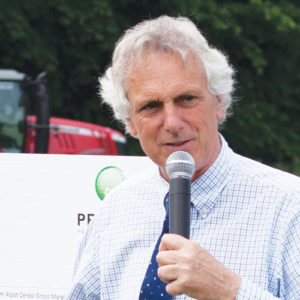
Nick Myers
In the high-yielding years of 2014 and 2015, levels removed in crops exceeded amounts applied. This could now be lowering soil availability of these vital nutrients.
Growers have to target high yields to combat low grain prices, so this is a particularly worrying trend,” says Nick Myers, ProCam’s head of crop production.
Adequate phosphate and potash is essential to avoid growth checks, but soil indices of about 2 are also needed to ensure optimum nitrogen use.
“Phosphate applications and take-off in the grain were more or less in balance last year at about 55kg/ha for both, but when you add in the straw, take-off was more like 85kg/ha –a 30kg/ha shortfall,” he says.
Potash applications were just below 70kg/ha, yet the take-off in the grain alone was about 80kg/ha. With straw included, this rose to 105kg/ha – a 35kg/ha deficit.
Once soil P and K levels are run down, they are difficult and costly to bring back and as well as cutting yields, could potentially affect plant health and disease control, Mr Myers adds.

Staying sharp shouldn't be a chore