Gene-edited barley with higher lipid levels is UK first
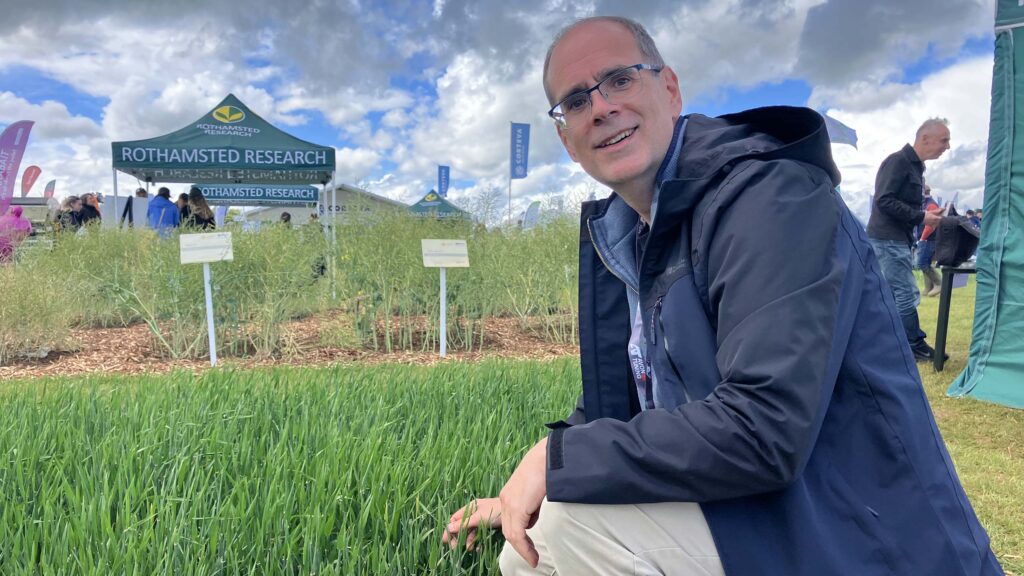 Prof Peter Eastman © MAG/Emma Gillbard
 A gene-edited spring barley with higher lipid levels has become the first crop to receive a Precision Bred Organism (PBO) marketing notice through the UK’s new regulatory pathway for precision breeding.
The barley was developed by scientists at Rothamsted Research with the aim of creating a higher-energy livestock forage.
See also: Cereals 2026: RAGT has high hopes for malting barley Arrow
Using Crispr gene editing technology, they switched off two genes responsible for the breakdown of lipids within the plant.
By reducing this breakdown process, the plant accumulates higher levels of lipids in vegetative tissue, resulting in a forage crop with increased metabolisable energy that could help livestock gain more energy from the same feed intake.
“These genetic changes could occur naturally or through conventional breeding,” explains Prof Peter Eastmond, who led the research at Rothamsted. “The Crispr technology allows us to be faster and more accurate at introducing new plant traits.
“Typically grasses and cereal crops contain 2-3% lipids. The gene-edited barley has a 1% greater lipid concentration. Lipids have a high energy density, so small changes can have a relatively large impact.”
Farm trials
The PBO spring barley is currently being grown on 1.5ha plots on two arable farms in Lincolnshire and Nottinghamshire. The crops will be harvested as a whole crop this summer.
Next year, the plan is to grow it on a dairy farm and feed it to livestock, following regulatory approval to permit the PBO as livestock feed.
The marketing notice confirms that the barley meets the criteria of a precision-bred organism under the Genetic Technology (Precision Breeding) Act 2023 and the Genetic Technology (Precision Breeding) Regulations 2025, allowing the crop to progress towards wider research and analysis, and eventual commercial deployment of the trait.
However, regulations affecting the future of PBOs remain uncertain. UK legislation on the topic could be set to change and realign with EU standards, which do not permit gene editing.
Rothamsted Research has also developed a high lipid content winter wheat through conventional breeding.
The project
The barley is being evaluated through the Probity (Platform to Rate Organisms Bred for Improved Trait and Yield) initiative, a collaboration between researchers, farmers and supply chain partners designed to test precision-bred crops in real farming environments.
The project is led by the British On-Farm Innovation Network and funded by Defra’s Farming Innovation programme, which is delivered by Innovate UK.
Alongside the high-lipid barley, the project is also assessing precision-bred wheat varieties with traits aimed at improving grain quality and yield, led by Rothamsted Research and the John Innes Centre.