Whisky slowdown hits Scottish malting barley
 © GNP
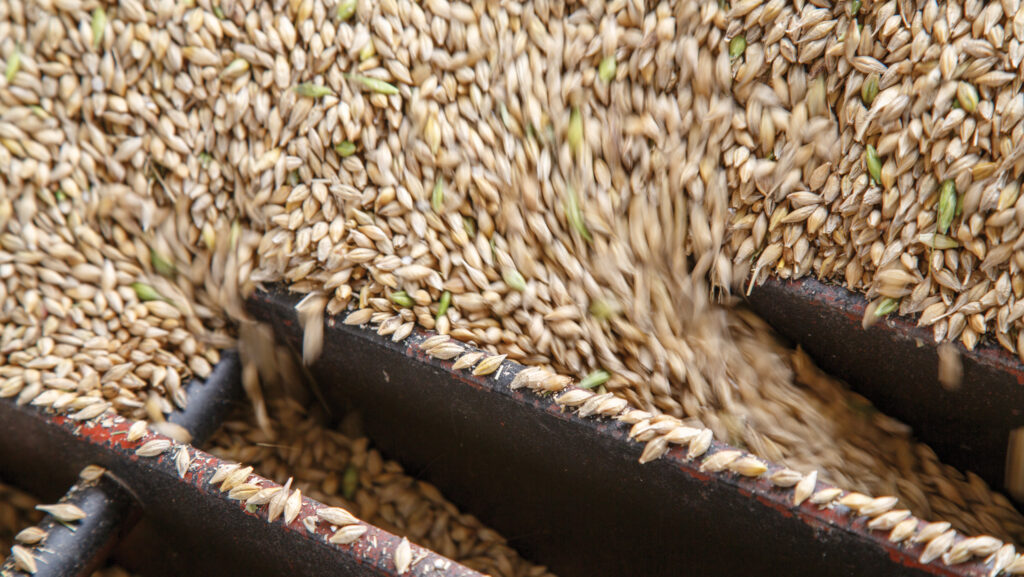
© GNP Spring barley is the cornerstone of Scottish arable farming, accounting for 50% of all cropping across the country.
More than half of this production is destined for the malting industry, supplying Scotland’s renowned whisky sector.
Yet despite its long-standing importance, the sector faces one of its most uncertain periods in decades, with low premiums and distillers reporting a drop in demand for whisky.
See also: Scottish spring barley undersowing success for Devon expats
Critical crossroads
According to Adam Christie, managing director at Scottish Agronomy, the sector is at a critical crossroads – something he hasn’t seen before in his 40-year career.
Over the past decade, expansion of whisky production by distilleries encouraged confidence throughout the supply chain, but a slowdown in global demand has exposed how dependent Scottish growers have become on a single outlet.
Adam says: “Production rose to meet rising demand, with Scotland producing 700,000t-900,000t of malting barley each year.
However, the industry gambled on this continued increase, which has now come crashing down.”
Rising living costs, weaker consumer spending and previous tariffs imposed by the US all contributed to falling whisky demand.
At the same time, changing drinking habits among younger consumers have further reduced consumption, he explains.
The result has been significant overproduction throughout the supply chain, with premiums falling and profit margins slim or non-existent.
Significant volumes of whisky are in storage, with few signs of movement in the markets.
Adam says many of his farmer clients have sought alternative cropping options as the figures no longer stack up.
“This is something I had not experienced in my career,” he recalls. The result has been a 15% dip in Scotland’s current spring barley cropping area compared with last year.
Winter cropping options are limited due to weather restrictions, with growers instead shifting towards options such as spring oats as a viable alternative.
Need for industry-wide collaboration
For Adam, solving the current malting barley market crisis requires close collaboration across the entire supply chain.
“Scottish growers are very good at producing top-quality malting barley. We’ve just got to make sure we can market it, and overcome this downturn.
“To do that, we need structural change. We cannot be left exposed to just one end-market.”
Farmers, maltsters, merchants and end users all need to engage in discussions about how to create a more sustainable future for Scottish spring barley and safeguard the industry.
The recent visit of King Charles to the United States, following which tariffs on Scotch whisky imports were removed, offers some optimism for a trade recovery.
However, given the large reserves already in storage, any positive impact is likely to take time to filter through to malting barley prices.
Adam says: “The industry needs answers. We all need to start communicating with each other more. The frustrating thing is that we can see the issue, but we’re unsure how to rectify it.”
Another concern within the sector is the industry’s reliance on a narrow range of varieties.
About 75% of Scottish malting barley currently grown is the variety Laureate. While the variety has performed consistently for both growers and maltsters, such dependence creates vulnerability.
That’s why Scottish Agronomy continues to carry out extensive variety trials in search of a successor to make the industry more resilient against potential disease breakdowns.
The search for new markets
“Beyond distilling, malt barley offers potential as an ingredient for health foods due to its energy density and functional properties,” says Adam.
Countries such as Denmark have already demonstrated how innovative approaches can unlock new value from agricultural products.
“The Danes have been innovative with their potato starch industry, developing a zero-waste, high-margin model where the former cellulose waste is now a key ingredient in eco-friendly food packaging.
“Why not apply this level of innovation to the malting barley sector?” he says.
This year’s crop
For now, the sector remains in a period of uncertainty, but spring barley continues to be an essential part of Scottish rotations.
Crops in the ground this year are looking full of potential. This may mean a bumper harvest and a similar volume of malting barley produced, despite the reduced area planted.
“When it comes to costs, every penny needs to be under scrutiny,” says Adam.
“We currently have growers going for a very basic agronomy programme or a high-input approach to drive yield. Cutting spend is not always the right answer.”
The industry recognises that relying too heavily on a single premium whisky market is no longer sustainable.
The challenge will be finding new markets and new varieties that keep the crop profitable and resilient.
Scottish Agronomy celebrates its 40th year
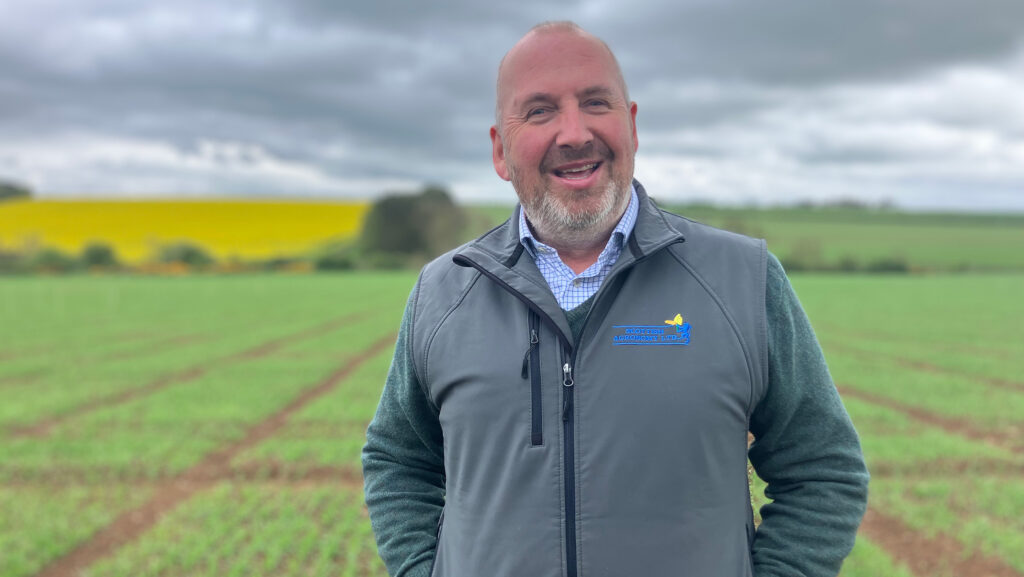
Adam Christie © MAG/Emma Gillbard
Scottish Agronomy is now in its 40th year, celebrating its role as a provider of independent agronomy advice.
What started out as a farmer-led organisation for independent advice and trial services has developed into 85ha of trial sites across 26 locations.
The organisation now supports 225 members, from large-scale arable businesses to smaller family farms, delivering prime agronomy advice.
Adam Christie started out as a trials officer in 1989 and has risen through the ranks to become managing director. Farmers Weekly asked him about his career highs and lows.
Career high
“Seeing the co-op develop over the years has got to be my career high.
“It’s been so brilliant seeing members learn from each other, the staff develop and learn from the successes and failures of trials.”
Career low
“Sitting on a trial plot combine, harvesting winter wheat in 1995. The grain was coming into the tank green as the weather was awful and ears had sprouted.
“This was the same everywhere in Aberdeenshire. It was an extremely challenging year.”

Staying sharp shouldn't be a chore