AHDB data suggests more aphids are carrying BYDV
 © Blackthorn Arable
Results from aphid testing for barley yellow dwarf virus (BYDV) this autumn suggest a rise in the proportion carrying the virus, a worrying trend that could result in more crops affected by the disease.
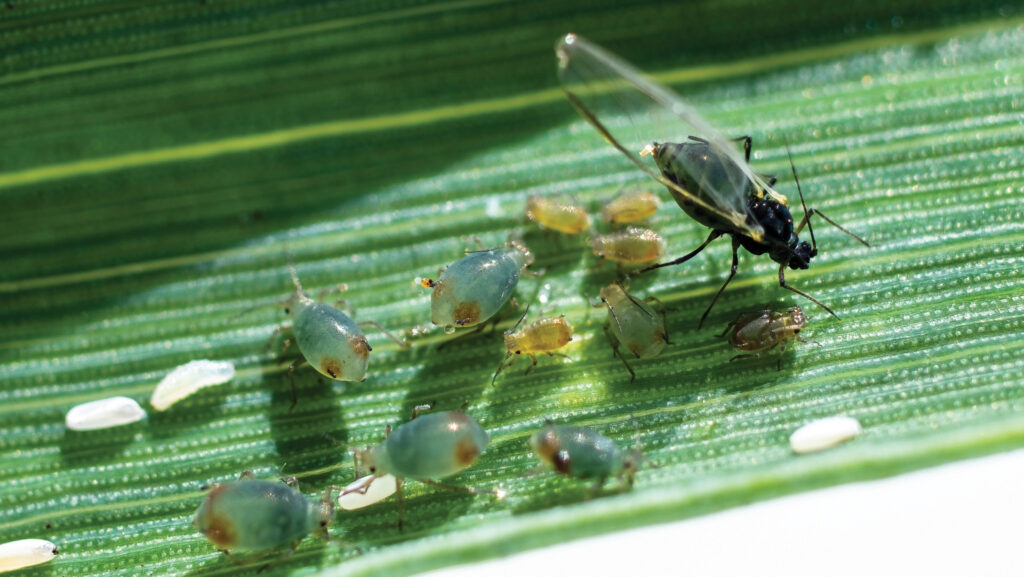
BYDV is transmitted via aphids, which infect plants when they feed on the phloem of the leaf.
There are two key aphids: the grain aphid and the bird cherry-oat aphid.
See also: BYDV: Lessons from 2026 on how to reduce risk
Testing reveals the proportion of aphids carrying virus is increasing
- 2020-2024: average 22.3%
- 2025: 34%
- 2026: 36%
Note: 2026 based on samples tested so far
Each autumn, the AHDB publishes data on the proportion of aphids that carry BYDV based on testing carried out by Rothamsted Research.
Researchers test more than 1,000 aphid samples for the virus each year, which are collected during the main autumn aphid flight period from a small number of insect suction traps.
Bird cherry-oat aphid samples dominate the trap catches, as they fly in far higher numbers during the autumn, compared to grain aphids.
Over the past several years, testing has revealed that most aphids do not carry BYDV.
Based on 2020-24 average data, less than a quarter (22.3%) tested positive for the virus.
This is why the AHDB set the default as 20% in the new BYDV tool.
The default value is replaced with actual regional values during the autumn.
However, based on recent data, the AHDB warns there may be a concerning trend emerging.
The average proportion of aphids carrying BYDV was relatively high in autumn 2025 (34%) and in 2026 (36%), so far.
In response, the AHDB says it may need to review the BYDV tool’s default value of 20% if the virus consistently tracks higher than the historic average.