How four precision-bred traits could help UK growers
 © GNP
Creating a more permissive regulatory framework for precision-bred crops in England is starting to pay dividends as the first crops begin small- and large-scale field trials.
While there remains legislation uncertainty and barriers for commercialisation, progress is being made towards genuinely useful precision-bred innovations for either growers or consumers, as researchers and businesses highlighted advances at the first UK Precision Breeding Conference in Norwich.
See also: Gene-edited soya shows promise in UK field trials
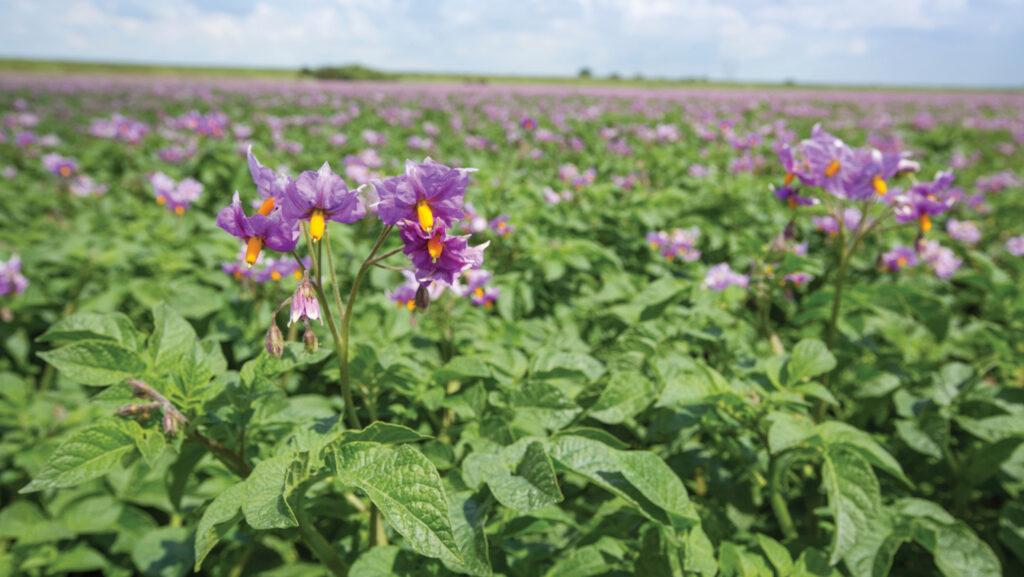
Blight and virus-resistant potatoes
One of the flagship successes is the Sainsbury Laboratory’s PiperPlus, which combines three late blight resistance genes and two virus resistance genes that protect against potato virus Y (PVY) and potato leafroll virus (PLRV), potentially eliminating the need for blight fungicides and insecticides.
It could also allow high-quality, virus-free seed potatoes to be grown reliably outside of Scotland.
Rather than using gene editing, researchers transferred the five resistance genes from wild potato relatives in what’s known as a cisgenic approach.
This qualifies as a precision-bred plant as the changes could have arisen through traditional breeding, as confirmed by being officially placed on Defra’s register of precision-bred organisms for marketing.
“Precision breeding has shortened the process,” explained lead researcher Dr Agnieszka Witek.
“Breeding in the genes could have taken decades naturally, but with precision breeding can take as little as a couple of years once you have your targets.”
Bred into the background of long-time favourite variety Maris Piper, the precision-bred version has thrived in field trials while the unchanged Maris Piper was killed by late blight, she said.
“We’ve never detected either virus in our trials apart from in the controls, and we don’t see any difference in yield.”
Agnieszka confirmed a formal food and feed safety application was about to be submitted to the Food Standards Agency (FSA), which would allow the variety to be grown commercially, once it also achieved variety listing and seed certification.
Light leaf spot resistant oilseed rape
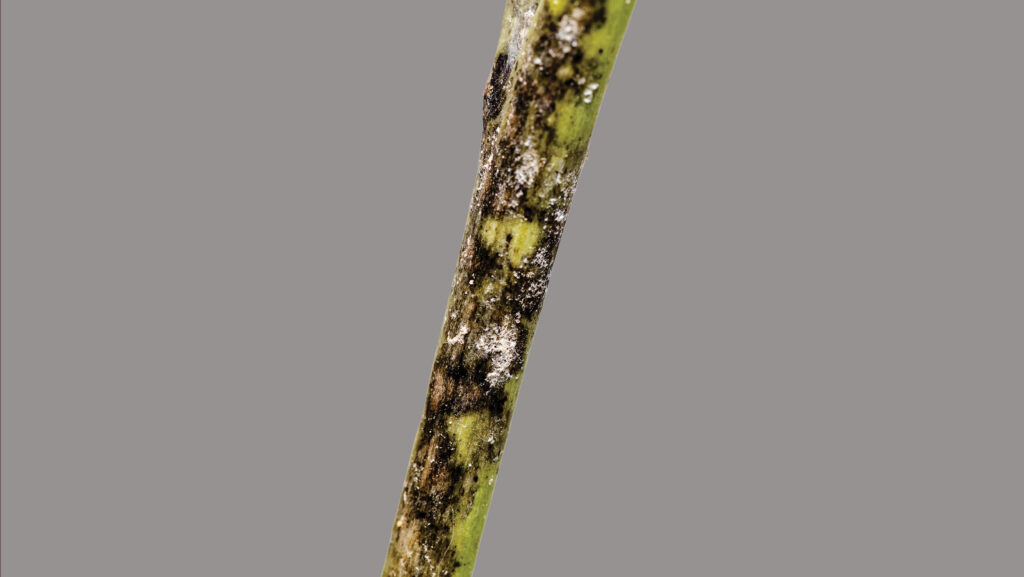
This British On-Farm Innovation Network (Bofin)-led project LLS-Erased, funded by Defra’s Farming Futures Fund, aims to develop gene-edited light leaf spot resistant oilseed rape varieties, again reducing reliance on fungicides, which are struggling to control the disease as resistance to them develops.
After the John Innes Centre and the University of Hertfordshire identified a key susceptibility gene in mutant plant populations, US-based gene-editing company Cibus is using its platform to switch the genes off, providing enhanced resistance.
The Cibus platform, unlike most other methods, edited target elite varieties directly rather than using a lab-friendly variety followed by backcrossing into elite germplasm, explained the firm’s vice president of trait production, Andrew Walker.
Light leaf spot in oilseed rape © Blackthorn Arable
“We use a single-cell system called protoplasts. You don’t hear a lot about this technology because it requires a lot of patience to make it work.
“But we’ve made it efficient, fast and so it doesn’t require any integration of the gene-editing technology into the plant genome.”
Being able to make edits in elite germplasm directly speeds up development immensely, he said.
“We can go from protoplast to seed in less than a year, returning it to the breeder very quickly.”
Another advantage was that it allowed breeders to quickly stack multiple modes of resistance together, including those bred into varieties by conventional methods, he noted.
“It enables the best of all worlds, where we can add targeted trait discoveries into the genetic backgrounds that already have improved tolerance.”
While the first field trials comparing susceptible and resistant varieties started this autumn, it won’t be until autumn 2028 that Cibus gene-edited lines are trialled, Bofin’s Tom Allen-Stevens told Farmers Weekly.
One key aim for the 10 trials this season was to test a new method of trialling developed by Japanese engineer Genichi Taguchi and adapted to agriculture by Adas that potentially could reduce the amount of replication required, Tom added.
Virus yellows resistant sugar beet
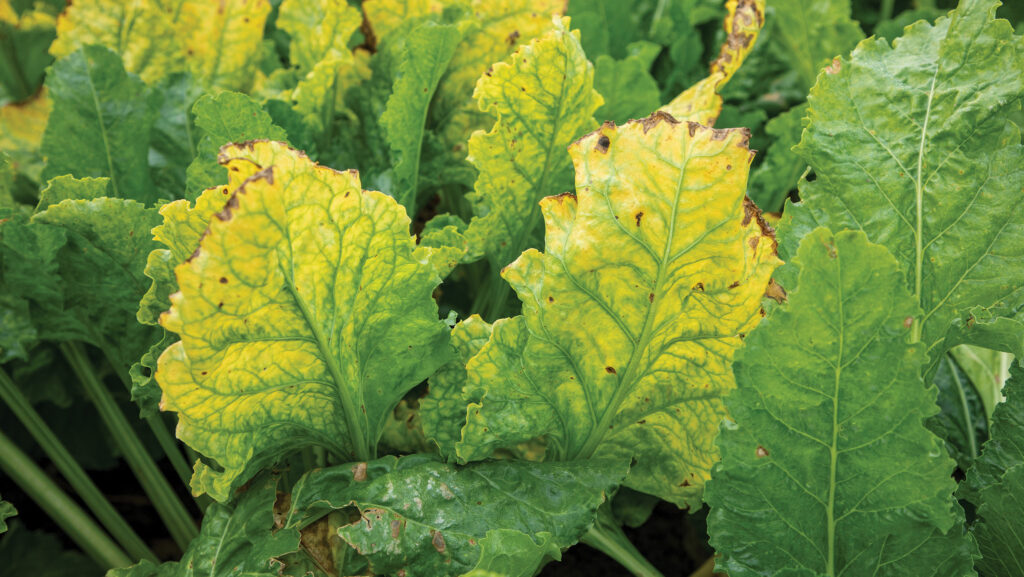
One of the most anticipated gene-edited traits is virus yellows resistance in sugar beet.
Virus yellows control is very challenging following the loss of neonicotinoid seed treatments, while, as a complex of three different viruses, it is a difficult target for conventional breeding to tackle.
Norwich-based biotech company Tropic, in collaboration with British Sugar, the Beet Research Organisation (BBRO) and the John Innes Centre, was using a process called RNA interference to naturally resist the viruses.
RNA interference worked in a similar way to antibodies, explained British Sugar’s head of science, Perry Bateman.
Researchers are working on virus yellows resistance in sugar beet © GNP
“When a virus infects a cell, it injects its genetic code to give instructions to the cell to make more copies and spread the disease.
“But within the cell there are short sequences of genetic material called short interfering RNAs.
“If their sequence matches the incoming viral genome, it forms a duplex and recruits other cell machinery to destroy it, silencing the effect of the virus.
The challenge was that the current sugar beet genome doesn’t contain any short interfering RNA sequences with the correct sequence, he said.
“But with Tropic, we can design edits in the beet genome to match and induce the silencing effect.”
Installing the edits in beet plants was far from straightforward, he noted.
“That’s the task of the John Innes Centre, with BBRO testing its success, before a seed breeding partner turns it into a commercial variety.”
As with other gene-editing projects, commercial acceptance of the technology was vital, he added.
“We sell sugar to manufacturing customers who make thousands of products, many of which are exported, so we need to be mindful of UK-EU alignment.”
British Sugar research had found that 69% of UK adults were in favour of gene editing, qualified by it being necessary for a sustainable resilient future for British farming.
“Support for the technology is real, but conditional on why we’re using the technology, so we need to explain with one plain language story for the sector,” he stressed.
Gene editing in cereals
Several projects are under way in wheat, including an example of a consumer-facing trait: low asparagine wheat.
Part of the Probity project, led by the British On-Farm Innovation Network (Bofin), Rothamsted Research has developed precision-bred lines that knock out asparagine synthetase genes, lowering the risk of acrylamide formation when wheat flour is baked or processed at high temperatures.
Bofin’s Tom Allen-Stevens explained the object of the Probity project was shorten timelines and reduce barriers for breeders to embrace precision breeding.
“It’s an on-farm platform that takes traits close to discovery and then accelerates development by getting enough product for the supply chain to test and invest in a trait,” he said.
Around 80t of a line containing the trait developed using mutagenesis is being multiplied up for testing by project partners.
Other traits being investigated in the Probity project include a trait that encourages bigger, bolder grains and barley that has been gene edited to suppress lipid breakdown in the leaves and stems to increase metabolisable energy of forage crops.
“The ground-breaking element is we have been bringing precision-bred crops onto commercial farms for the first time anywhere in Europe,” Tom stressed.
Another project to watch for is Wild Bioscience’s work on improving photosynthesis. “Photosynthesis is the engine of plant growth,” explained the firm’s Sam Gattis.
“So it’s one of our key targets for developing crops that boost farm efficiency and resilience.”
The process is surprisingly diverse, which the firm’s researchers have tapped into using machine learning models to engineer traits that allow plants to photosynthesise more efficiently.
“For example, we’ve identified a single native wheat gene that is capable of activating photosynthesis in an additional cell layer,” he said.
In C3 plants, this layer of cells around each vein in the leaves don’t play much of a role in photosynthesis, but by activating the gene in that cell layer through precision breeding, Wild Bioscience has increased the size of chloroplasts – the cell compartment where photosynthesis occurs – in these tissues.
“We have a growing pipeline of traits targeting various photosynthetic inefficiencies, and the first two have shown double-digit yield increases in plot trials,” Sam added.
“We’re now focused on getting these traits into the elite varieties we acquired with F1 Seed so we can get them in the hands of farmers as quickly as possible.”