Key benefits of new maize fungicide for growers
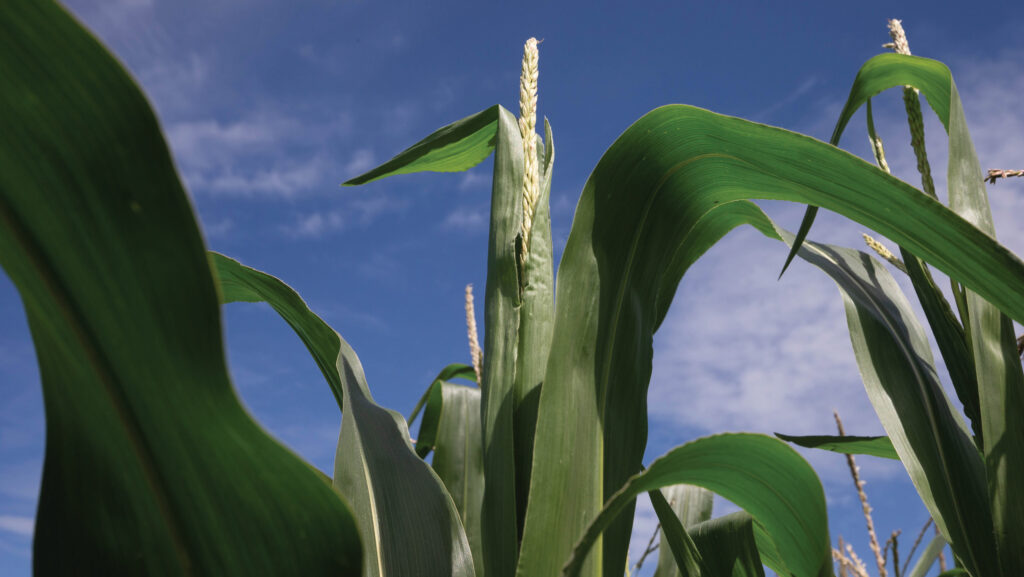 Maize in flower © Tim Scrivener
 Maize growers have a new-generation azole fungicide option for managing foliar disease at the critical stem extension to flowering stage.
While mefentrifluconazole is already familiar to cereal growers, the active is now available for use in maize as the product Belanty.
This offers a more potent choice for managing eyespot and northern corn leaf blight.
See also: How grain maize earns more profit than wheat for two growers
BASF business development manager Andrew Clune points out that while the potential size of the cob has already been laid down by the six-leaf stage, maintaining a good green leaf area from stem extension is critical to fill all the kernels and maximise yield.
Like the flag leaf driving most of the yield in wheat, the main leaves on a maize plant driving yield are the two before and two after the cob, says Andrew.
Therefore, it’s important to keep these leaves as clean as possible for as long as possible to maximise the surface area to intercept sunlight and drive yield.
Furthermore, 50% of a maize crop’s water requirement is in the month after tasselling.
“So you need a healthy crop with green leaves, as water stress at this time in summer can result in 4-7% yield loss a day.”
Looking at timing, as the fungicide needs to be applied preventatively in advance of any disease or at first signs, farmers need to target crops from early stem extension through to flowering.
“In reality, if you don’t have a high clearance sprayer, go in just before tasselling. If you do, go as late as you can before the end of flowering to give longer cover.”
This season is the first with Belanty, and in trials carried out by BASF, it gave better control (15-20% more) of eyespot compared with the company’s existing strobilurin option Comet (pyraclostrobin).
It achieved 80% control of the disease at 1.25 litres/ha (full rate), says Andrew. They also saw better control of northern corn leaf blight with the fungicide.
Despite not being on the label, he says the fungicide also has useful activity against fusarium.
Four key diseases in maize
Eyespot
The highest eyespot infection has always been in the East and South West, but BASF’s Andrew Clune says the high incidence in a recent Adas survey (79% nationally) suggests that it is no longer confined to these areas.
This is due to it liking cool, rainy conditions, which is being seen more in recent summers.
For germination, spores need seven hours of continuous leaf wetness.
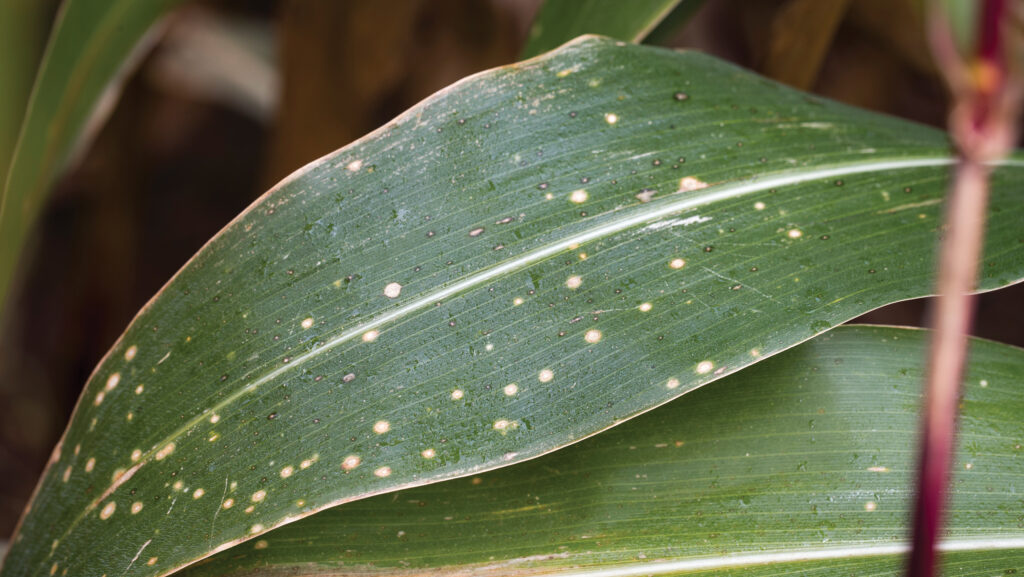
Eyespot in forage maize © GNP
With rain, heavy dews or crops grown near the coast, they will quite often have these conditions.
It spreads most rapidly at 10-12C and the incubation period is four to 10 days.
However, Andrew says the key thing is that it can come on rapidly and, within two weeks, farmers can see rapid drying down of the crop (leaf kill) resulting in 50% yield loss in severe situations.
Northern corn leaf blight
Andrew believes northern corn leaf blight is more widespread than assumed as symptoms are often put down to wind shear or mechanical damage.
Again, this disease enjoys cool, wet seasons, but likes slightly warmer temperatures (18-25C) than eyespot and a high humidity.
He warns there can often be high humidity within the crop.
In these conditions, it can spread rapidly within a crop. However, high temperatures and light intensity can inhibit infection.
Maize residue is the key source of inoculum so it can be more of a problem where farmers grow continuous maize.
The disease can dry a crop down within a few days with a severe infection.
Fusarium
This is more of a problem in grain maize and where following wheat in a rotation.
There are three species and it can attack the stem base in August/September.
Infections can cause lodging, especially in grain crops that are harvested later.
Kernal infection is favoured by cool, wet conditions particularly after flowering.
Rust
The last one is rust, which tends to be later in the season.
It likes cool, moist conditions late summer conditions and is spread by wind-borne spores.