Phoma disease predicted to appear later in OSR crops this autumn
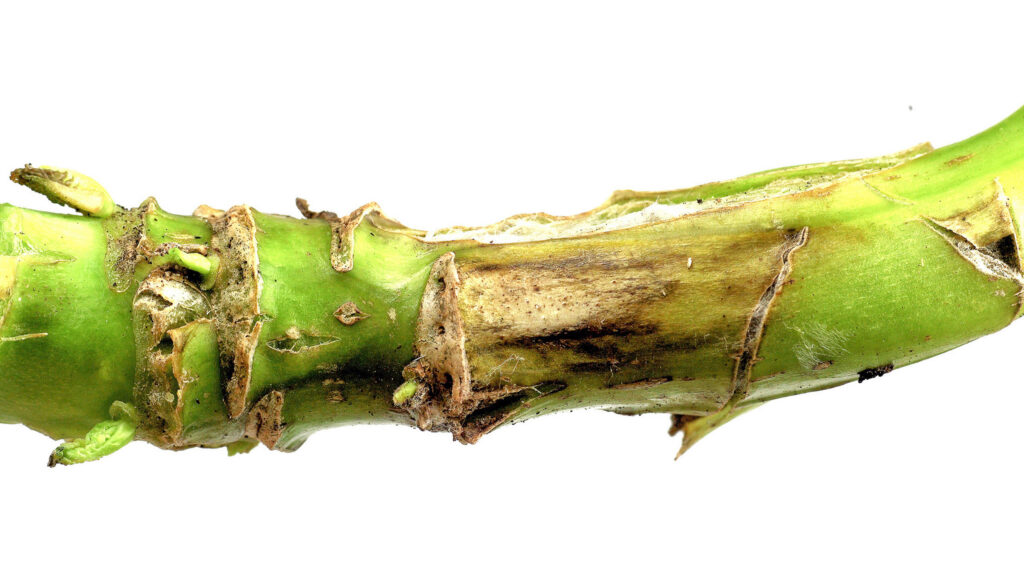 Phoma stem canker on an oilseed rape plant © Blackthorn Arable
 Phoma symptoms are predicted to appear a little later this autumn due to the drier weather, according to the latest AHDB disease forecast.
AHDB’s forecast models when 10% of oilseed rape plants may develop symptoms, and for this autumn it predicts that the fungicide treatment peak will start around the middle of October.
See also: SDHI fungicide-resistant phoma discovered in OSR
The forecast uses rainfall and temperature data from 15 July to 26 September to simulate the development of the phoma pathogen, explains AHDB senior crop protection scientist Catherine Harries.
Damp and warm conditions speed up spore release from infected stubble, crop infection and disease progression.
Forecast trends
A relatively high number of dry days in many areas has resulted in a slightly later predicted disease onset in this autumn’s forecast, compared with recent years (see table).
The forecast predicts that:
- Nearly half of the sites will reach the 10% threshold during the week commencing 18 October 2026
- Just over a quarter of the sites will reach this threshold in the following week
- A relatively small number of sites will reach this threshold in the first two weeks of October, which are mainly in the western half of GB.
As early phoma epidemics are the most damaging to yield, a later start to onset will generally reduce the impact of the disease.
Treatment thresholds
She warns that if the disease is left unchecked, classic stem canker symptoms can form around the leaf scars at the base of stems, especially in varieties that are relatively susceptible to the disease.
Therefore, it is important to treat small plants and varieties with relatively low Recommended List phoma disease resistance ratings first when 10% of plants develop phoma leaf spots.
Treatment urgency increases as the disease resistance rating falls below 7, which includes many popular varieties, according to the AHDB’s planting and variety survey results.
For varieties with a high level of phoma resistance, she suggests that they may not need a spray unless the 20% symptom threshold is exceeded.
Disease onset |
|||||||
| The proportion of forecast sites reaching the 10% phoma symptom threshold during seven starting weeks in autumns 2024, 2025, and 2026 | |||||||
| Year | 27 September | 4 October | 11 October | 18 October | 25 October | 1 November | 8 November |
| 2026 | 0% | 3% | 12% | 47% | 27% | 10% | 1% |
| 2025 | 5% | 12% | 28% | 36% | 14% | 5% | 0% |
| 2024 | 3% | 9% | 33% | 30% | 13% | 10% | 2% |