Why are seed-borne diseases such as bunt making a comeback?
 © Adobe Stock
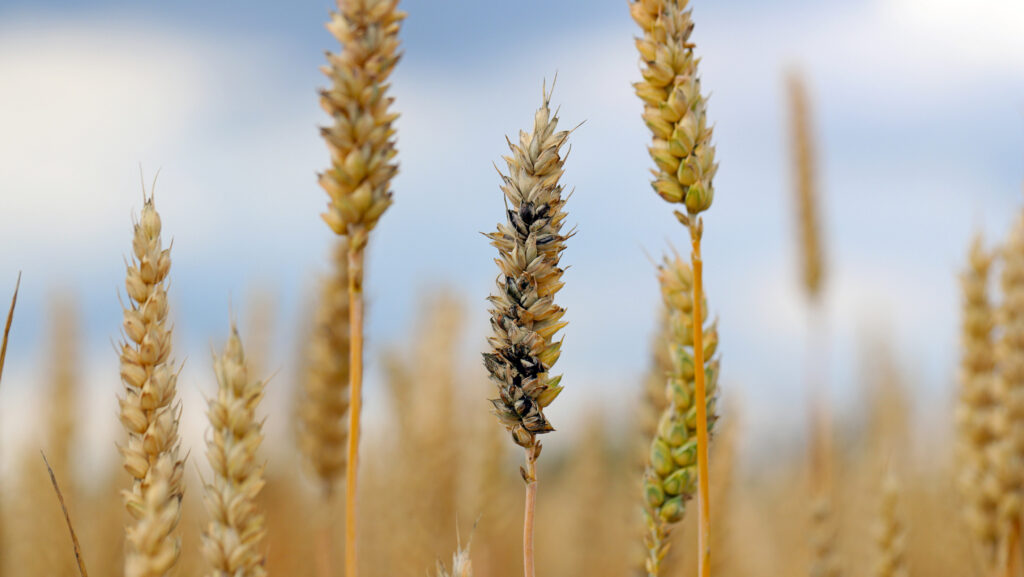
Some rarely seen seed-borne diseases, such as bunt, are making a comeback, with significant yield consequences in affected fields, says an expert.
“You usually never hear of bunt being an issue, but it’s being widely talked about among farmers this year,” says Tom Wheelhouse, technical sales manager at UPL.
“The thing with bunt is that if you have it, then it becomes an issue in the soil and will spread to neighbouring fields in the wind.”
If farmers combine a crop infected with bunt, you can pretty much guarantee it will be in the next field’s soil, he warns.
See also: Why climate change adds to septoria threat in wheat
The only way of controlling diseases such as bunt or fusarium, whether it is infected from the seed or the soil, is with a seed treatment, as no foliar fungicides will control them, he adds.
“Bunt symptoms will be observed close to harvest. However, the effect from seedling blights may not be obvious unless severe. Crops affected by seedling blight will have lower plant stand and lower yields.”
With the dry conditions of the past two years not especially conducive to the spread of seed-borne disease that tends to prefer wet soils and rainfall at flowering, Tom believes their increasing prevalence is due to fewer crops being treated with a fungicidal seed treatment.
Seed treatments
“In a way, seed treatments have been a victim of their own success. They’ve been so good at controlling these diseases that many farmers have never seen them before, which creates the perception that they aren’t a problem and they don’t need to treat their seed,” says Tom.
A greater emphasis on soil health has led some farmers to question whether they want to introduce a fungicide within the root biome.
Tom believes this is a valid point to debate, but it overlooks the fundamental purpose of seed treatment: protecting crop yields from highly damaging diseases.
“Seed treatments are a highly targeted intervention that delivers a fraction of the fungicide active ingredient a hectare when compared to a foliar fungicide,” he notes.
When choosing a seed treatment, Tom says farmers should opt for a product with the broadest range of diseases it controls, while also considering usability.
He points to Rancona i-MIX (ipconazole + imazalil) which gives good control of the barley diseases, particularly leaf stripe. “It’s also equally good on wheat disease such as bunt and fusarium,” he says.