

Take-all in wheat: Advice for growers as weather shifts risk
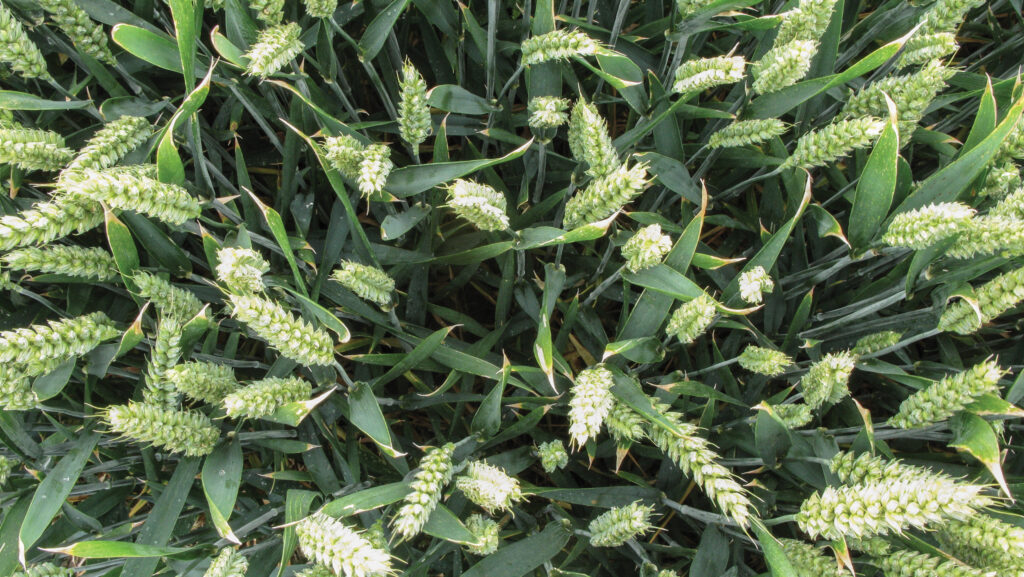 Wheat suffering from take-all © Blackthorn Arable
 Take-all is the most economically damaging root disease of consecutive wheats in UK arable systems, with yield losses in the range 10-20% common.
Its impact can be much worse in dry seasons or where rooting conditions are poor.
Work at Rothamsted Research is revealing how climate change is set to affect its incidence and severity.
See also: Whisky slowdown hits Scottish malting barley
Analysis of data from the institute’s long-term experiments show warmer, wetter winters and milder, wetter springs, followed by a dry or wet summer – including extreme heat – increase take-all infections.
An integrated approach to management is essential, with a range of rotational, cultural and targeted crop protection controls at growers’ disposal to help.
This is likely to make disease risk more variable and dependent on local soil type and weather conditions, says take-all research team leader Dr Nida Ghori.
“If we get more rainfall, we will ultimately get more disturbance to soil structure.
“And when drainage is poor, conditions are more conducive to take-all and we will see more disease.”
However, even in a dry spell, sufficient moisture may be retained in the crop root zone to enable take-all to be active, she adds.
“Especially if we have a wet spring, it doesn’t then matter what kind of summer it is going to be, soil moisture levels will be enough for take-all to survive, although summer conditions will influence the final severity,” she says.
Infection window
Take-all is a soil-borne fungus that attacks the root systems of cereal crops and restricts water and nutrient uptake, leading to stunted growth and premature ripening.
It thrives when soil temperatures are above 12C. With warming temperatures, there is a longer optimal window for take-all infection, explains Adas crop physiologist Dr Christina Baxter.
Increasingly volatile autumn weather patterns are pushing growers into earlier drilling, increasing disease risk in two ways, she explains.
First, warm soils favour development of the take-all fungus, and second, larger early root systems may also increase opportunities for root-to-root spread.
“Differences in root growth are also likely to be why we see varietal differences in tolerance to take-all.
“Delayed drilling remains one of the best cultural controls, but growers can be caught between waiting for cooler soils and ensuring crops establish well before winter.”
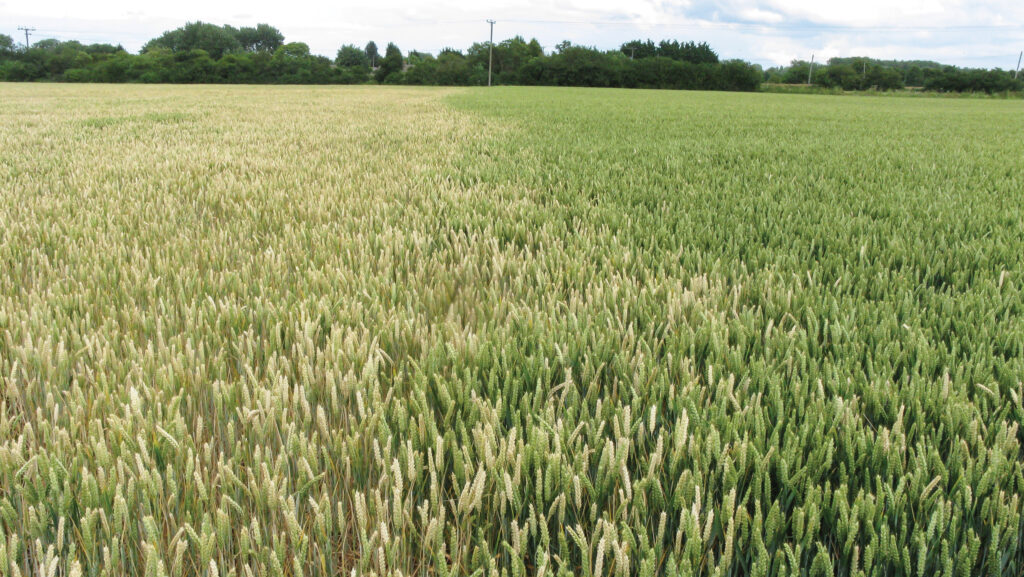
Wheat suffering from take-all © Blackthorn Arable
Soil structure also plays an important role, with compaction, poor aeration and waterlogging all restricting rooting and exacerbating disease effects.
Puffy, poorly consolidated seed-beds favour spread, which can be addressed by rolling.
Improving soil health through organic matter, cover crops and appropriate cultivations can also help crops build the root density needed to withstand stress later in the season.
Christina points out that Yield Enhancement Network (YEN) data shows wheat crops are maturing faster, with the grain-filling period shortening by around 10 days over the past decade as temperatures rise in June and July. That makes deep, resilient rooting systems increasingly valuable.
“Healthy soils support healthier roots, and healthy roots are becoming one of the key tools for climate resilience.
“If the root system is poor, the crop has little chance in a dry season.
“But where soils are healthy and can retain more water and roots can access water deeper in the profile, we see a huge difference in crop performance,” she notes.
Case study: One agronomist’s approach to take-all management
Take-all remains a constant threat in the wheat crops CCC Agronomy’s Jonathan James advises across the south coast of Sussex, particularly on the lighter brickearth soils where disease risk is high.
“We see take-all every year. Not at horrendous levels, but certainly on the lighter soils we see it quite regularly,” says Jonathan.
Managing the take-all risk has become more complex as weather patterns shift.
He is seeing warmer summers and increasingly mild autumns delaying the drop in soil temperatures needed to suppress the disease.
Traditionally, he has advised growers to drill second wheats from mid-October onwards, ideally once soil temperatures fall below 12C.
However, in recent seasons that threshold has arrived later than expected, and in autumn 2024, soil temperatures didn’t really hit 12C until around 20 October.
“This season it was probably a fraction earlier, but with the changing climate and the warm summers we’re getting, the autumn drop in soil temperature does seem to be getting later.
“This means growers may be drilling wheat into soil temperatures above 12C,” says Jonathan.
However, growers are wary of narrowing weather windows, with recent autumns following a pattern of prolonged dry spells, then a sudden switch to extreme rainfall events.
As a result, some growers may be tempted to drill earlier than ideal.
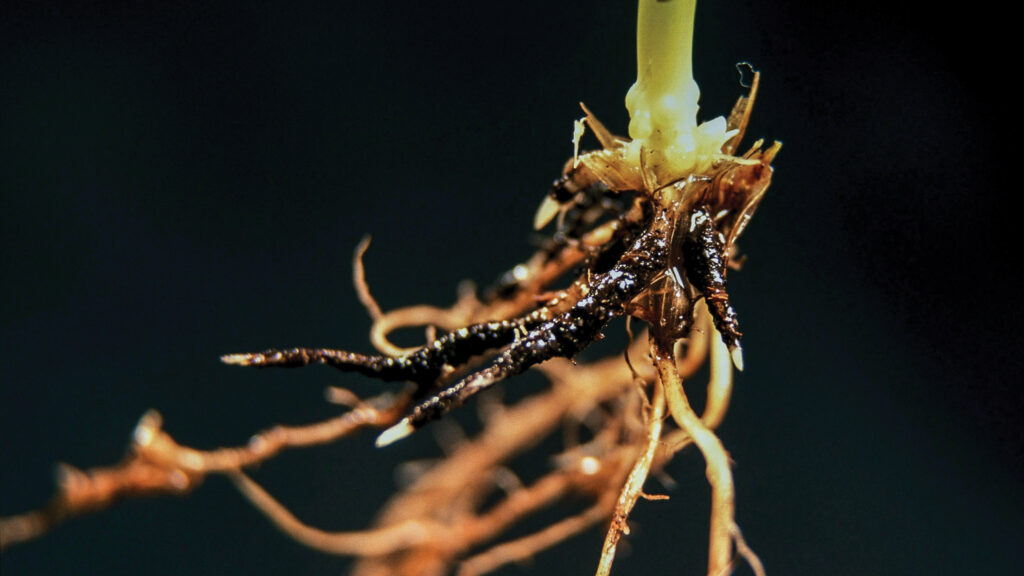
Wheat roots blackened with take-all disease © Blackthorn Arable
Mitigation and seed treatment
To mitigate take-all risk, Jonathan focuses on rotation, soil type and cultural controls.
Second wheats are generally put on heavier land and early destruction of volunteers is a priority.
He is concerned that susceptible cereal species in environmental seed mixes may build take-all inoculum, and factors this into rotation planning.
Seed treatment is an important part of his approach to take-all control with Latitude (silthiofam) used on “close to 100%” of second wheats, but he stresses chemistry alone is not enough.
“Latitude does help, but you’ve got to get all the cultural stuff right first,” he says.
The product remains the only approved seed treatment for take-all control in cereals and, 25 years after its introduction, continues to play an important role, says Leanne Fowler of Certis Belchim.
One of the key benefits is the additional flexibility it can provide where weather conditions narrow drilling windows, allowing drilling dates to be brought forward by up to two weeks without significantly increasing take-all risk.
“That flexibility can make a real difference, particularly in higher-risk situations such as second wheats, early drilled systems or where rotational flexibility is limited,” says Leanne.
The active ingredient silthiofam works by creating a protective zone around the developing root system.
Once in the soil, it moves gradually through the soil profile, helping protect new roots from primary infection and reducing the spread of secondary infection.
Long-term trials have shown the seed treatment delivers an average yield response of 0.55t/ha in winter wheat in moderate take-all situations.
“Protecting root function is increasingly important as climate variability places crops under greater stress.
“Take-all damaged roots struggle to access water and nutrients, particularly during drought or periods of heat stress, so using Latitude to mitigate its effects will help boost crop resilience in those difficult seasons,” adds Leanne.
