How careful growth built a 1,200ha mixed enterprise
 © MAG/Emma Gillbard
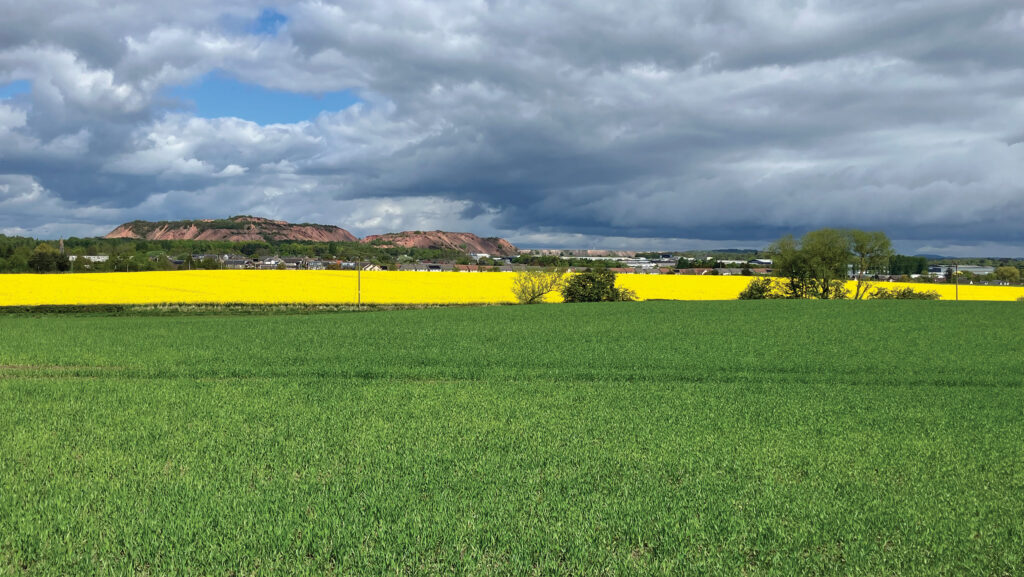
 Walter Dandie & Sons was one of the first farming businesses in Scotland to embrace contract farming, transforming a traditional 48ha mixed farm into a modern 1,200ha enterprise, finishing 500 head of cattle per year.
Today, the family operate over six units within a seven-mile radius of its home base in West Lothian near Edinburgh airport.
See also: Actions four farmers have taken to mitigate extreme weather
Staying local has been central to the business’ success. Proximity means fuel costs are kept under control, while allowing machinery and staff to move efficiently between farms.
David Dandie © MAG/Emma Gillbard
How it happened
The first step came when the family purchased 150ha of land over a period from the early 1970s through to 1985. Then, in 1993, they entered their first contract-farming agreement – at a time when the system was relatively new in Scotland.
Rather than chasing rapid expansion, the Dandie family adopted a measured approach. Further contract farming agreements followed in 2000 and 2007, giving them seven years between each addition to fully understand each farm, improve drainage and build soil fertility.
The pace accelerated in 2015, when the business almost doubled in size in just three years, but investment remained carefully planned.
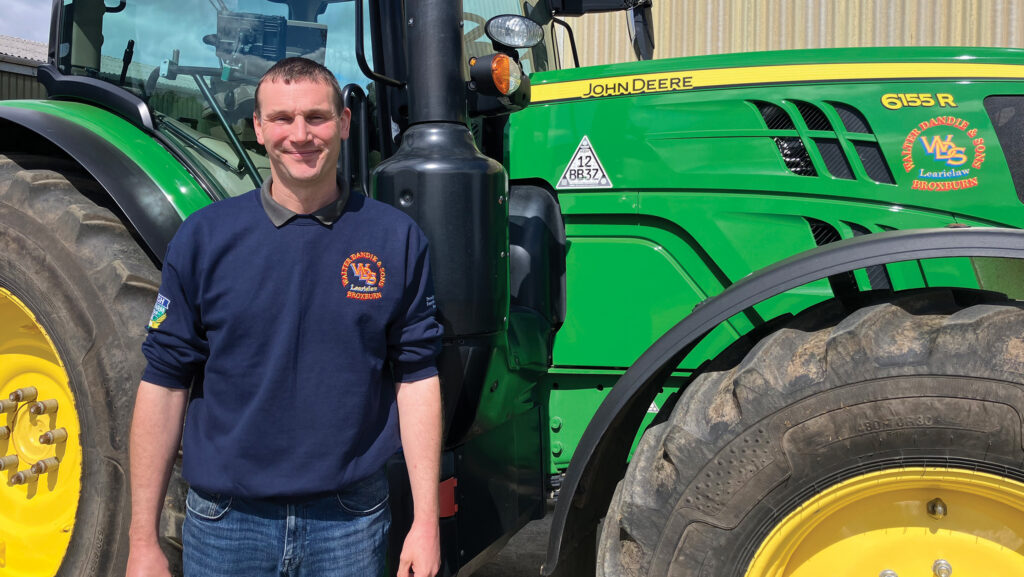
“You’ve got to understand costs and budget every year. Growth only works if every extra acre pays for itself,” explains David Dandie, who farms with brother William, father Walter and uncle Robert.
Having built a name for themselves, over the years neighbours approached the business to contract-farm their land.
“We’ve built up a good reputation, and that has created opportunities. However, we’re now much more selective when taking on land. We don’t want to just farm more acres, especially with prices where they are. Future expansion will only happen if the right opportunities arise,” says David.
© MAG/Emma Gillbard
Cropping rotation
The business grows:
- 400ha winter wheat
- 320ha spring barley
- 200ha winter barley
- 200ha oilseed rape
Winter wheat is primarily for the distilling market, destined for vodka, and feed wheats are sold into the poultry feed market. Spring barley targets premium markets, both for malting and seed.
Machinery and haulage business
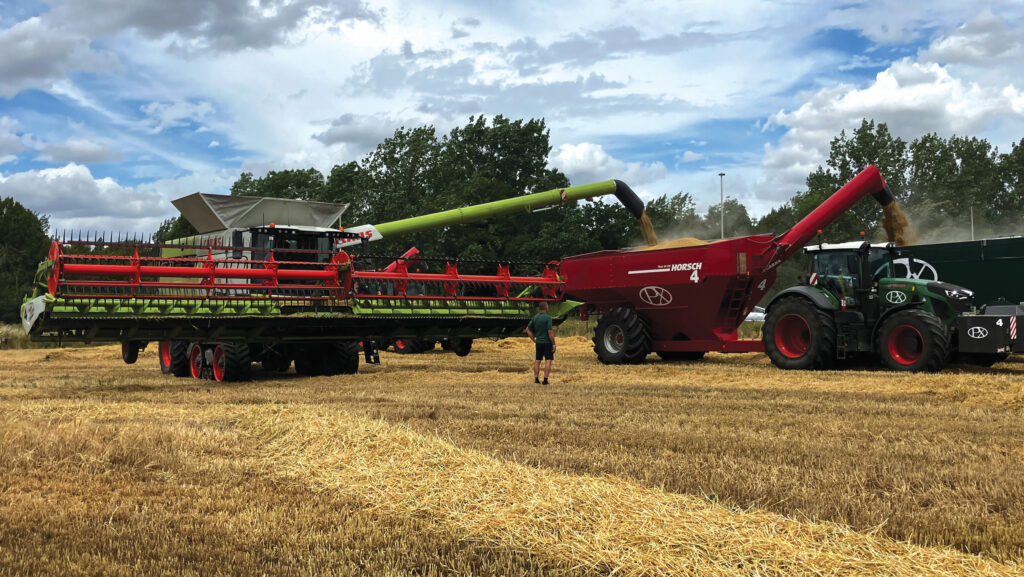
Machinery flexibility has become increasingly important as the business has expanded. The family now run two Claas combines: a 770 and a brand-new 8700 with 41ft headers, new for harvest this year.
Two trailed sprayers allow work to continue if one machine requires maintenance, while a dedicated water bowser eliminates unnecessary journeys back to the yard. The business also carries out about 280ha of contract spraying each year for neighbouring farms.
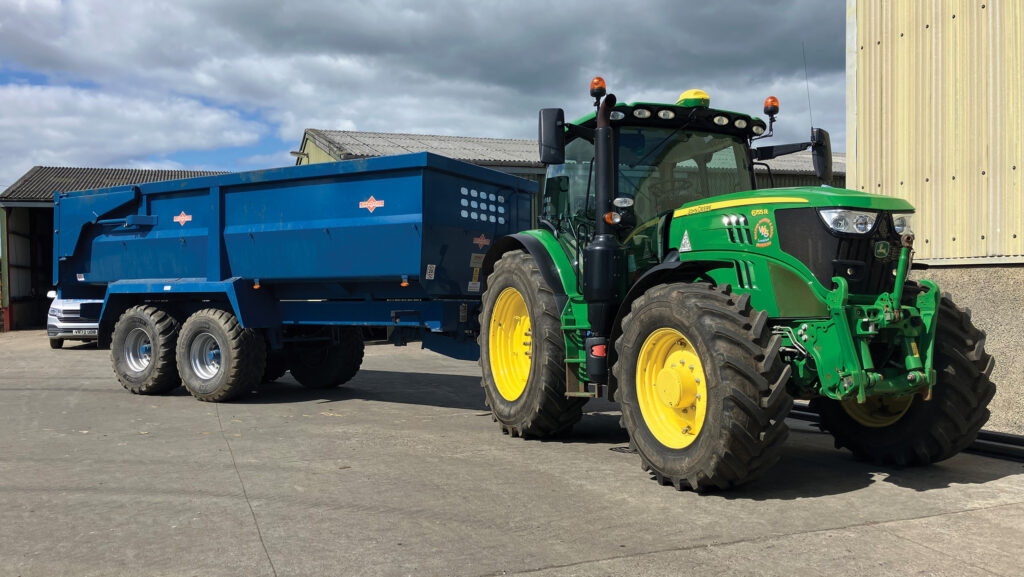
Alongside farming, the family has operated its own haulage business since the 1960s. A dedicated lorry transports grain, straw, fertiliser and lime, with about 99% of the wheat and approximately 60% of spring barley sold directly to processors.
All the oilseed rape is sold direct to crushers in Liverpool.
During the Covid pandemic, having the farm’s own transport proved particularly valuable, allowing grain to continue moving while many others experienced logistical difficulties.
“It really helped us improve communication and eliminated time waiting around the yard for lorries to load. We can now turn grain around rapidly,” says David. What is more, haulage work for neighbouring farms helps offset costs – particularly fluctuations in fuel prices.
© MAG/Emma Gillbard
Soil-first approach
Whenever new land is taken on, soil sampling is one of the first jobs. Establishing a baseline allows nutrient strategies to be tailored to individual fields. The business measures soil organic matter to monitor improvements over time.
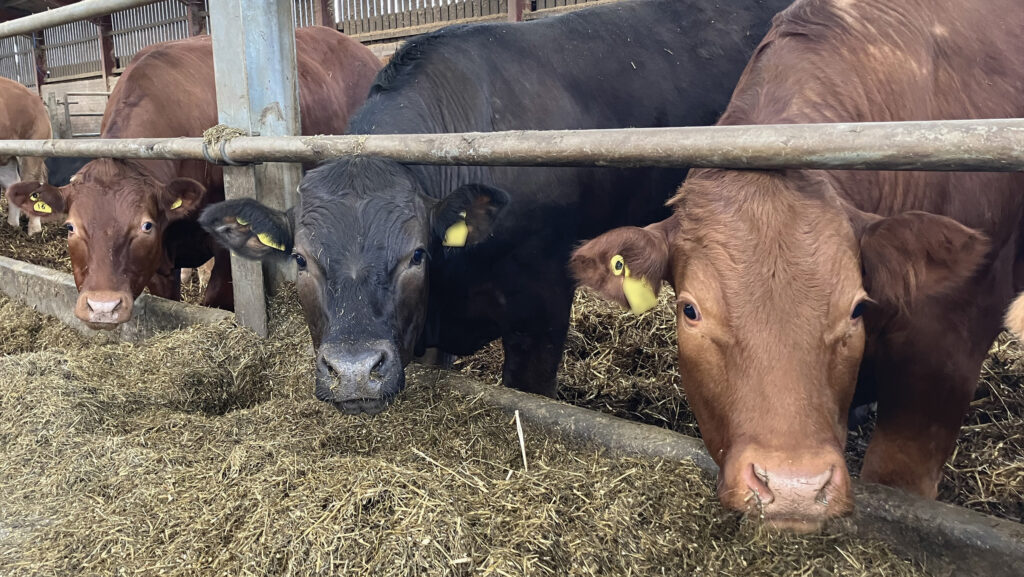
The farm fattens 500 Limousin cattle each year. Organic manure from the herd plays an important role in maintaining soil health.
About 3,000t of cattle manure is produced annually, supplemented by an additional 5,000t of bought-in compost. “This means every field receives organic matter roughly once every five years in the rotation,” says David.
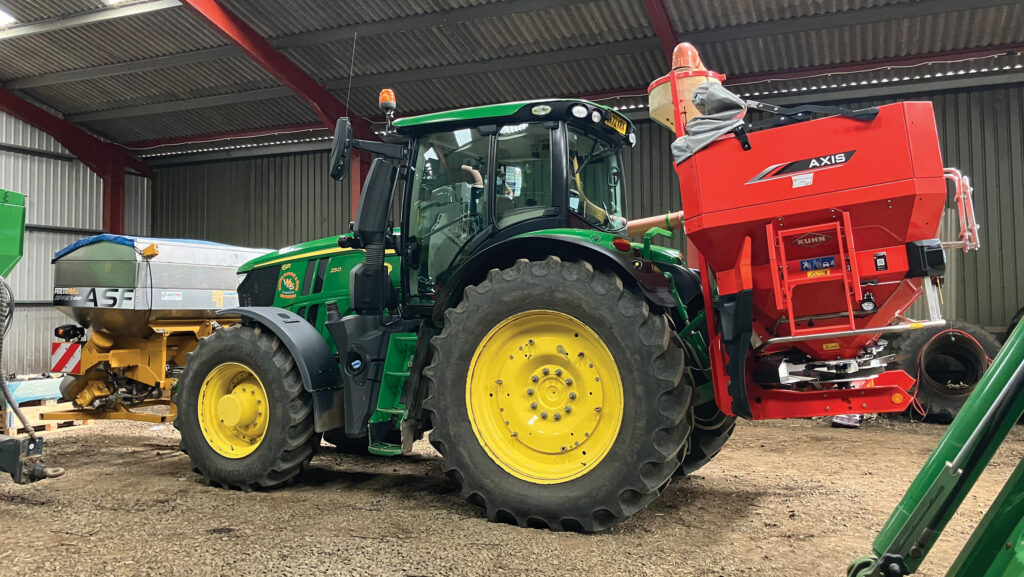
Burned poultry manure fibre is also applied using the farm’s own lime spreader, significantly reducing phosphate and potash fertiliser requirements.
© MAG/Emma Gillbard
Companion cropping success
One of the business’s most successful innovations has been companion cropping oilseed rape with berseem clover. The clover is broadcast at a seed rate of 4kg/ha and establishes quickly before dying off naturally in winter frosts.
This provides an early nitrogen contribution, noticeably improving crop colour.
“Previously, I would be panicking that I need to get nitrogen on in February, when the ground may still be wet and can cause soil damage, but crops are noticeably greener with the clover companion,” says David.
Originally introduced to stay ahead of a possible environmental support scheme, the practice has delivered several benefits alongside the early boost of nitrogen, not least reduced pigeon grazing.
The system now covers the farm’s entire oilseed rape area, and has helped produce consistently strong yields of 5t/ha.
© MAG/Emma Gillbard
Fine-tuning nutrition
Crops are inspected on a weekly basis to help fine-tune inputs across the large acreage – which means a close relationship with the farm’s agronomist.
Nitrogen is applied using a little-and-often approach to offer more consistent growth throughout the season. Winter wheat receives four applications of 50kg N/ha. A similar method is used in the barley.
Rather than combining sulphur and boron with nitrogen, the nutrients are applied separately using granular products to improve crop uptake while allowing large areas to be covered quickly.
Flexible establishment
Cultivation methods vary depending on crop and field history. Minimum tillage is used ahead of oilseed rape and first wheats, while second wheats and spring barley follow one of the farm’s five ploughs.
Trials using a minimum-tillage establishment technique for second wheats resulted in lower yields than the plough-based method.
“The plough remains an important tool for controlling wild oats and maintaining seed crop quality. We are beginning to see brome sneak into some fields. The plough is essential to keeping on top of this,” he says.
Winter wheat drilling begins during the first week of September, followed by winter barley near 20 September and second wheats are drilled at the end of the month.
Looking ahead
Cover crops are becoming increasingly important within the rotation, with about 80ha established annually, using species including berseem clover and phacelia, which are in turn grazed by a neighbouring sheep flock.
David says if there is opportunity to expand, they will explore it, but with prices where they are, the business is much more selective now. He advises growers to fully understand costs and budget each year.