Advice on gaining a clear picture of soil nitrogen levels this season
 © Tim Scrivener
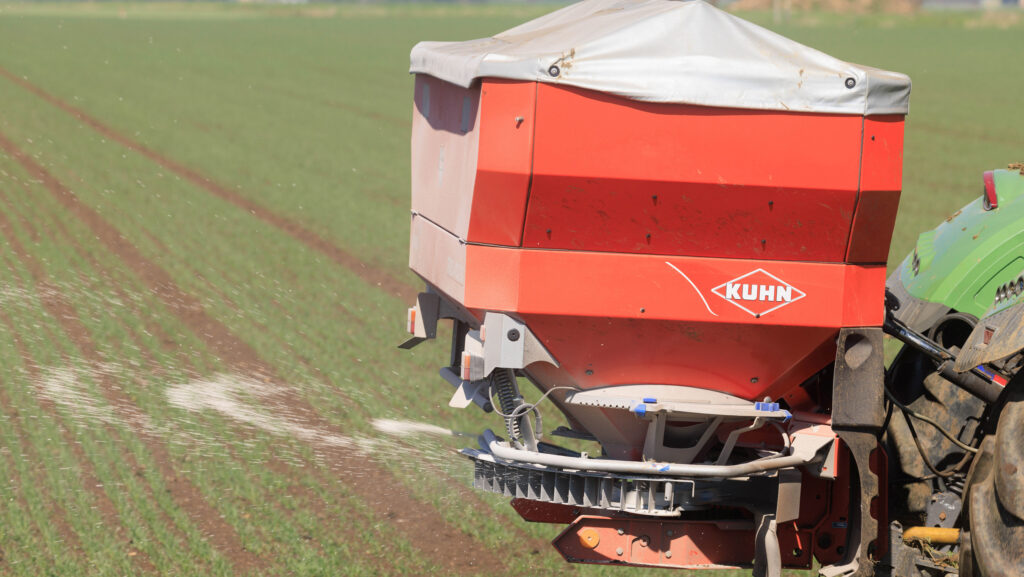
 With some uncertainty about how much residual nitrogen is in soils, growers are being urged to consider getting fields tested ahead of early fertiliser applications.
Hutchinsons fertiliser and crop nutrition specialist Rob Jewers says there are two conflicting factors that have added to the uncertainty around soil nitrogen levels this season.
See also: The role of cover crops in nitrogen management for potatoes
On the one hand, early soil mineral nitrogen (SMN) testing before Christmas indicated that levels were higher than normal, as last year’s drought conditions and disappointing yields in some areas meant crops had not fully utilised all of the nitrogen available.
“However, since then, heavy rainfall during December and January in much of the UK may have washed some of that nitrogen further down the soil profile, confusing the picture,” says Rob.
Gain greater accuracy
Typically, many growers use published figures in the Nutrient Management Guide (RB209) to estimate soil nitrogen supply (SNS), requiring just three pieces of information – excess winter rainfall, soil type and previous cropping.
“While not perfect, this gives a good indication of soil nitrogen supply in the majority of situations,” says Rob.
However, where SNS is likely to be greater, or there is more uncertainty over levels, it is worth measuring soil nitrogen. Growers and agronomists can then tailor spring nitrogen applications accordingly.”
The Hutchinsons SMNPlus test is based on three key pieces of information:
- a measurement of soil nitrogen based on soil samples collected from the field and analysed in the lab
- an estimation of nitrogen in the crop based on Green Area Index (GAI)
- an adjustment for net mineralisable nitrogen if required.
Getting results from lab analysis of samples can take up to a fortnight, so growers should speak to their agronomist to arrange soil testing well in advance of the first planned fertiliser applications, with January to mid-February generally being considered as the best time to sample, Rob notes.
Fields with significant variations in soil texture, or those with a history of organic manure application and vegetables in the rotation, are among the priority areas for testing, as are any fields that experience regular problems with lodging, very high grain protein or nitrogen contents, he adds.
“Nitrogen residues can also be large following outdoor pigs, and testing may be worthwhile where long leys or permanent pasture have been recently ploughed out, but not in the first year after ploughing.”
Making the most of early nutrition
Rob highlights 10 tips to get the most from early nutrition.
- Measure what’s in the soil – do an SMN test.
- Aim to apply macronutrients (principally nitrogen) early – experience shows that applying the first 100kg N/ha earlier in the season generally gives the best response, especially if conditions turn dry later in the spring, as in 2025.
- Be wary of increasing disease or lodging risk in high biomass crops – where necessary, and practicable, consider splitting the first dose, leaving a couple of weeks in between applications to avoid a sudden flush of soft, sappy growth.
- Adjust the flat rate according to crop requirements -flat rate nitrogen applications are generally preferred over variable rates for the first dose, to establish a base level of nutrition within the crop.
- Watch later-sown crops – which may have less well developed root systems for accessing soil nutrients, so will need sufficient nutrition applied early, especially if nutrients have washed down the soil profile over winter.
- Don’t forget sulphur – sulphur is crucial for effective nitrogen utilisation, so should be included with early applications, either as a compound, or separate products.
- Consider other nutrients – such as phosphate if not applied to the seedbed. Biostimulants, for instance, foliar phosphites, can also aid rooting and phosphorus uptake. Manganese is another key nutrient to consider where deficiencies are likely.
- Check soil pH – sub-optimal pH is the single biggest influencer of nutrient availability, and options are available to help rectify problem areas in-season (such as granular lime).
- Be flexible with fertiliser product choices – adapting to conditions and crop requirements throughout the season.
- Monitor crops closely and use tools – GAI tools, Omnia satellite imagery, tissue testing, sap analysis, and other sensor technology can help more accurately assess crop development and nutritional requirements.