How technology is delivering income and impact at scale
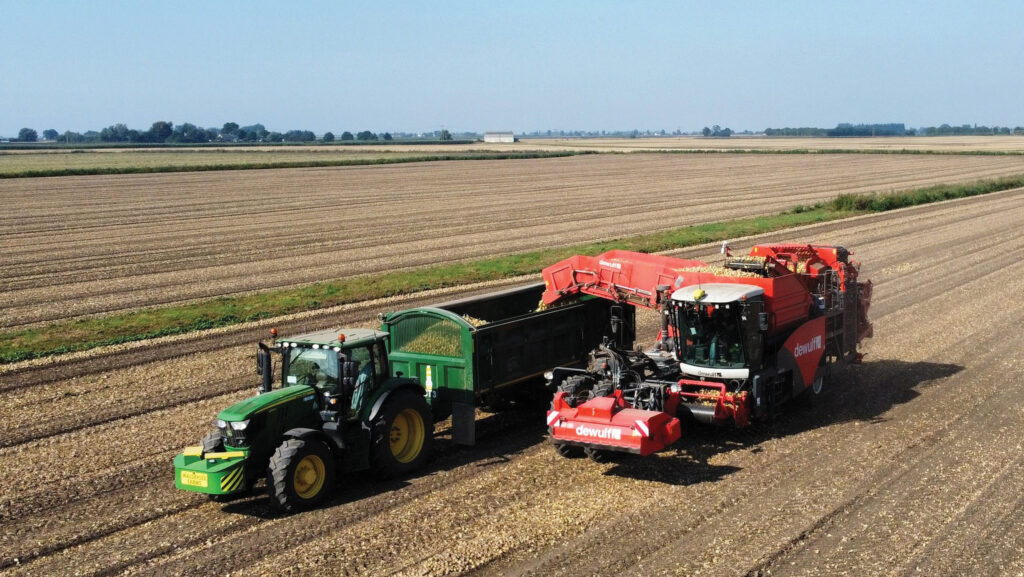 © Waldersley Farms
 New technology has a central role in the day-to-day operations at Waldersey Farms, but only where it fits with the strategic direction of the 8,000ha business and improves data-led decisions.
Rather than adopting technology for the sake of it, the impact of innovation is assessed before being rolled out. The potential for additional income from its use is a major consideration.
See also: 4 new nitrogen management technologies and how they work
Waldersey Farms managing director Mark Hall says the business focus is three-fold:
- Reduce the cost of production per tonne
- Bring the carbon footprint down to zero by 2040
- Improve the health, safety and welfare of the 28-strong farm team.
As an example, every member of the team has been equipped with an iPad, iPhone and Apple watch, with a resulting 30% reduction in the administrative burden that a business of this scale is familiar with.
Mark looks for innovation that improves input efficiency and helps to access premium markets. He also aims to reduce risk and measure environmental impacts.
“Technology needs to lower our costs and help us to meet higher environmental standards. It has to work alongside our efforts to produce high quality food, preserve habitats and improve the soil,” he says.
Getting a return from new technology is just as relevant for a big operation producing root, vegetable and combinable crops such as Waldersey Farms as it is for a smaller farm, he stresses.
Mark says his 260ha family farm in Bedfordshire also benefits from a similar approach. “Making it pay is key,” he says.
“The size of the business is less important – if it helps with decision-making, meeting sustainability requirements and enabling new income streams, it usually has a place.”
In use now
The farm is making the most out of the John Deere Operations Centre and Omnia precision farming software for variable-rate drilling and fertiliser applications.
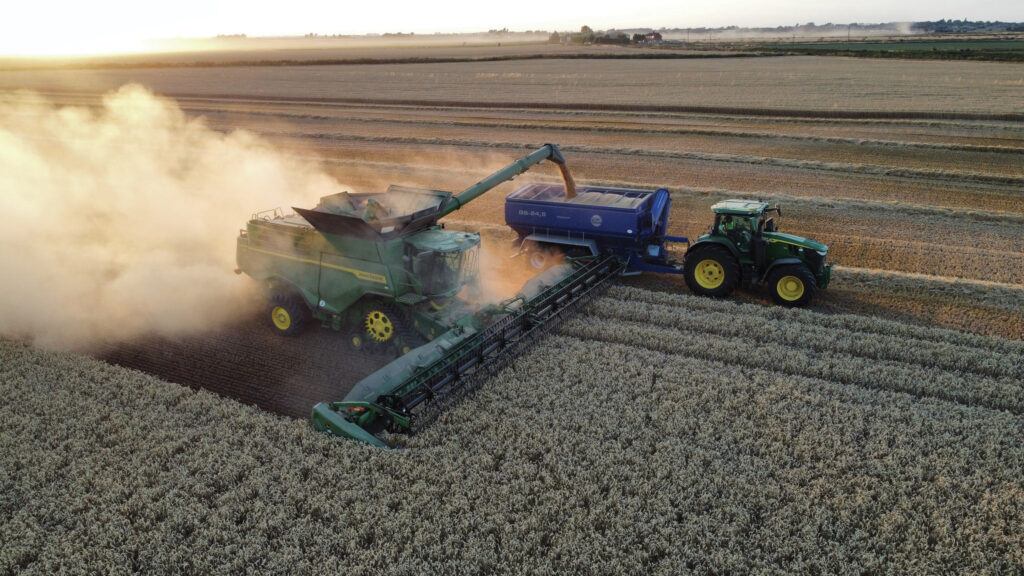
Data integration across the platforms is working particularly well. Automation is also proving its worth, with the John Deere X9 combines optimising throughput and grain quality, adjusting ground speed and settings in real-time.
“These are outpacing other machines now and boosting harvest performance.”
Biologicals have earned a place for their potential to reduce reliance on other inputs, with endophyte-based Nuello iN seed treatment being tested across crops to replace some nitrogen fertiliser or improve nitrogen use efficiency.
© Waldersley Farms
Herbicide reductions of up to 50% are being achieved in onions and sugar beet using Ecorobotix spot sprayers, which allow real-time green-on-green spot spraying.
Mark points out that yield gains are coming from reduced phytotoxicity.
“Drone weed mapping 72 hours before application is part of the herbicide reductions story too – we can use section control and pulse width modulation to bring down herbicide use and minimise any phytotoxic effects.”
The business is also going further with its soil carbon and harvest data by combining it with normalised difference vegetation index (NDVI) and electron-vibrational interaction (EVI) spectroscopy readings, all of which goes into an artificial intelligence (AI)-enabled decision support system.
Currently, that costs the business £45/ha a year. “The aim is better nitrogen use efficiency,” explains Mark. “We are hoping to see a real step change.”
What’s next?
Mark hopes to use 3D mapping technology to carry out habitat development and carbon sequestration assessments.
Using drone and aerial based LiDAR remote sensing technology the plan is to map key habitats, farmyards and highlight drainage issues.
“From the ditch analysis, we will be able to see where any remedial work is needed before damage is done,” he predicts.
AI is another key focus. With autonomous machinery already available, the ability to combine historic and real-time data on climate, soils and crops is paving the way for predictive agronomy, he suggests.
“The move from being reactive to predictive will have huge benefits for a business of this size and complexity.”
It will also allow supply chain optimisation and sustainability analytics, both of which will reduce waste, improve efficiency and help with monetising reductions in carbon footprint and meeting environmental goals.
“Taking our weather, agronomy, machine, soil and satellite data, combining it and then analysing it, will help decision-making.
Ultimately, we want to bring our costs down while raising our standards and building resilience.”
Peat soils
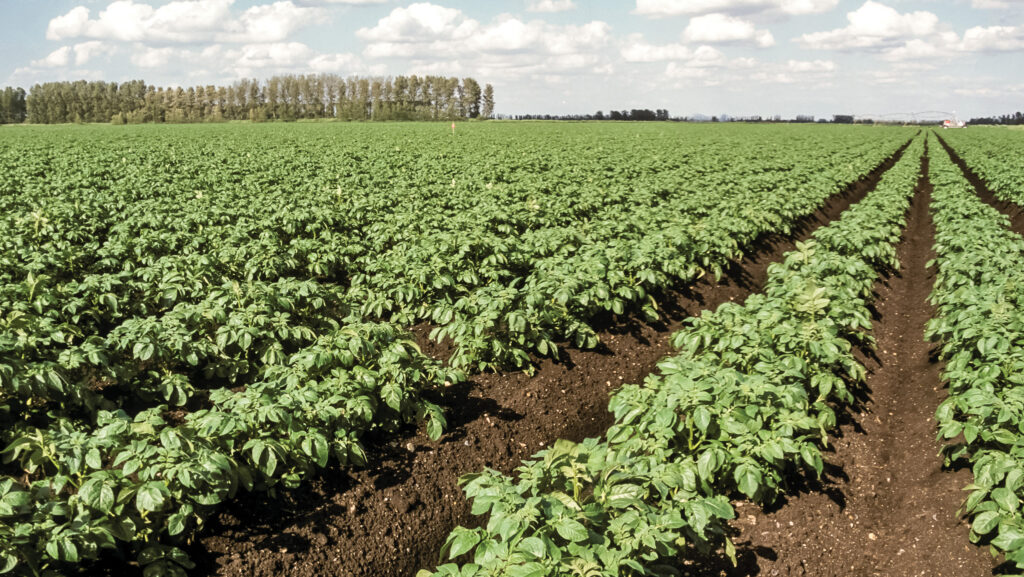
Peat soils are prone to erosion © Blackthorn Arable
Farming on the Cambridgeshire and Norfolk peat and silt soils can bring some unique challenges.
That’s why Waldersey Farms implement practices that limit soil erosion to balance food production with environmental protection.
Environmental baselining has been carried out.
The farm worked with the UK Centre of Ecology and Hydrology, to understand more about the impacts of farm practices on such a precious resource and to help meet climate targets and mitigate risks.
Across the estate, farm operations data is combined with autonomous biodiversity monitoring systems.
This tracks insect numbers in real-time, so the effects of farming practices on the wider ecosystem are better understood.
This also allows habitat creation schemes and landscape recovery plans to be developed to improve biodiversity over time.
The farm is using four greenhouse gas flux towers across the silt and peat soils to measure exchanges of greenhouse gases from the land and crops to the atmosphere at scale, with lower-cost flux chambers and peat cameras also in place.
“All of this data helps us to understand more about what’s happening on a landscape scale and how we can work to protect the environment,” says Mark.