Narrow row spacing and livestock key to farm’s high yields
Narrow row spacing and evenly planted crops are key to achieving consistently high yields on David Passmore’s Oxfordshire farm, with winter wheat frequently achieving 12-14t/ha.
All cereal crops are drilled at 12.5cm row widths, and David says he would sow crops even narrower if he could find a drill to do so.
Looking to optimise spatial arrangement of plants and maximise light interception, David got involved with a trial four years ago comparing standard 12.5cm row spacing with a cross-drilling method.
See also: Caithness farmer grows over 10t/ha spring oat crop
Cross-drilling
This double pass system sees winter wheat drilled with the standard drill at half seed rate, followed by a second pass perpendicular to the first.
The crop is effectively drilled in an X shape across the field. This saw a 0.7t/ha yield uplift, due to reduced competition.
© MAG/Emma Gillbard
The cross-drilled area had the same plant density as the conventional (325 to 350 seeds/sq m), but with more evenly spaced crops in what was effectively a 6.25cm row in each direction.
David now cross-drills half his winter wheat area each year. In fact, he won gold for the highest yielding winter wheat in the 2026 YEN Awards with a 14.3t/ha, cross-drilled wheat.
He says the double pass works well, but time and labour constraints are the main issue, especially when drilling windows are constrained by the weather.
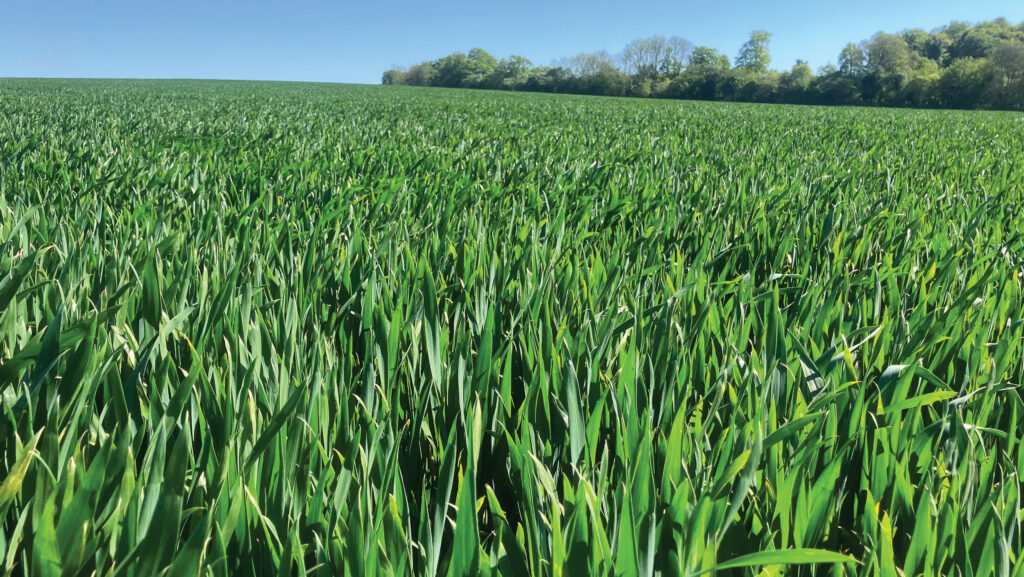
Winter wheat crop © MAG/Emma Gillbard
This left him wondering if he could make further improvements in the spatial arrangement of plants.
Collaborating with crop specialists Niab and Adas, David set about investigating the benefits of sowing wheat in a hexagonal pattern to achieve equal plant spacing.
This saw him individually plant 11,000 wheat seeds, as machinery for this level of precision planting was not available, in replicated trial plots
A yield benefit of 1.1t/ha from the hexagonal arrangement was achieved, compared with the 12.5cm row farm standard.
With clear room for improvement in how crops are established, David is now exploring how he can modify a drill to broadcast seed to create a randomised sowing effect, with uniform sowing depth.
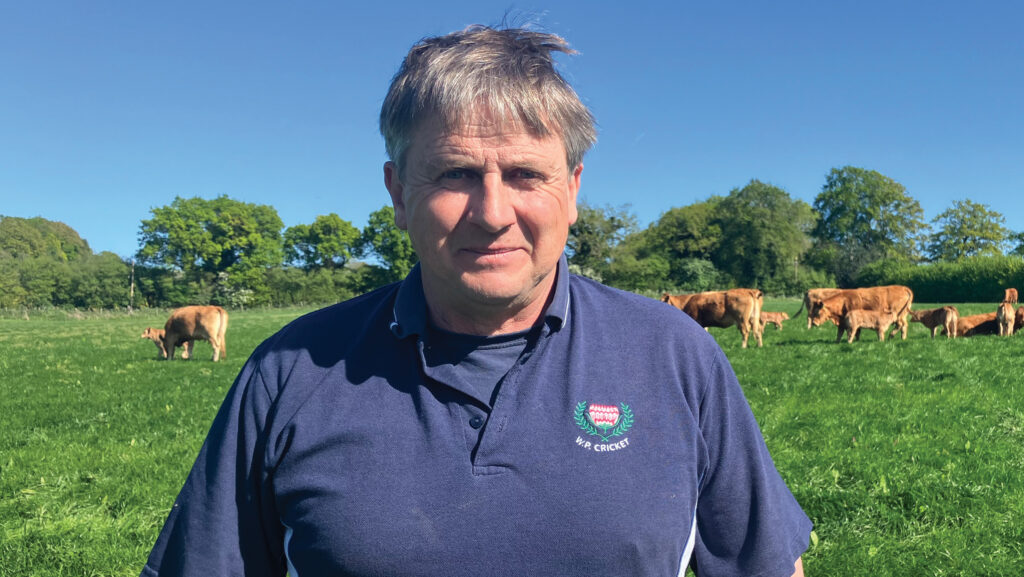
David Passmore © MAG/Emma Gillbard
Mixed farming underpins performance
While precision establishment is central to yield success, David believes the foundation of consistently high yields lies in a long-standing mixed farming system that integrates both beef, sheep and herbal leys.
“The reason the YEN field achieved more than 14t/ha wasn’t just because of the wheat crop itself.
“It was also because of the grass, the cattle and the longer rotation that came before it,” he says.
The Oxfordshire farm has operated as a mixed unit since the family took it on in 1959, and David says the benefits have accumulated over the decades.
“Mixed farming has always been part of what we do.
“In the 1970s and 1980s, the industry saw a huge shift towards chemical use and more specialised systems, but we continued to integrate livestock.
“It’s encouraging to see more interest in mixed farming again. The benefits have always been there.”
Each enterprise supports the other
Around 30% of the farm is in grass at any one time, a balance David believes is critical to maintaining soil health and profitability across the business.
“The winning wheat field is now a field of grass. Many would question: why not go for a second wheat crop? It could achieve 10t/ha, but each enterprise supports the other.
“The reason the field reached 14t/ha was because of the grass, the cows, and the extended rotation,” he explains.
The plough is fundamental to cereal crop establishment and effective weed control, but because grass makes up 30% of the rotation, not every field is ploughed each year.
Fields receive no crop protection products during the three-year grass ley period, providing opportunities for insects, birds and wider biodiversity to flourish.
David targets premium seed markets, producing high-specification crops that benefit from clean fields and lower weed burdens created by the grass-based rotation.
“The livestock improve the soils, the soils improve the crops, and the crops and wide rotation provide feed and grazing opportunities.
“Overall, everything performs better because of everything else.”
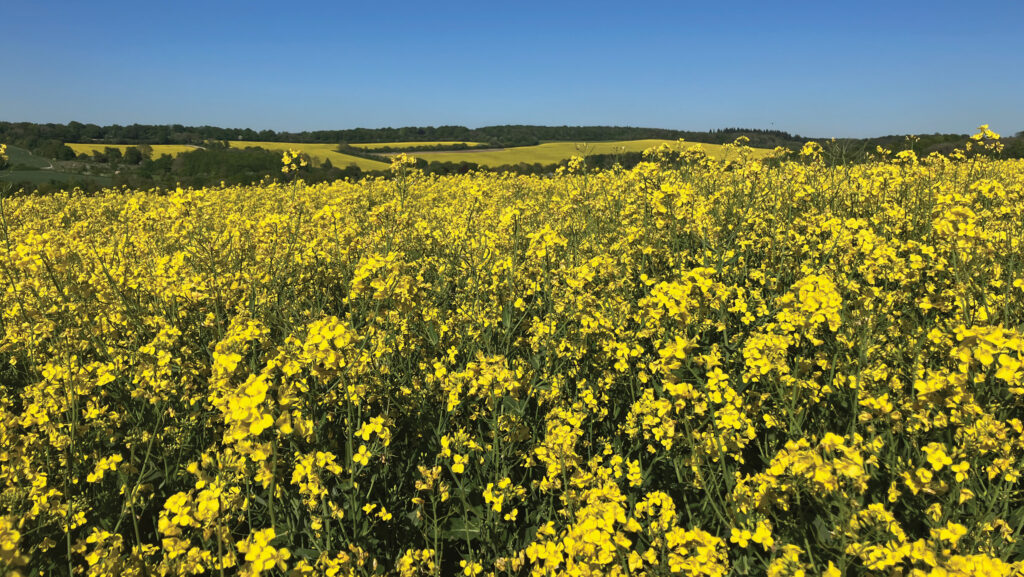
OSR crop © MAG/Emma Gillbard
The rotation generally consists of three years of grass, followed by winter wheat, oilseed rape, then either peas or spring barley, another wheat crop and back into three-years of grass.
Livestock and herbal leys
The livestock enterprise includes 160 Limousin cattle and 200 breeding ewes.
Sheep initially graze herbal leys before spending winter on crop residues and stubble turnips, while suckler cattle are outwintered.
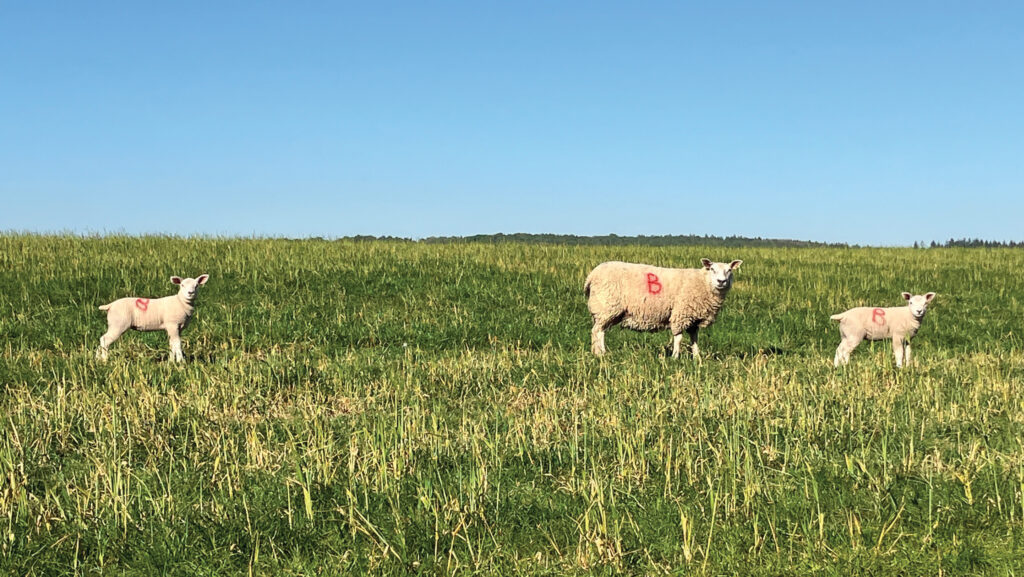
Sheep on David Passmore’s Oxfordshire farm © MAG/Emma Gillbard
Sheep lamb on new leys, with cattle grazing the second and third-year grass.
Herbal leys containing deep-rooting ryegrasses help improve resilience by drawing nutrients from deeper soil layers and increasing organic matter.
As a result, soil organic matter levels have stabilised at an impressive 8-9%.
“Ryegrasses have a “mining” effect on nutrients, bringing them up from deeper in the soil.
“The following winter wheat benefits from this, helping crops survive drought conditions.”
These benefits are particularly evident in dry seasons.
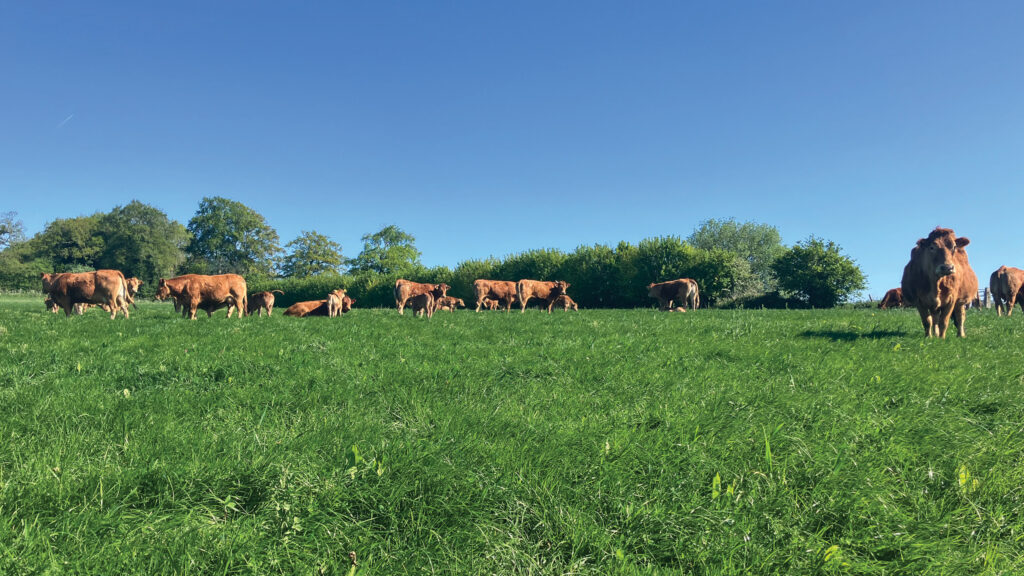
David Passmore’s cattle © MAG/Emma Gillbard
David often finds wheat yields are higher in drier years, when healthy soils with strong organic matter reserves help crops access moisture and continue filling grain.
Wet seasons, by contrast, tend to have a greater impact on performance, with septoria remaining the biggest yield-limiting disease.
Emphasis on T3 timing
To protect yield potential, David operates a robust fungicide programme.
With yellow rust pressure increasing, T0 applications are becoming more routine, while particular emphasis is placed on the T3 timing.
“People are often focused on harvest by that stage, but keeping crops green right through the end of the season is where a lot of yield is built.”
Frequently, wheat crops are still green well into July, continuing to build yield later into the season.
Organic sources supply much of the farm’s phosphorus and potassium requirements, while magnesium sulphate is applied to address deficiencies commonly found on the farm’s chalk soils.
Maintaining adequate magnesium levels also helps reduce the risk of grass staggers in livestock.
Ultimately, David views the farm as a series of interconnected enterprises all working together to benefit one other.