

4 new nitrogen management technologies and how they work
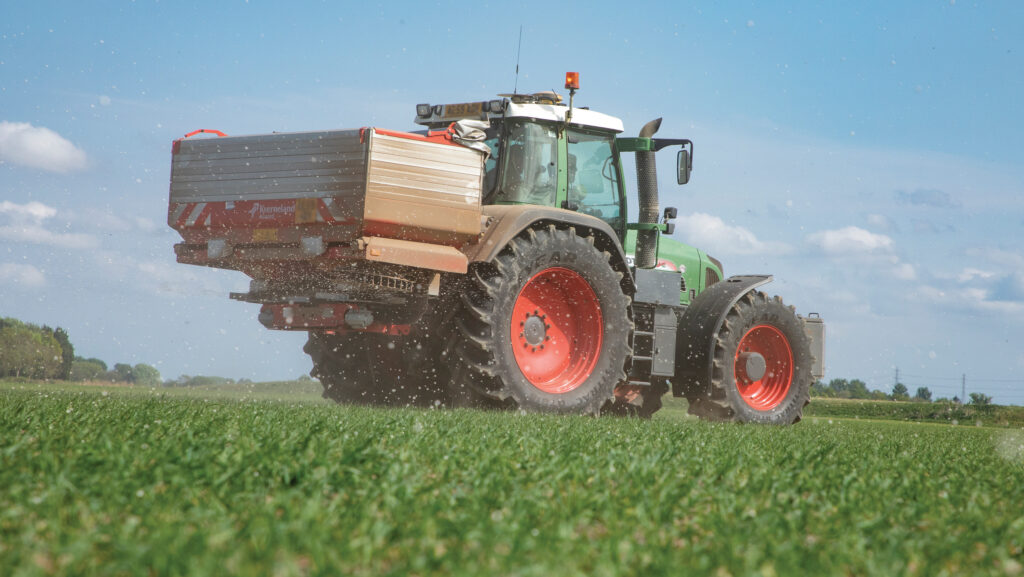 © GNP
© GNP Several firms across Europe are developing and launching new technologies for measuring the nitrogen requirements of arable crops.
Improving nitrogen use efficiency has both environmental and economic advantages for farmers; at the moment about 50% of applied nitrogen fertiliser is wasted.
These four new technologies promise to accurately measure nitrogen in soils and plants and potentially help growers more precisely apply the nutrients needed for optimal plant growth.
See also: Foliar urea fails to deliver in AHDB trials
1. Miniature lab in a box
A shoe-boxed sized sensor that’s buried 30-60cm deep in a field is German start-up Soilmonitor’s solution.
Inside the box is as a miniature laboratory. “It runs the same chemical assay test to measure plant available nitrate as they use in the lab,” says Soilmonitor chief sales officer Nicholas Enders.
The version being field tested at Kiel University’s experimental farm uses negative pressure, similar to a suction cup, to draw in soil solution onto a microfluidic chip.
The necessary chemical agents are added and mixed to create a colour change that is both nutrient specific and measurable, Nicholas explains.
“The result is sent wirelessly from the buried box to the farmer’s phone or laptop. It means the farmer no longer has to do manual sampling or even go to the field again after burying the box.
“Our aim is that the box should work for a year.”
Currently, the test takes about an hour to run, but Nicholas says further development will reduce that time, running a test every couple of days.
“Our aim is for the box to be able to take at least 100 measurements. The main limitation is not the reagent volumes, but battery life and chemical stability.”
While evaluation is still ongoing, in relatively homogenous fields, he suggests three sensors should provide good average values; more variable fields may need more for a true value.
“There’s still benefit in seeing changes in trends and, for that, one to three boxes would be enough.
“That would provide information about how weather, fertilisation, cover crops affect nitrate changes in the soil.”
Initially, the firm will simply provide data for the grower to interpret, but future developments will look at helping to transform it into fertiliser or irrigation strategies, Nicholas says, along with adding further soil nutrient testing.
“The next one will be ammonium, so you have a result for total plant available nitrogen, and we’re also working on sulphate and phosphate.”
2. Soil station
Working on a similar solution is Estonian firm Paul-Tech, which already has 200 of its devices deployed in the UK. Its soil station – complete with solar panel and a SIM card to transmit results to the cloud – measures multiple electrical properties of soil.
This includes, but is not limited to, electrical conductivity, at two-hour intervals and converts it into soil nutrient and moisture levels. Users pay £1,200 for two stations a year.
“We found we can deliver plant available nitrate readings derived from how differently charged ions act in the soil,” says Paul-Tech chief executive Mikk Plakk.
“Current validation trials comparing the results with soil tests before and after nitrogen applications show around 80% accuracy.”
Needing no calibration, it’s a hassle-free, easy-to-use sensor system, he says.
The real-time data is analysed using Paul-Tech’s artificial intelligence models, along with weather data and satellite imagery to give practical insights to farmers.
“We analyse the data and give one-line insights to the farmer, such as fertiliser is dissolving and becoming available or running out and needs a top-up,” Mikk explains.
“We don’t currently specify amounts, just timing, but we’re conducting extensive validation around crop growth stage and required nitrogen to turn our data into forecasting needed nitrogen.”
Already, users on average are applying about 20% less nitrate fertiliser as a result of using the system, he claims.
“They are improving their cost:yield ratio. It’s not a problem if you apply a lot of nitrogen and the climate supports it and turns it into yield.
“But, like here in the UK, if growers follow the same plan this year with extreme drought as they did last year with excessive water, it’s not optimal.”
One new feature in development is the addition of a third sensor, at 50cm, to the two already being used by the system at soil depths of 8cm and 20cm, Mikk adds.
This will give even greater understanding of whether nitrate is being leached.
“At the moment, we can see nitrate being picked up by the deeper sensor and then it disappears, and we can’t say for certain if it has been taken up by active growth or been leached.”
3. In-field sap analysis
Like Soilmonitor, fellow German company NutriSen is bringing a lab test to the field – in its case sap analysis.
After using satellite imagery and analysis to suggest typically three sampling locations in a field, users of the system extract sap from a small section of a main stem using a garlic press and add a drop to a sensor strip to measure the amount of nitrate, explains NutriSen co-chief executive Debora Moretti.
On the strip is an enzyme that is very specific for nitrate. “We measure the electrical current that this enzymatic reaction produces,” she says.
Stem sap is used rather than leaf sap because it has a more stable concentration of nitrate. “In the leaf, nitrate is being converted into amino acids or proteins, so to be more accurate we measure the stem nitrate.”
Nitrate levels in any plant type could potentially be measured, but the initial target is to measure levels in wheat plants between GS32 and GS39.
The combination of satellite imagery, in-field sap analysis and optimal nitrogen uptake curves – developed by France’s National Research Institute for Agriculture, Food and Environment – enables the company to give field specific nitrogen fertiliser recommendations.
“In the future, we should be able to provide a variable rate map for the entire field, where the satellite data is adjusted by the field measurement – currently, we don’t have this adjustment.”
In addition, Debora foresees the measurement of one field being used as a base to make fertiliser recommendations for an entire region using machine learning algorithms.
4. Elaniti Soil Diagnostics
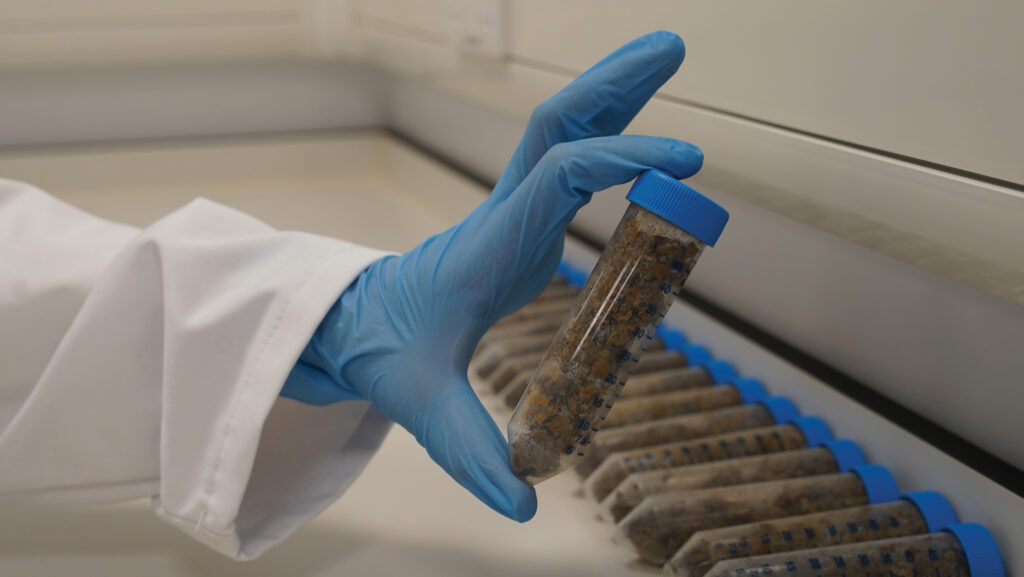
Soil analysis © Elaniti
Understanding how soils function by combining soil biological data with other parameters into machine-learning models to provide insights into farming outcomes, including soil nutrient supply efficiency is at the heart of Kent-based Elaniti’s Soil Diagnostics product.
Data combination
For nutrient supply efficiency, the models use a combination of soil biological, physical and chemical data, farm management information and environmental data, explains Elaniti chief executive Scott Jarrett.
“We train our models using applied fertiliser and crop performance data, including yields, so we can observe the biogeochemical features of the soil within the farm’s unique environmental and management context, alongside the result,” he says.
By training the model using as many data attributes as possible, the company can then predict likely future nutrient supply efficiency using the same input data.
The result is information that helps growers predict whether achieving milling wheat specification is likely before fertiliser is applied or whether only to apply enough for feed wheat, he claims.
Case study results
“We have a case study of a grower who had a 50:50 decision between milling and feed wheat. He decided to go for milling and ultimately missed the specification.
“When we looked at soil nutrient composition, the relative score across our database was in the top 20% for nutrient availability. But when we included biology, we expected the field to perform in the bottom 10%.
“If you exclude soil biological data, we think you’re missing a lot in the terms of the explanatory power for forecasting a particular outcome.
“In future, we think we can help the farmer decide in advance whether to pursue a particular strategy using our platform.”
Soilmonitor, Paul-Tech and NutriSen spoke to Farmers Weekly at the recent World Agri-Tech Innovation Summit. Elaniti presented at Agri-TechE’s Reap Conference in Peterborough