

Farmers urged to get ready for Big Farmland Bird Count
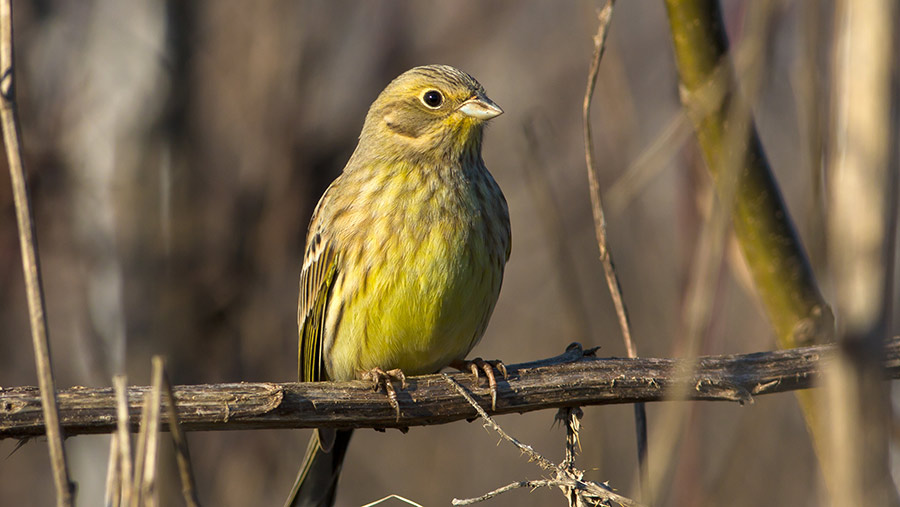 © Floriana/Adobe Stock
 Farmers, crofters and gamekeepers are being encouraged to sign up for the Big Farmland Bird Count (BFBC), which gets under way later this week.
Organised by the Game and Wildlife Conservation Trust (GWCT), the BFBC is sponsored by NFU, NFU Cyrmu, NFU Scotland, the Country Land and Business Association, the Farmers’ Union of Wales and others, who are all official partners.
This year’s event takes place on 2-18 February and marks 10 years since the first nationwide count.
See also: How to deliver landscape-scale change through farm cluster groups
Last year, more than 1,700 farms took part, counting more than 460,000 birds of 149 different species across 0.6m hectares of farmland. Since its launch in 2014, nearly 13,000 bird counts on farms and crofts across the UK.
As well as providing a crucial snapshot of the bird population on farms and crofts across the UK, the annual count aims to raise awareness of the important role that farmers, crofters and other land managers play in the conservation of farmland birds.
Patrick Barker, whose family farms 545ha of arable land on a Linking Environment and Farming (EAF Demonstration Farm in Suffolk, has been involved in the initiative since it started, recording three of his four farms.
He recommends birders contact their local farmers and ask if they would be willing to allow them to take part in BFBC, or indeed any other organised bird surveys, or vice versa.
Mr Barker said: “There is not always time for farmers to carry out the counts themselves – we are busy people all year around, but this does not have to stop you from taking part.
“You know you have really achieved something fantastic when farmers have recorded birds calling or singing on their farms and sent the recordings to you, either to ask for help with identification, or to proudly let you know what they have found on the land.”
Biodiversity tips
The use of “conservation headlands” – wide field margins where little or no pesticides are used – is a very good for farmland birds. Allowing broad-leaved weeds to flourish boosts insect populations, which are a key food source for birds.
Planting and managing hedgerows also provides crucial food, as well as nesting habitat and a safe haven from predators.
GWCT advisers encourage land managers to maintain small wet areas around the farm or shoot to help attract wading birds.
Leaving an area of uncropped, cultivated land can also provide suitable nesting and foraging areas for birds which prefer to forage on open ground, such as the red-listed lapwing, skylark, stone curlew and turtle dove.
How to take part in the Big Farmland Bird Count
Species guides, including short videos, are available the BFBC website.
- Count sheets can be downloaded from the BFBC website.
- Count your birds. On any day between 2 and 18 February 2024, spend about 30 minutes recording the species and number of birds seen on one particular area of the farm or croft
- 3) Once complete, results can be submitted online
The Big Farmland Bird Count webinar is being held on on 6 February – Join this free online event to learn how to help birds on your farm.