

Low-carbon fertiliser: What products are in the pipeline?
 © GNP
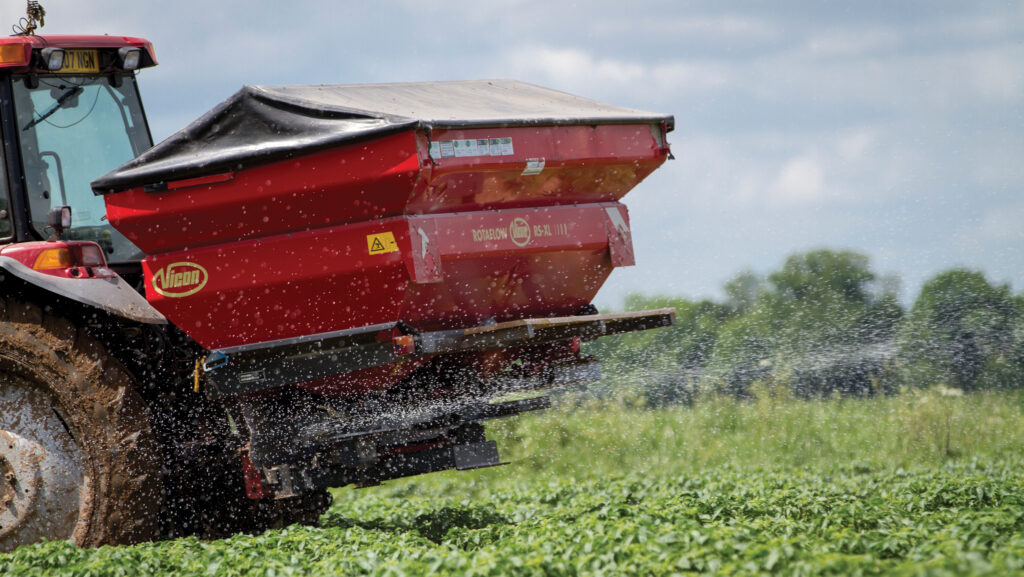
© GNP There is a bewildering array of low-carbon fertilisers in the pipeline, ranging from blue and green ammonia-based inorganic products to new organic products utilising waste products.
All have their pros and cons. To help farmers looking to reduce their carbon footprint, Farmers Weekly looks at the different types.
See also: Farm trials prove value of biostimulants over fertiliser
Mineral fertilisers
Yara’s food chain business manager Mark Tucker explains that the first category is the mineral fertilisers which are chemically the same as current fertilisers used on farm, but produced using less carbon.
But before looking at the newer products, he points out that there are quite significant differences in the carbon footprint of standard fertilisers that are already available.
For farmers looking to reduce their carbon footprint, he suggests they consider the country of origin.
Where it is made can make quite a difference depending on the different technologies used in its manufacture.
“It can double or treble the production emissions.”
Fertiliser produced in Europe has the lowest at 3.42kg carbon dioxide equivalents (CO2e)/kg of ammonium nitrate nitrogen (Grey Hydrogen – produced from natural gas using steam reforming), compared with 7.23kg for Russia and 10.45kg for China (Brown Hydrogen).
Yara is even lower at 3.08kg of CO2e/kg ammonium nitrate N, by the extensive use of abatement technology in its factory.
However, this is set to fall further with the arrival of a new generation of inorganic fertilisers.
The first is Blue Hydrogen fertiliser, where natural gas is still used in its manufacture by steam reforming, but with the addition of carbon capture.
Yara is set to launch its Blue Hydrogen in 2026 produced at Sluiskil, home to Europe’s largest ammonia and fertiliser plant.
Up to 800,000t of carbon dioxide is captured annually, liquefied, and transported via specialist company Northern Lights for permanent storage under the Norwegian seabed.
The result of this is fertiliser which has just 63% of the carbon footprint of its ammonium nitrate product back in 2009 (baseline).
With an even lower carbon footprint is fertiliser produced from Green Hydrogen. This is very different, says Mark. The hydrogen is split from water by hydrolysis using renewable energy (electricity).
So for a typical 200kg/ha application of nitrogen fertiliser as calcium ammonium nitrate, it has only 20% of the carbon footprint of the 2009 product.
However, Green Hydrogen fertiliser is only being made in small volumes at the moment and a key driver will be the availability of renewable energy.
“The cost and technology to do this at scale is a challenge,” says Mark.
One key benefit of the inorganic mineral fertilisers is that they are exactly the same as the classic mineral fertilisers.
Therefore, no performance related trials are needed, unless farmers are implementing a system change like moving from liquid to solid or from straights to compounds.
It also means no changes are needed in the agronomy for growing crops.
However, cost is going to be a factor. This could be offset by farmers keeping ownership of the carbon and selling credits.
Farmers may want to buy a lower carbon fertiliser and use the lower carbon claims for selling their products or a food company may pay for this investment.
Blue is cheaper than Green, which is a serious investment. “You are looking to double the cost with Green compared with current fertiliser.”
He says Yara has a target of a mix of Blue and Green hydrogen fertiliser accounting for 40% of sales by 2030.
Organic-mineral fertilisers
Another group is the organic or waste-based fertilisers, which include some mineral element.
These include compost, digestate and manure that has been made into pellets.
Mark points to SoilWorx as an example where poultry manure and feather meal are used as base material, with mineral components such as ammonium sulphate and muriate of potash (MOP) added to achieve a desired nutrient analysis.
However, they are very different to the classic mineral fertilisers and there is, therefore, a need for performance related trials at the research level and also on-farm.
These will need to determine yield responses and their affect on grain quality and nitrogen use efficiency.
He says that they are generally seeing 10% less in yield and farmers/agronomists will need to learn how to use them to get the most out.
Cost wise, they vary a lot and some can look attractive, he says. However, he warns that some caution is needed as the carbon footprint accounting methods are different for organic and inorganic fertilisers and it’s like comparing apples with pears in terms of carbon footprint benefits, and may end up being less beneficial than first thought.
There are also the practical considerations – do they fit in an existing system?
They may need capital expenditure if it means a change of system (like liquid to solid). Other considerations include their spreadability, Red Tractor compliance and the extra cost of being bulky materials.
These organic fertilisers can also bring longer-term benefits to soil health and assessments will need to be made to determine the benefits, he says.
OCI Global launches lower carbon fertiliser
© OCI Global
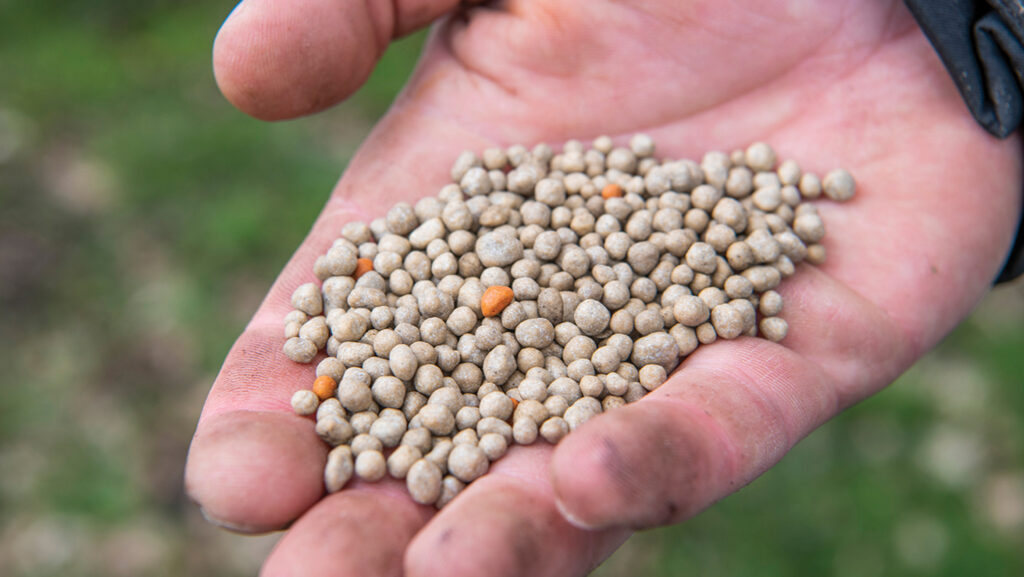
A nitrogen-based fertiliser with up to 60% lower carbon footprint, compared with conventional fertilisers, has been launched by OCI Global.
Nutramon Novo is produced using biomethane, a renewable alternative to fossil fuels, explains Sam Leadbeater, UK and Ireland sales manager for OCI Global.
“Our new lower carbon fertiliser combines 50% nitrate nitrogen and 50% ammonium nitrogen, delivering both rapid uptake and long-lasting nutrition across all crops,” he explains.
“The high-quality characteristics of the product are the same as those of our existing flagship fertiliser, Nutramon, yet the carbon footprint involved in its production has been reduced by up to approximately 60%.
“This is because biomethane sourced from organic waste materials, such as food and garden waste, is used in the production process – rather than natural gas.”
As a result, there are fewer carbon emissions associated with the product, reducing the overall environmental footprint of crops grown with this fertiliser.
“Studies have shown that using the fertiliser on malting barley, instead of conventional nitrogen fertilisers, can reduce the total carbon footprint of a 750ml bottle of whisky by up to 10%,” Sam adds.
Mark Tucker was speaking at the recent Cupgra annual potato conference held at Robinson College, Cambridge
Staying sharp shouldn't be a chore
Explore more / Transition
During the series we follow our group of 16 Transition Farmers through the challenges and opportunities as they seek to improve their farm businesses.
Transition is an independent editorial initiative supported by our UK-wide network of partners, who have made it possible to bring you this series.
Visit the Transition content hub to find out more.
