

Norfolk estate trials liquid green fertiliser
 © GNP
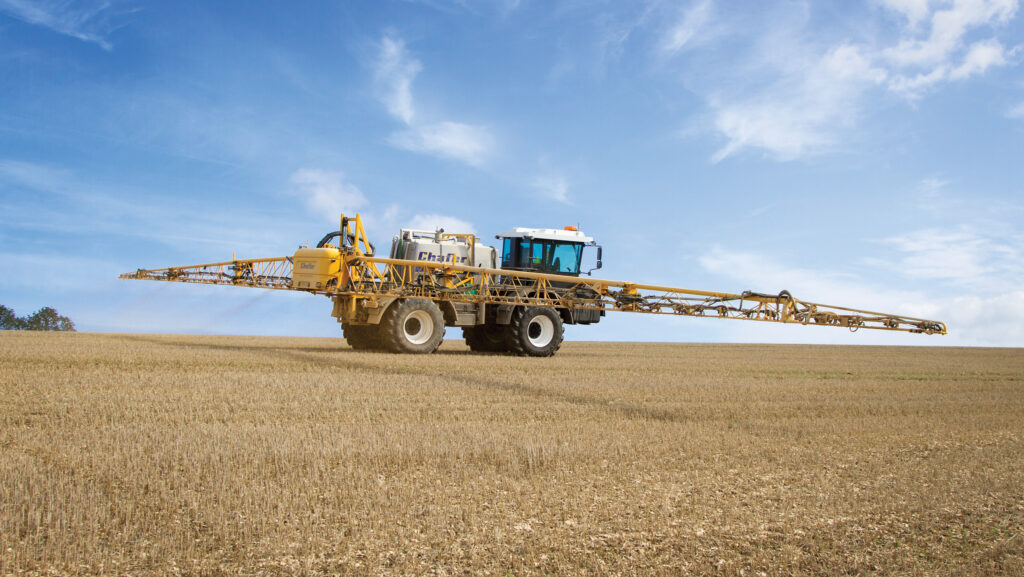
© GNP The Holkham Farming Company is conducting the UK’s first field-scale trial of liquid green fertiliser.
Undertaken in partnership with Omex Agriculture, it forms a key part of the estate’s wider goal of becoming a carbon negative by 2040.
See also: £700,000 centrifuge helps make solid fertiliser from digestate
Holkham is growing a 14ha crop of sugar beet using the company’s LoC Green fertiliser – a product which includes ammonia made using renewable energy sources such as solar and wind power rather than from fossil fuels.
Success will help Holkham unlock a market where premium arable prices are increasingly linked to lower carbon footprints – placing the estate at the forefront of a sector under pressure to demonstrate measurable environmental progress.
LoC Green fertiliser is chemically identical to conventional or “grey” fertiliser.
But because the energy source is green, its carbon footprint is 70% lower, says David Booty, Omex head of research and development.
“It’s exactly like the green energy market, where you buy renewable electricity,” he says.
“The end product is exactly the same – but the production process is much more environmentally friendly.”
Performance
The Holkham trial aims to allay any concerns that “green” products underperform agronomically.
The goal is to demonstrate that 120kg of low-carbon nitrogen will deliver the same output as 120kg of standard grey nitrogen.
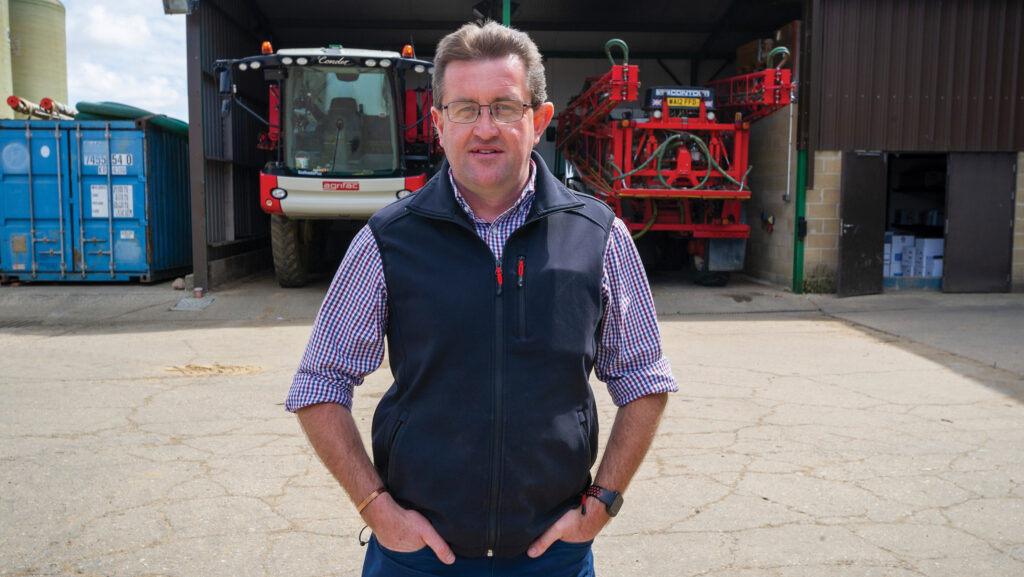
Holkham farming director James Beamish is using the LoC fertiliser as the cornerstone of the estate’s sugar beet nutrition programme.
© Jason Bye
Doing so will provide valuable insights and data in comparison to traditional fertiliser application, he says.
“The real driver of our carbon footprint is nitrogen fertiliser,” says Mr Beamish.
“About 85% of the estate’s carbon emissions are from farming and food production – and about half of those emissions are tied directly to fertiliser.
Reducing them is a significant investment – but we believe it’s an investment worth making.”
Lower yields are not an option. To be viable, the numbers must stack up financially, not just environmentally.
Nitrogen fertiliser typically accounts for approximately half the total yield – contributing between 45% and 75% of a crop’s total carbon footprint.
Roughly half of these emissions occur during fertiliser manufacturing. The other half happens during field application.
There is little doubt that green fertiliser is much more environmentally friendly. But it is also more expensive.
Adoption
Cost remains a primary barrier to wider adoption.
- For a product offering a 70% carbon reduction, in spring of 2026 the green fertiliser premium ranged between £150/t and £170/t – and margins are already tight across the arable sector.
- For spring barley, in spring of 2026 liquid green fertiliser added roughly £7.50-£8.50/t of grain produced.
- For milling wheat, which requires higher nitrogen rates, the cost rose to £14-£15/t.
To bridge this gap, a “hybrid” range has been developed. This blends green and grey formulations to offer a partial carbon reduction at a lower cost.
A hybrid product can offer a range of carbon footprint reductions to suit goals and budgets.
These hybrid options act as a stepping stone for businesses not yet ready for a full transition.
Holkham is absorbing these costs as part of its innovation strategy. Mr Beamish admits the business is lucky to be able to “tinker and play a little bit.” But he is clear that the market must eventually support these costs.
“I’m not getting paid for the lower carbon at the moment – but it is a key part of the estate’s strategy to reduce our carbon emissions.
“If I’m just purely looking at the bottom of the P&L, grey fertiliser is probably still my direct route.”
The trial is also looking at the “other 50%” of emissions – those lost in the field. Even if manufacturing becomes net zero, on-farm losses persist.
Techniques such as placement and the use of inhibitors are vital. Using an inhibitor like NOxShield has been proven to reduce “in-field” nitrous oxide emissions by about 50%.
For a crop like sugar beet, this represents a 20-30% reduction in total carbon dioxide per tonne of production. This highlights why a holistic approach is necessary.
Market rewards
The drive for low-carbon farming is increasingly coming from the supply chain. British Sugar has announced it will reward sustainability from 2027.
Other partners, like Adnams brewery, are also seeking lower-carbon raw materials. For processors, “Scope 3″ emissions – those from the farms they buy from – often represent 95% of their total carbon footprint.
Decarbonising the farm is the most effective way for these companies to meet their own climate targets.
Educating the entire chain is crucial. If consumers see low-carbon sugar on a shelf, they might be willing to choose it.
The Holkham trial will provide the data needed to model the exact cost impact per kilo of sugar.
This transparency helps commercial teams from supply chain partners understand the value of the product.
“We’re hoping we will be recognised as a forward-thinking innovative estate,” who is looking to extend the trial to other crops.
Holkham has already purchased another 22t of green fertiliser for next year. This will be trialled across all cereals, including malting barley destined for brewer Adnams.
The hope is to supply the brewery with carbon-negative barley.
The next challenge is scaling the technology. To drive down costs, the industry must move beyond small-scale trials to wide-scale adoption.
This will require collaboration between growers, processors and fertiliser manufacturers.
While the cost premium is currently a hurdle, the supply chain is gradually starting to explore rewarding those who adopt greener technologies, says Omex business growth director Laura Wood.
“It’s very scalable,” she says. “Farmers are increasingly looking for ways to reduce their carbon footprint without compromising productivity, and low carbon fertilisers have the potential to become an important part of that journey.
But more support is needed, and supply chains have an important role to play in rewarding growers who take the lead and invest in lower-carbon fertiliser.”
Study explores potential for legumes to reduce fertiliser usage
A University of East Anglia study is examining whether reintroducing edible legumes could help reduce fertiliser applications in arable rotations.
The project is investigating how beans, peas and lentils could fit alongside wheat, oilseed rape and potatoes in Norfolk farming systems.
Scientists believe they could reduce input costs, improve soil health and increase resilience to climate change.
Researchers led by Madalitso Mgunda will assess the commercial and practical barriers to wider adoption by interviewing farmers, processors and other industry stakeholders, alongside analysing climate suitability data.
Overcoming challenges
Ms Mgunda, is a postgraduate researcher at UEA’s School of Global Development and recipient of the 2026 Norfolk International Scholarship.
She has previously worked with the World Food Programme on legume value chains.
“Extreme heat, spring drought, unseasonal flooding, together with changing disease and pest risks pose a real threat to the agricultural heartlands of East Anglia, Norfolk and the South East – resulting in major yield fluctuations and lost revenue.”
The research will explore the realities facing Norfolk farmers and the wider supply chain, said Ms Mgunda. It would help identify the changes needed to make legume production a more viable option.
While the agronomic benefits of legumes are well-recognised, profitability remains a key issue for many growers.
Barriers include fluctuating gross margins, limited markets, variable yields, processing capacity and long-term contracts.
Ms Mgunda said: “Legumes have enormous potential to contribute to more resilient farming systems, healthier diets and lower environmental impacts, but their production remains limited.”
Working with researchers at UEA’s Norwich Institute for Sustainable Development, the project forms part of wider work on climate resilience and crop diversification.
It is supported by the Royal Norfolk Agricultural Association, the Norwich Institute for Sustainable Development and the JC Mann Charitable Trust.
Staying sharp shouldn't be a chore
Explore more / Transition
During the series we follow our group of 16 Transition Farmers through the challenges and opportunities as they seek to improve their farm businesses.
Transition is an independent editorial initiative supported by our UK-wide network of partners, who have made it possible to bring you this series.
Visit the Transition content hub to find out more.
