

10-point plan to beat flea beetle in oilseed rape
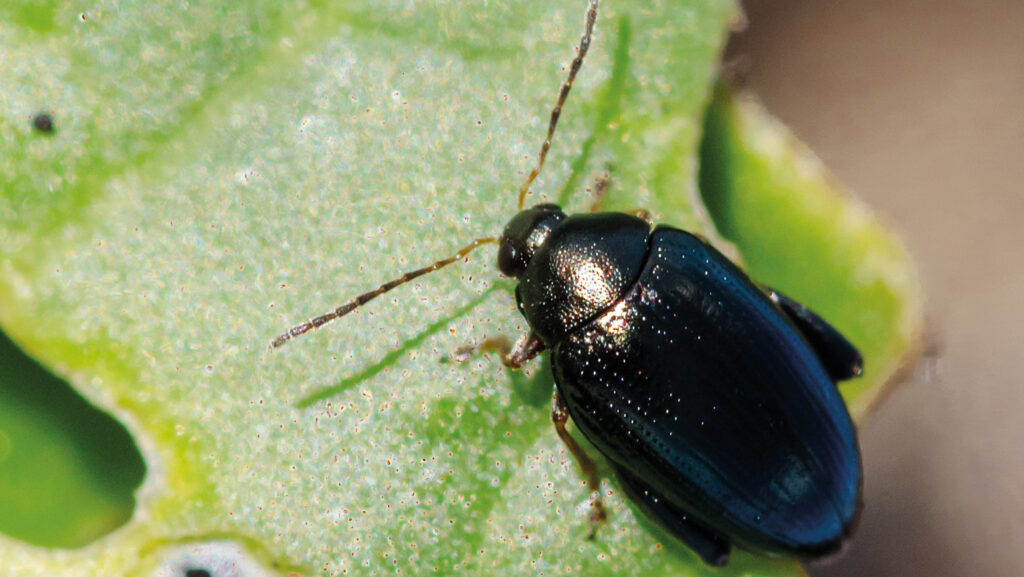 © Blackthorn Arable
 Oilseed rape growers are being urged to follow a 10-point plan to limit damage from cabbage stem flea beetles, with the most important factor being choosing a drilling date.
AHDB’s lead crop protection scientist, Dr Sacha White, suggests growers should look to follow as many of these 10 points as possible to limit cabbage stem flea beetle (CSFB) damage, as pest damage can lead to crops being abandoned or yields being severely reduced.
“There are multiple strategies available, and the more you do will help make management more reliable for your oilseed rape,” he says.
See also: How Lincs grower reclaimed world record oilseed rape yield
He points out that flea beetles start migrating in late August and early September, so this is the time to avoid sowing oilseed rape.
Growers should either drill early in early to mid-August or late from mid-September onwards.
Sacha outlines the 10 points in detail which growers should consider:
1. Ditch the date
As already outlined, Sacha suggests avoiding drilling in the peak flea beetle migration period and advises to either drill early or late, and not to stick to traditional calendar dates.
For early drillers, it is the larvae of flea beetles which are the biggest threat, so growers should keep seed rates low and not be tempted to push rates up to compensate for any anticipated losses.
Early-drilling growers should chose varieties with good autumn biomass and good spring vigour to counter the larval threat.
For late drillers, it is adult beetle damage which is the biggest threat.
Growers need to aim for quick establishment with a variety showing good autumn vigour and consider companion cropping, trap cropping and the use of manures.
2. Chase perfection at establishment
He advises growers to wait for moisture before drilling, and focus on low soil disturbance and tillage mulches.
They should aim for good seed-to-soil contact, roll drilled ground at 90% to the direction of drilling and optimise crop nutrition.
Slow-developing varieties should be selected for early drilling, and high-vigour, fast-developing varieties for later drilling.
3. Keep your distance
Sacha points out that flea beetles can fly up to two miles, so growers should try to make sure a new oilseed rape crop is as far away as possible from an old harvested crop.
He says that Swedish growers are advised to leave 800m between old and new crops.
4. Improve larval tolerance
Fewer and bigger oilseed rape plants can tolerate high larval damage, which can be seen between October and April.
So keep drilling rates low at 50-60 seeds/sq m and aim for 25-40 plants/sq m, and resist the temptation to increase seed rates to cover for possible losses.
5. Chuck the muck
He suggests that the use of organic manures can disrupt beetle attacks.
Applications of manures are likely boost growth and perhaps make it harder for flea beetles to locate oilseed rape crops.
6. Park the pyrethroids
The first resistance of flea beetles to pyrethroid insecticides was detected in 2014 and now resistance is widespread, and severe in England.
In 2023, 95% of flea beetle populations showed resistance meaning pyrethroid can be of little value, and can do more harm than good by killing beneficial insects.
7. Create companions
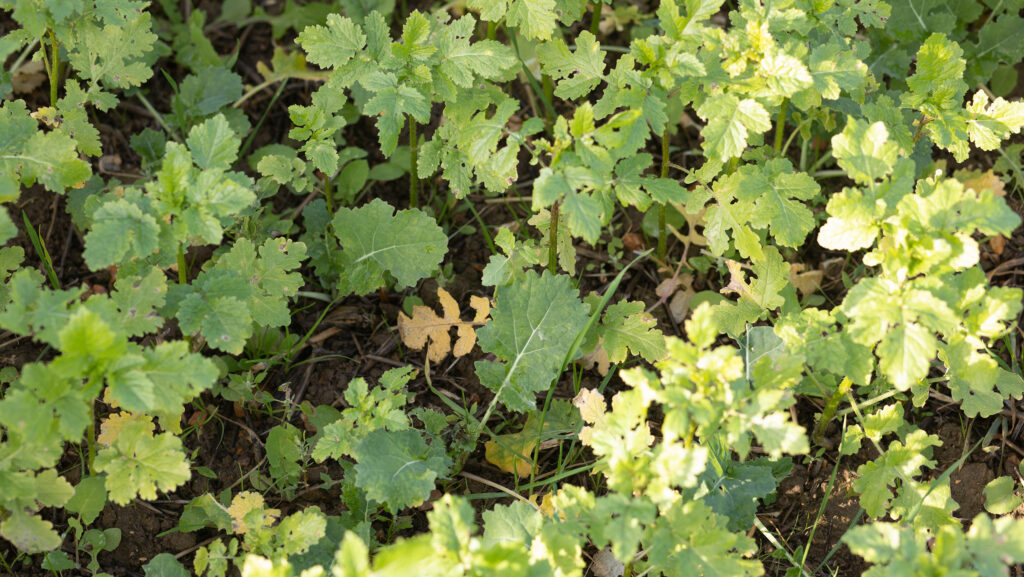
© Tim Scrivener
Companion cropping and intercropping can reduce flea beetle damage.
These could include companion crops such as buckwheat, vetches and berseem clover, and intercropping with fabia beans, which can all shield and strengthen oilseed rape crops.
8. Build brassica buddies
Sacrificial strips or volunteer brassicas can lure flea beetles away from newly-sown crops.
So leave oilseed rape volunteers to grow as a trap crop – perhaps 5ha of volunteers can be left and are safe to leave until the end of September.
This can reduce adult and larval pressure in fields of oilseed rape.
Any cover crops on the farm containing brassicas should be destroyed by the end of February.
9. Stir it up post-harvest
Light cultivation of oilseed rape stubbles soon after harvest can help reduce the number of emerging flea beetles.
But care is needed as this could have an negative effect on beneficial insect numbers.
This could contradict point 8, which calls for volunteers to remain as trap crops, so some experimentation may be needed.
10. Unlock hidden gems
This includes monitoring adults at harvest and volunteer plants for damage, and protecting natural enemies of flea beetles by the use of flowering strip and beetle banks.
These beneficials can include spiders, carabid beetles and parasitic wasps.
Grazing and topping can help, but growers should try to avoid ploughing and focus on min-till or no-till, which will provide more food for beneficials.
Dr Sacha White was speaking at an AHDB/United Oilseeds conference held in York in early February 2026