Beet army worm infestation nearly wipes out drought-stricken crop
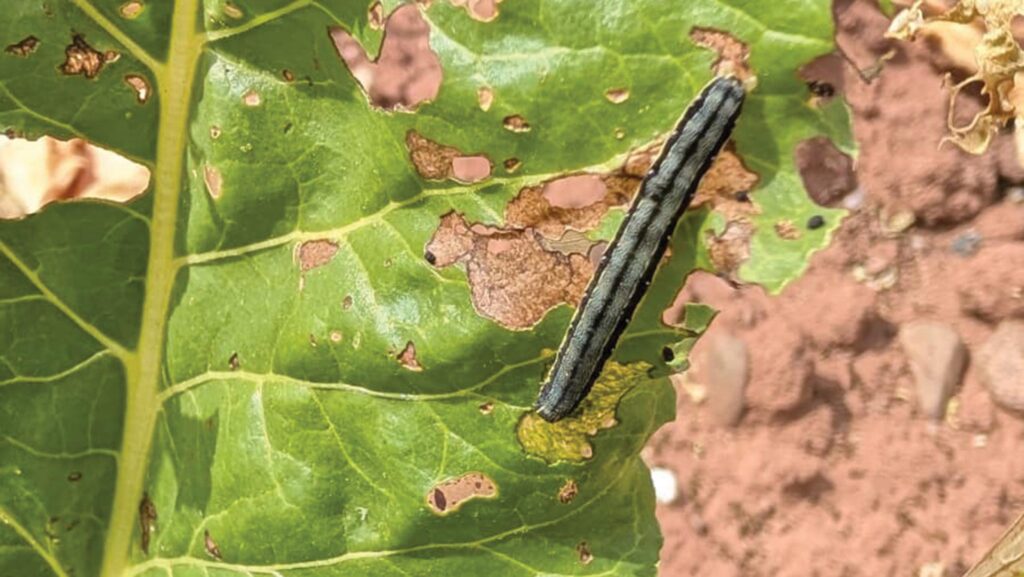 Beet army worm © Ally Hunter Blair
 An influx of a novel caterpillar pest known as the beet army worm nearly wiped out Herefordshire farmer Ally Hunter Blair’s drought struck sugar beet.
“It completely decimated the crop – stripping the leaves bare. I had never heard of the army worm before.
“We’ve been growing sugar beet 50 years and my father, who’s 90, hadn’t heard of it either,” says Ally.
See also: North East harvest set to finish before it usually starts
What started out as a small, bare patch near a rocky bank – which Ally initially put down to drought stress – rapidly turned into a major pest infestation.
With beet plants already drought stressed, the pest caused phenomenal crop damage.
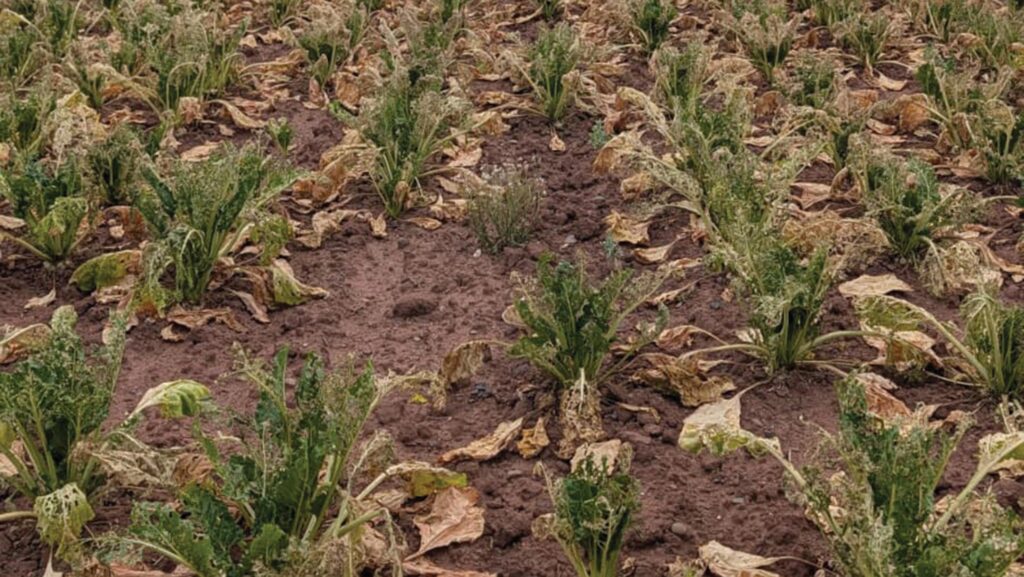
Damaged crop © Ally Hunter Blair
Ally took the decision to go in with an insecticide pyrethroid spray, with a follow-up spray the week after.
“It was frustrating to have to spray as I try to avoid using insecticides. It really was a do or die moment,” he says.
For now, the problem seems to have been “nipped in the bud”.
The sugar beet plants are recovering with new leaves beginning to shoot.
“We had one 12ha field that was really badly affected, but the other fields weren’t as bad as we sprayed them in time, before it got out of control.
“What we really need now is some rain to get the crops growing again.
“There’s just no moisture in the ground. We had 0.2mm of rain two weeks ago.
“Ross-on-Wye was the hottest place in the country last week,” notes Ally.
“The joys of farming in 2026,” he says.
What is beet army worm?
Beet army worm (Spodoptera exigua) was first identified in maize crops across the south of England earlier this summer.
The pest occasionally naturally migrates into the UK, but rarely reaches damaging levels.
This year, populations have expanded due to the warm, dry weather.
Female moths lay pale green or white egg in clusters on the undersides of leaves.
The young larvae are pale green or yellow in appearance.
As they mature, their appearance becomes highly variable, ranging from green and brown to nearly black, often with stripes.