North East harvest set to finish before it usually starts
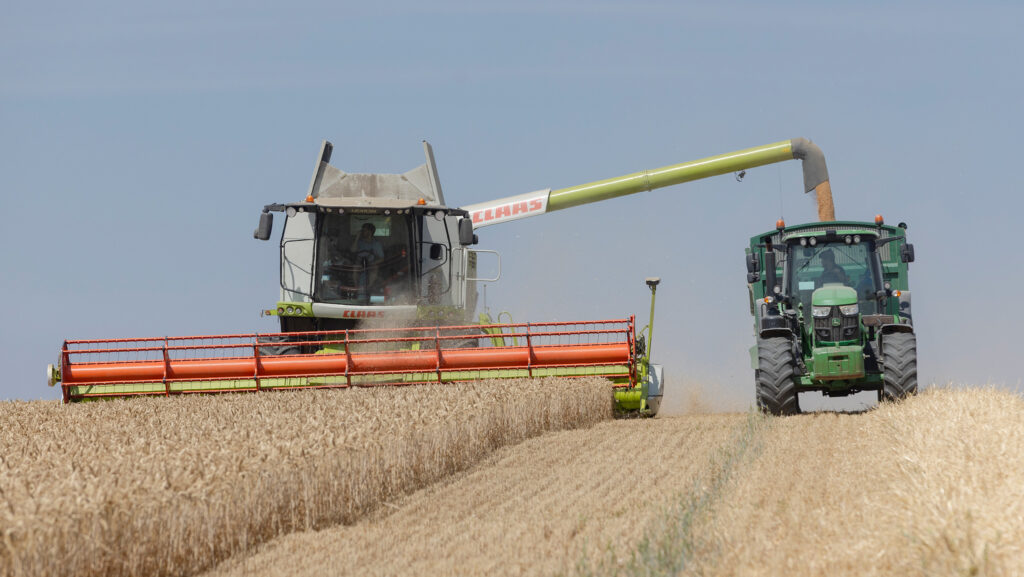 © GNP
© GNP A quick harvest has certainly not been without its challenges; that’s the consensus from this week’s harvest highlights.
Wiltshire
“With harvest now completed on many farms, our intakes are slowing down from what has been a very busy period for our grain stores,” reports David Evans, managing director at Trinity Grain.
He believes this year’s intake is reflective of wider industry trends, with yields 10-15% below expectations.
“Wheat quality is generally good, while spring barley quality has been more variable, with retention levels and nitrogen content being the key differentiating factors.
“As anticipated, oilseed rape yields have been positive,” he says.
“Overall, it’s been a quick, dry harvest, but a challenging time for farmers.”
See also: Harvest 2026: Promising yields in Yorks and on Lincs coast
Staffordshire
In the West Midlands, Stephen Sant at Model Farm, Hanchurch, has had a challenging harvest.
“You should rename this article ‘Harvest Lowlights’,” he says.
“Mixed farmers have fared better as they’ve had the benefit of farmyard manure, which has helped to retain some moisture.
“But for those of us who are wholly arable, it’s a different story.”
Having almost completed harvest, Stephen has noted a huge variation in yields for Graham and Arnie winter wheat.
“On lighter fields, yields were in the region of 5.2t/ha, but on heavier land, they averaged 8t/ha.
“What was strange is the huge variation in yield readings on the combine – in some parts we were averaging just 4t/ha – then 8t/ha then 12t/ha.”
As for the Dawsum grown as a second wheat, yields were really poor, at just 6.6t/ha.
However, the dry weather has bought some benefits.
“There’s been no drying to do, but we have had to cool some of our grain or consider timings for when the weather is cooler – to retain the moisture.”
And Stephen remains hopeful for his Mascani spring oats.
“They are not looking too bad,” he says. “We hope to harvest them this week, but the proof will be in the pudding.”
Northumberland
Moving to the North East, both quality and yields have been variable, says Gary Bright, managing director at GrainCo.
“For many farmers, crops looked great, but the dry weather has sucked out the moisture, which has had an impact.”
Even so, farmers in the region have fared much better than their southern counterparts.
“There have been daily differences in temperature of 10C, which is significant.”
Having received almost 90% of the expected winter barley, oilseed rape and oats in store, Gary has been happy with the quality – although no varieties have really stood out.
Oilseed rape averaged a reasonable 5t/ha, while barley yields ranged from 6t/ha to 11t/ha, with a specific weight of 67-68kg/hl.
“We’re a bit behind the rest of the country here; we’ve had about 25% of the winter wheat in so far, which has been much more variable,” says Gary.
“Average yields are around 8.6t/ha with a specific weight of 74-80kg/hl.
“If it remains dry, we could have all the wheat in next week – with harvest completing earlier than we would usually begin the wheat crop [around 20 August].
“However, one of the biggest challenges has been the lack of transport to move the grain. The diminishing number of hauliers and drivers is a concern.”
North Scotland
Meanwhile, in Inverness, Highland Grain will be taking its first intake of malting barley this week.
“Samples we have seen have been very positive so far, with low nitrogen levels and no real quality issues on screening and skimming,” says general manager Calum Barker.
“Every member we have spoken with has said the crops are looking promising, so we are quietly hopeful.”
The store has also taken more than 1,000t of oilseed rape, which has all been good quality, but winter barley has been very mixed, with high screenings being one issue.
“We’ve been very fortunate with consistent growing conditions, but our sympathies are with those farmers elsewhere who have not had it so favourable.”